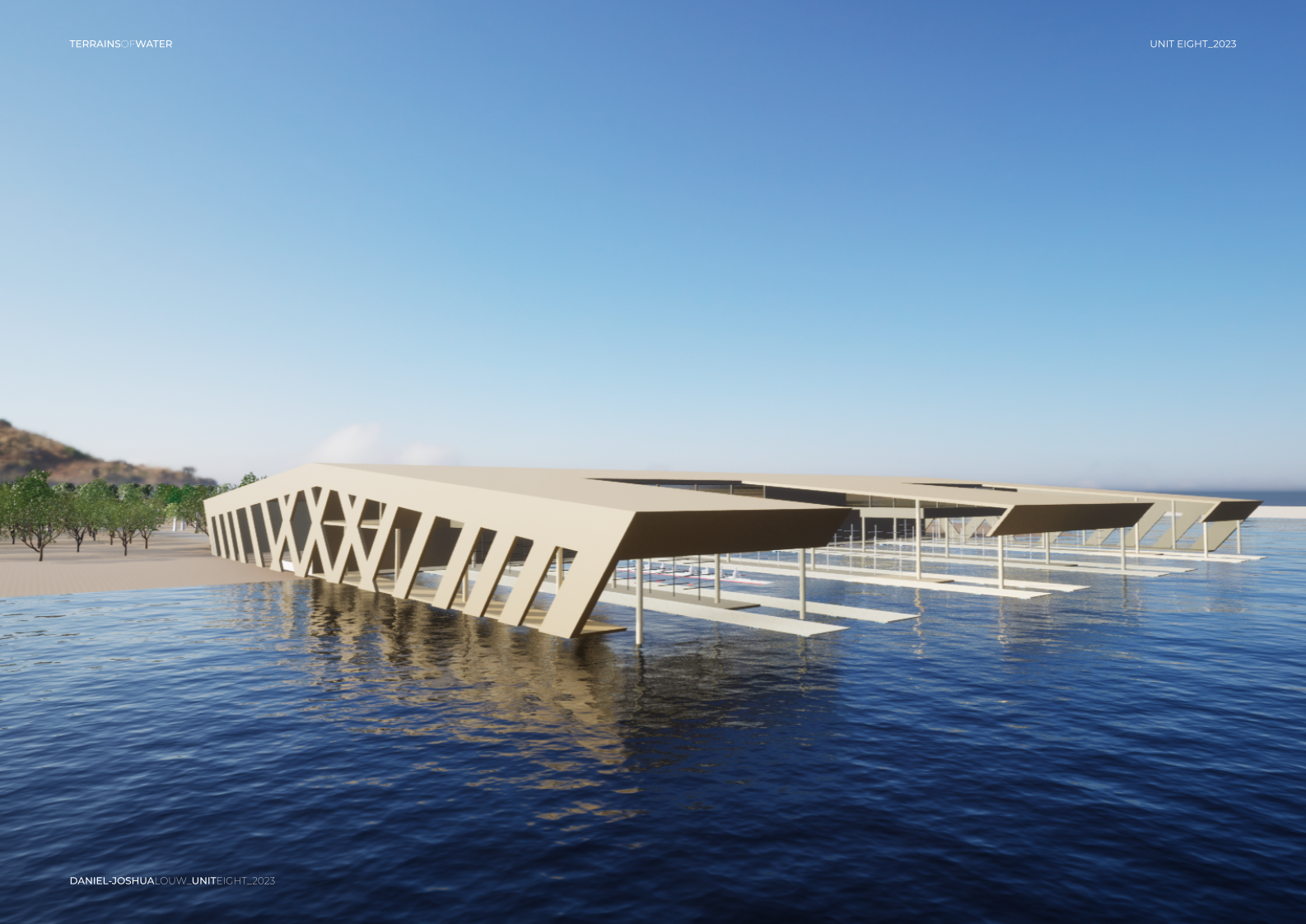
Water as Public Space:
A counter strategy of dam edge occupation through recreational water sports as a catalyst for inclusive enjoyment at Hartbeespoort Dam
This proposal to create accessible water landscapes in South Africa, particularly focusing on the Hartbeespoort Dam in the North West province, is commendable. Water landscapes can provide significant recreational and educational opportunities for people, and your background as a boy scout and university rower and coach gives you valuable insights into the benefits of engaging with water environments. Here are some key points to consider when developing your design proposal:
- Define the Problem: Clearly outline the existing barriers, both physical and intangible, that limit access to water landscapes in South Africa. Explain the economic challenges associated with water sports and how this affects public engagement with water bodies.
- Objectives: Specify the goals of your project, such as making water sports more affordable and accessible to a wider demographic, promoting water-based recreation, and breaking down the barriers that prevent people from enjoying water environments.
- Design Solutions: Present your ideas for creating accessible water landscapes. Consider factors like building infrastructure, offering affordable or subsidized equipment, providing training or coaching programs, and ensuring inclusive and accessible facilities.
- Community Engagement: Explain how you intend to involve local communities in the project. Gather input from potential users to ensure that your design is responsive to their needs and preferences.
- Educational Programs: Highlight the importance of introducing water sports and water safety education in schools to make them more inclusive and accessible. Explore partnerships with educational institutions and government agencies to promote these programs.
- Sustainability: Address the environmental aspects of your proposal. Ensure that your design promotes responsible use of water resources and conservation efforts.
- Funding and Resources: Detail the financial requirements of your project and explore potential sources of funding, such as government grants, private donations, or partnerships with local businesses.
- Implementation Timeline: Provide a timeline for the project, including milestones and deadlines. Consider a phased approach if the project is extensive.
- Partnerships: Explore potential partnerships with organizations, clubs, or institutions that share your goals and can provide support in terms of expertise or resources.
- Evaluation and Monitoring: Explain how you will measure the success and impact of your project. Define specific metrics for success, such as increased participation in water sports, decreased barriers to access, or improved safety in water landscapes.
- Legal and Regulatory Compliance: Address any legal and regulatory requirements related to water use and sports activities in the region. Ensure that your project complies with all relevant laws and permits.
- Public Awareness and Promotion: Discuss how you plan to raise awareness about your project and promote it within the community and beyond.
- Risk Assessment: Identify potential risks and challenges that your project might face and outline strategies to mitigate them.
- Remember that a successful project will likely require a multidisciplinary approach, involving experts in areas such as architecture, sports management, education, and community engagement. Collaboration with local stakeholders and the community is essential to ensure the project’s success and sustainability.