The Pitfalls of Perfection:
Delineating the utopian vision within architecture in Church Square
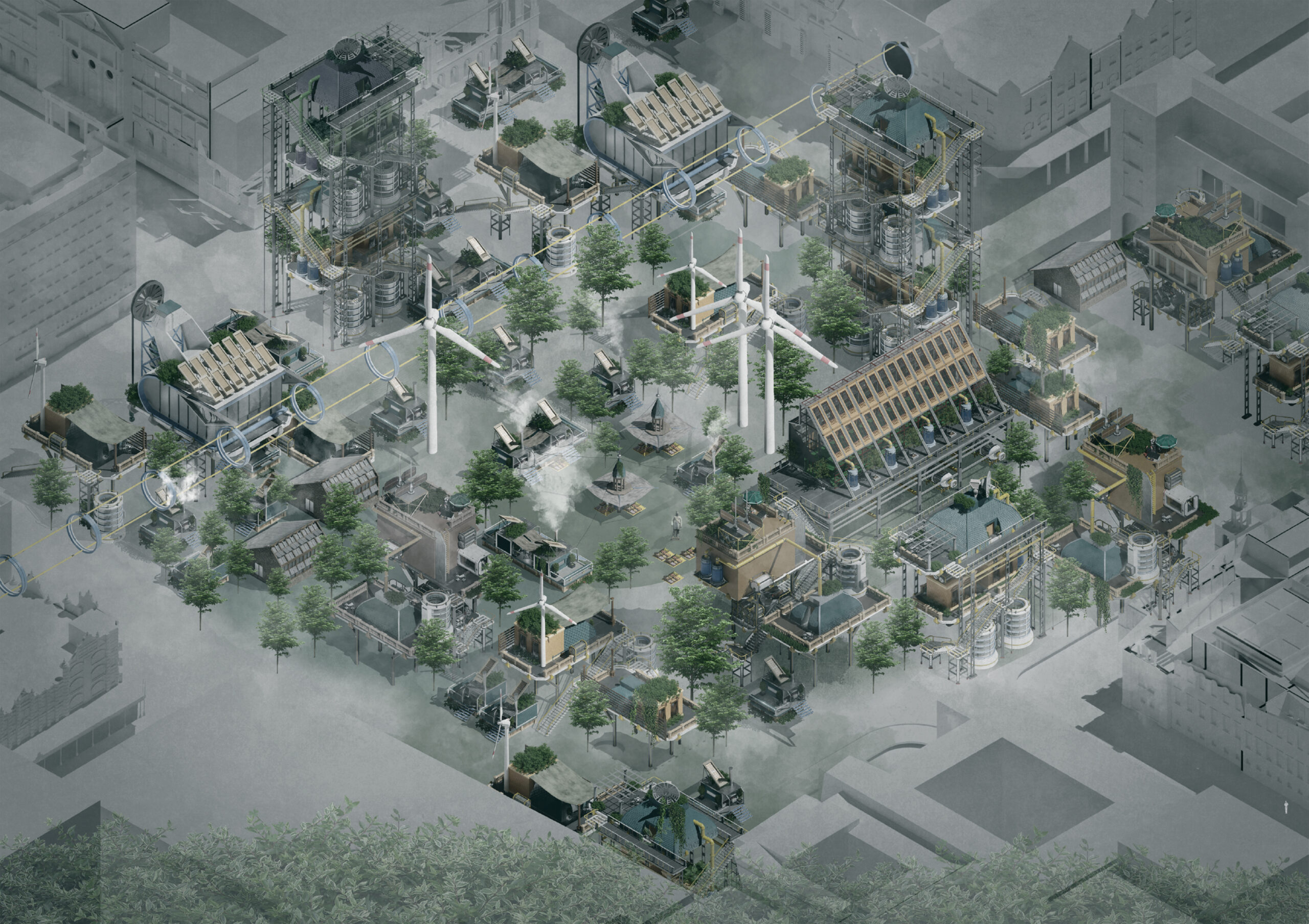
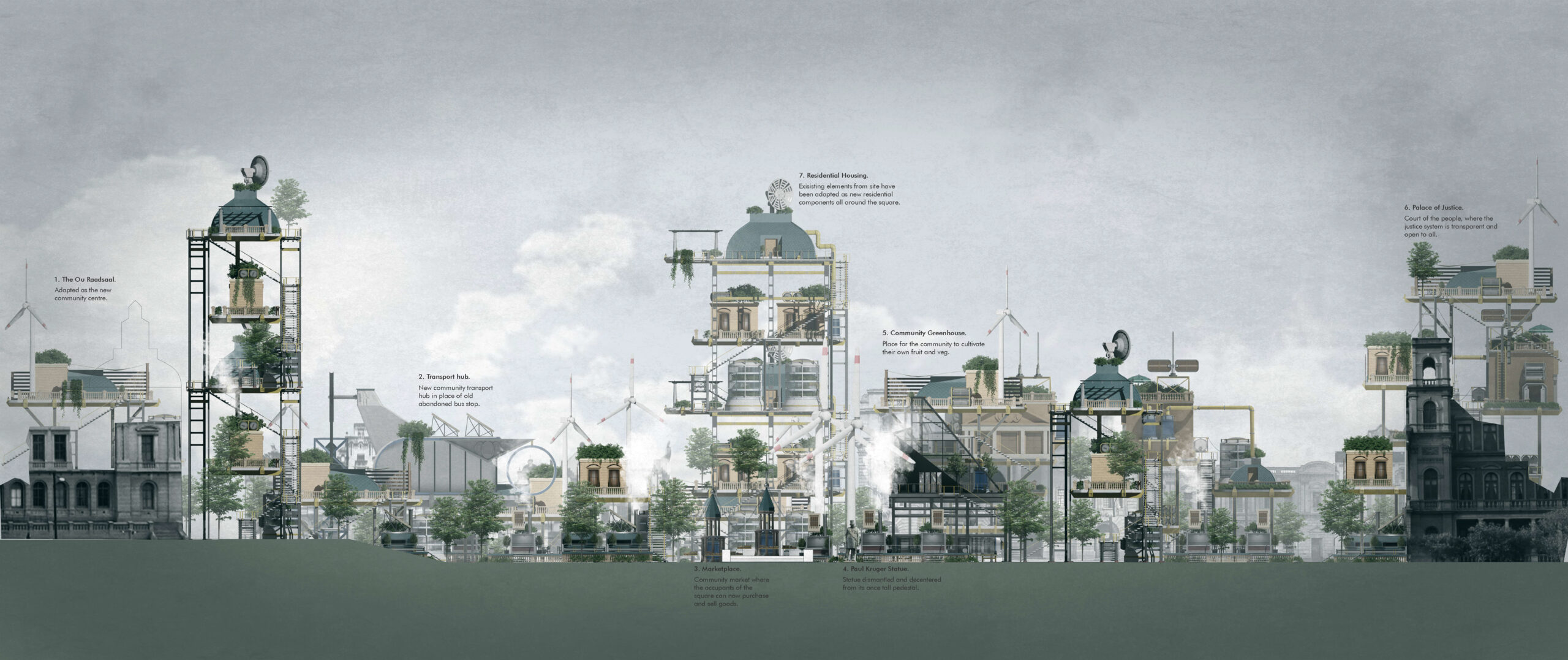
In the heart of Church Square, a bold vision unfolds. This project offers a unique lens through which to explore a new future, one that challenges conventional utopian ideals. As we journey through this exploration, we’ll delve into the architect’s role in shaping this vision and how it intersects with society’s evolving ideals. This narrative presents a critical fiction, inviting us to reimagine Church Square’s landscape beyond 2055. It’s a journey that not only questions potentially problematic utopian dreams but also encourages us to reflect on the essential utopian philosophy as described in Anthony Vidler’s reading of Plato’s Polis.
This project unfolds a multidimensional exploration at the intersection of utopian ideals, architectural design, and societal narratives. Focused on Church Square, the narrative traces the historical roots of utopia from Plato to modern interpretations, revealing both the necessity and potential dangers of utopian thinking. Through the lens of a street photographer named Alfred, the study delves into the lived experiences of individuals within Church Square, sparking a profound reflection on the evolving significance of historical artefacts and the intricate power dynamics they
embody.
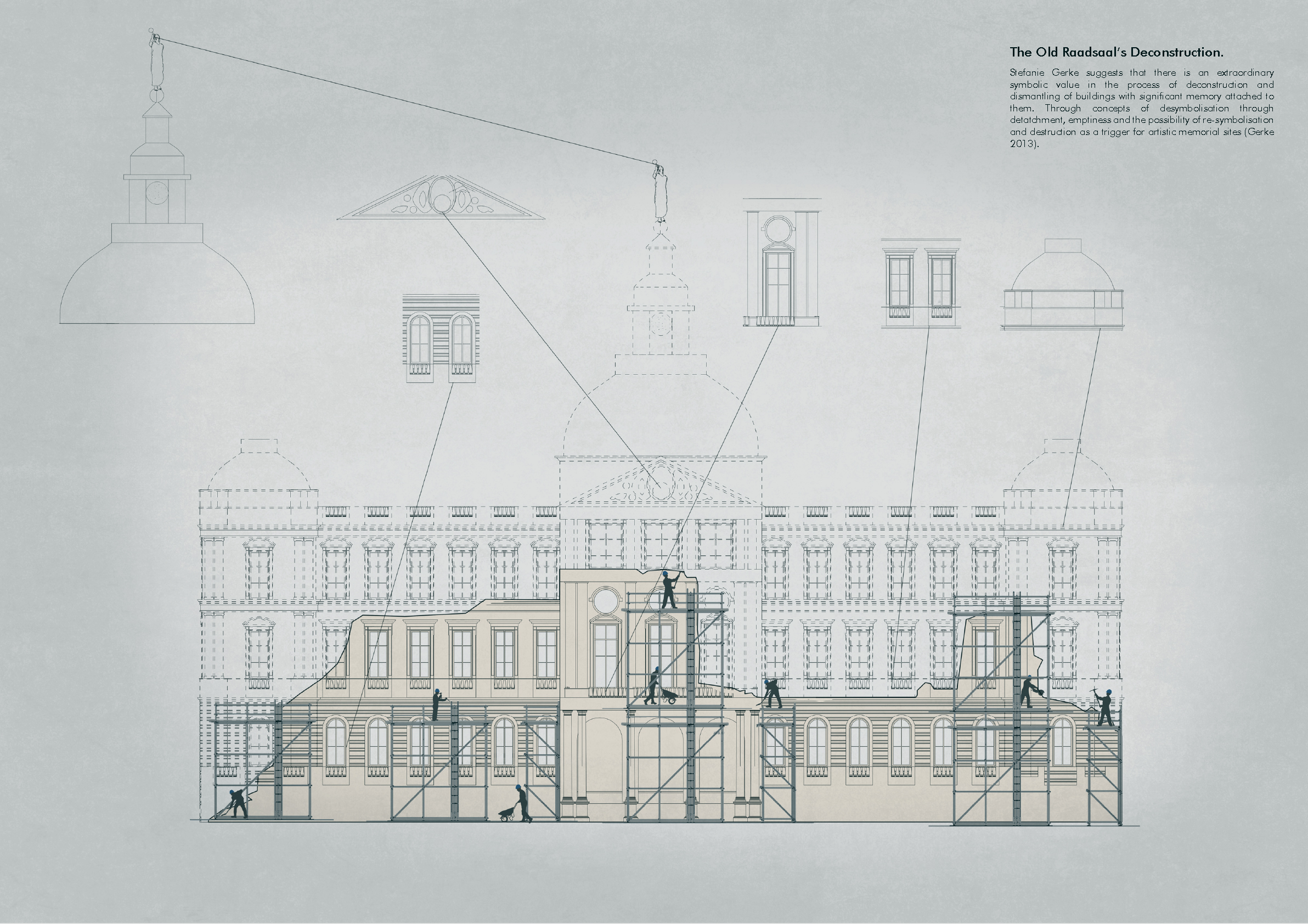
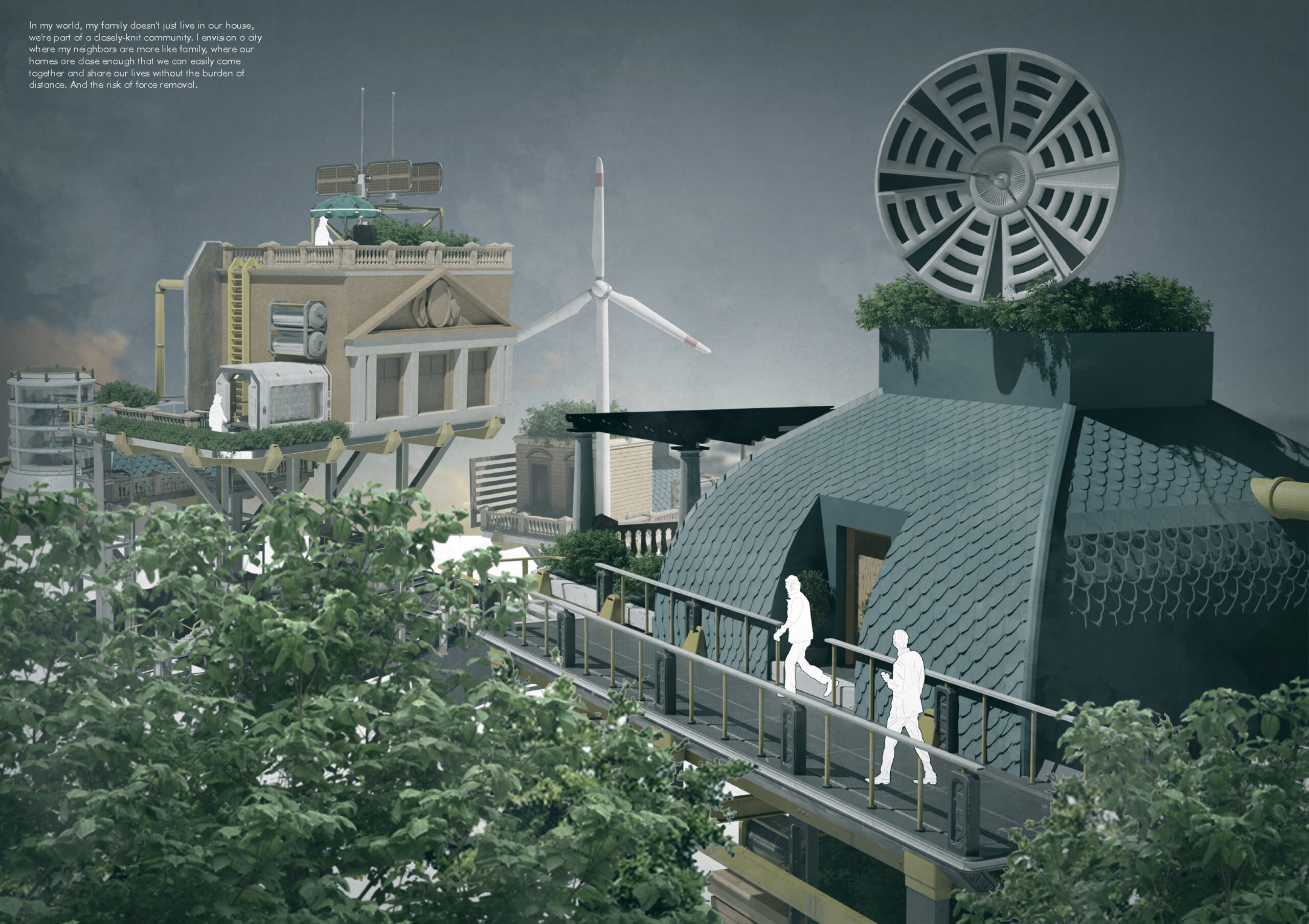
The project engages in a meticulous deconstruction of these artefacts, guided by a process of desymbolization and resymbolization. This process births a set of typologies rooted in the site’s fabric, challenging traditional notions of architectural design. Drawing on John Habraken’s theory, the role of the architect transforms into that of a storyteller, contributing to a city rather than dictating its form.
The project reflects on the ambiguous nature of utopia, underscoring the architect’s profound responsibility to honour societal narratives in the pursuit of creating meaningful and inclusive built environments.