Beyond the Rules:
An investigation into the spatial complexities of apartheid spatial planning in Soweto
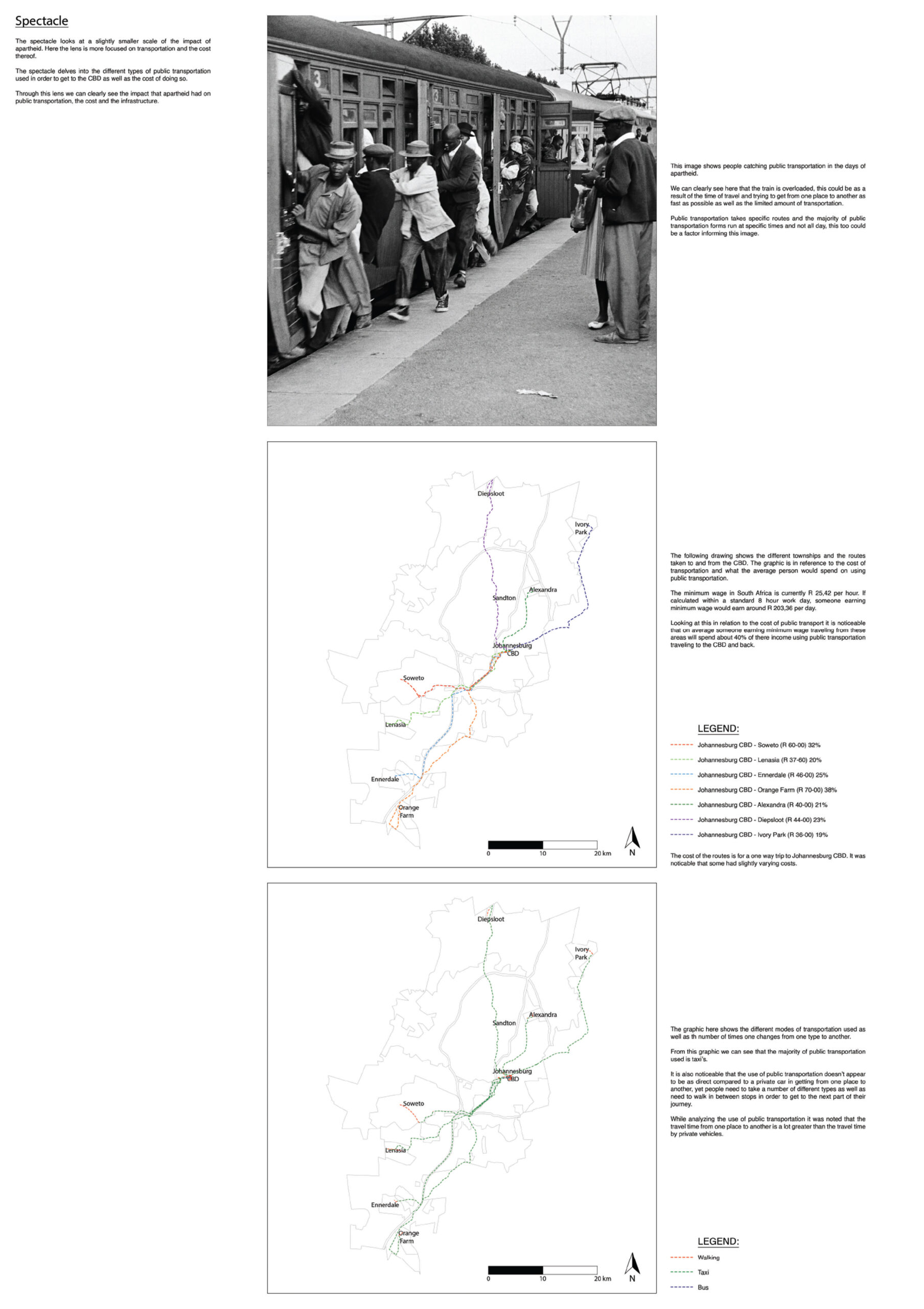
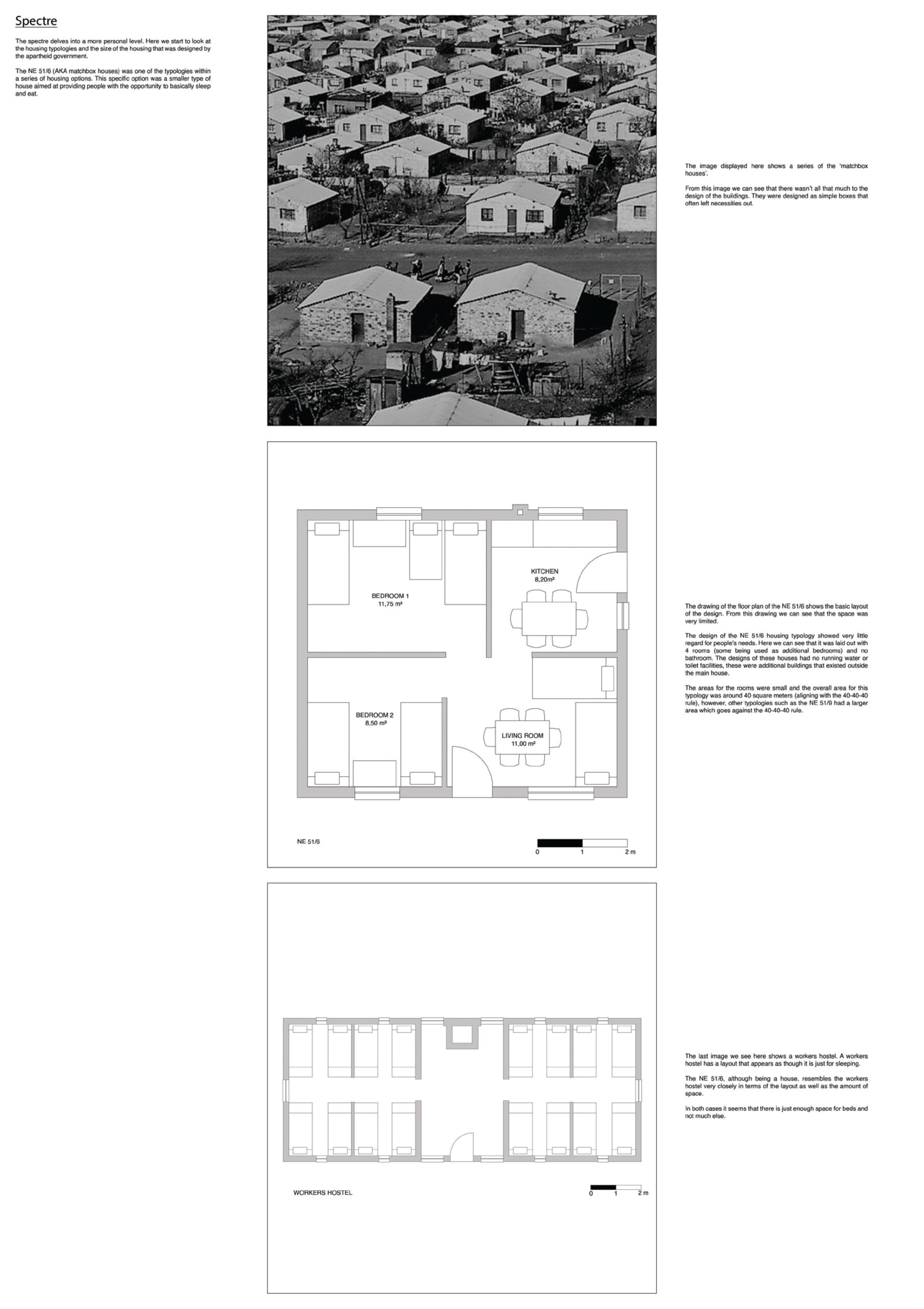
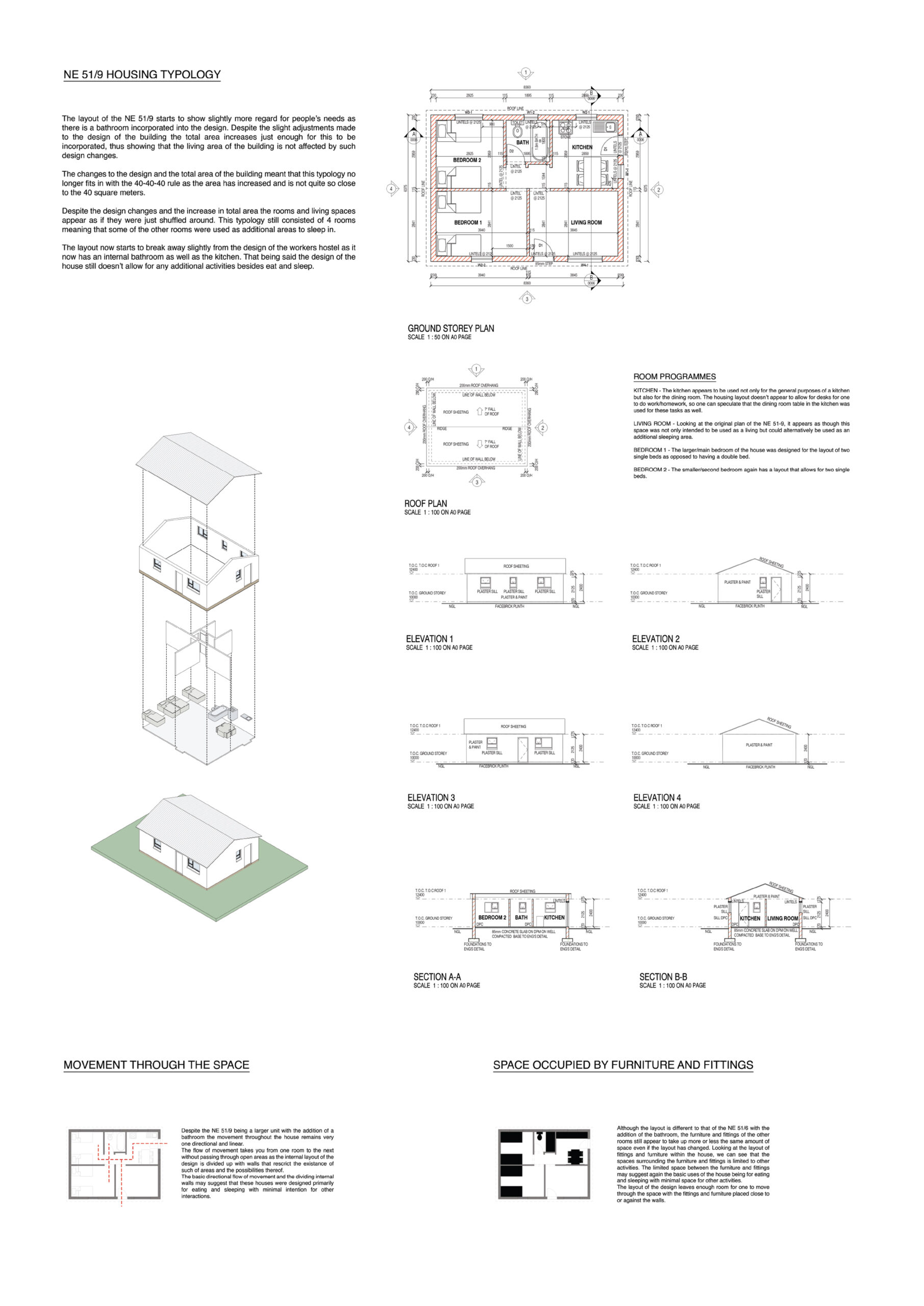
This design project aims to explore the history of low-cost housing in South Africa, and its long-lasting effects from the apartheid regime. The project employs both qualitative and quantitative analyses to examine the current state of low-cost housing and explores possibilities for the future. It specifically focuses on the spatial planning and housing typologies of the apartheid period, which result in the unofficial 40-40-40 rule. This rule mandates non-white citizens to reside 40 kilometers outside city centers, occupy houses of approximately 40 square meters, and allocate 40% of their income to public transportation.
Leaning on the principles of New Urbanism which seeks to reduce the cities’ dependence on transportation and enhance walkability within communities. The research utilizes spatial analysis to identify potential social and political issues to offer spatial responses for a more equitable future. Qualitative survey methods are employed to comprehend attitudes, perceptions, and behaviors related to apartheid housing typologies. Analysis of historical photographs, sketching and drawing play pivotal roles in understanding the research and acquired knowledge, and in creating models for curation and exploration.
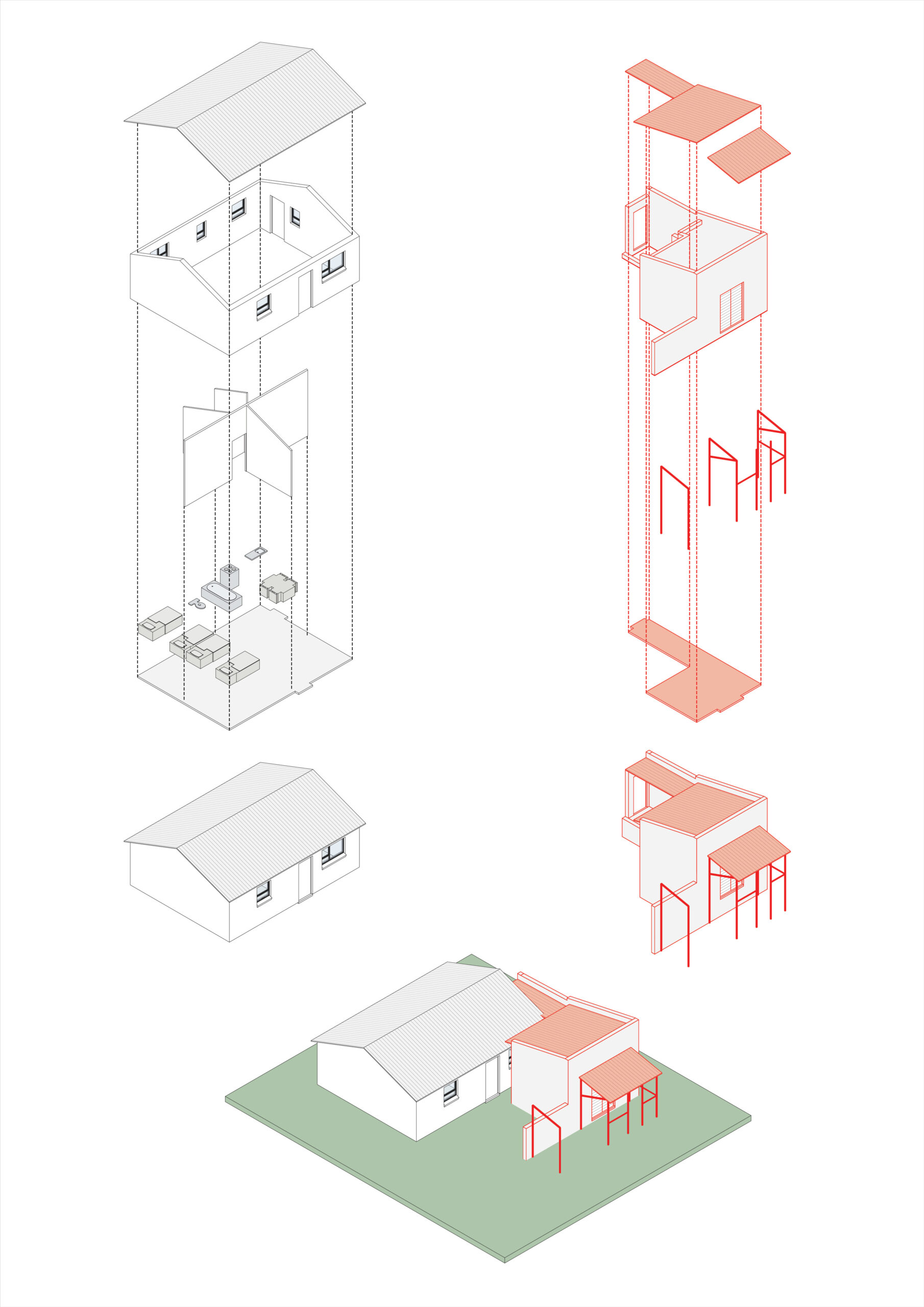
The project’s objective is to reimagine low-cost housing and enable future developments to make informed decisions that deviate from the unofficial 40-40-40 rule. The research primarily centers in and around Johannesburg, specifically the township of Soweto, established during the apartheid era to house non-white citizens. The design proposal also considers socio-economic aspects and how these changes align with the principles of New Urbanism.