The Draped Garden:
Sacred forms in Hindu dance and architecture
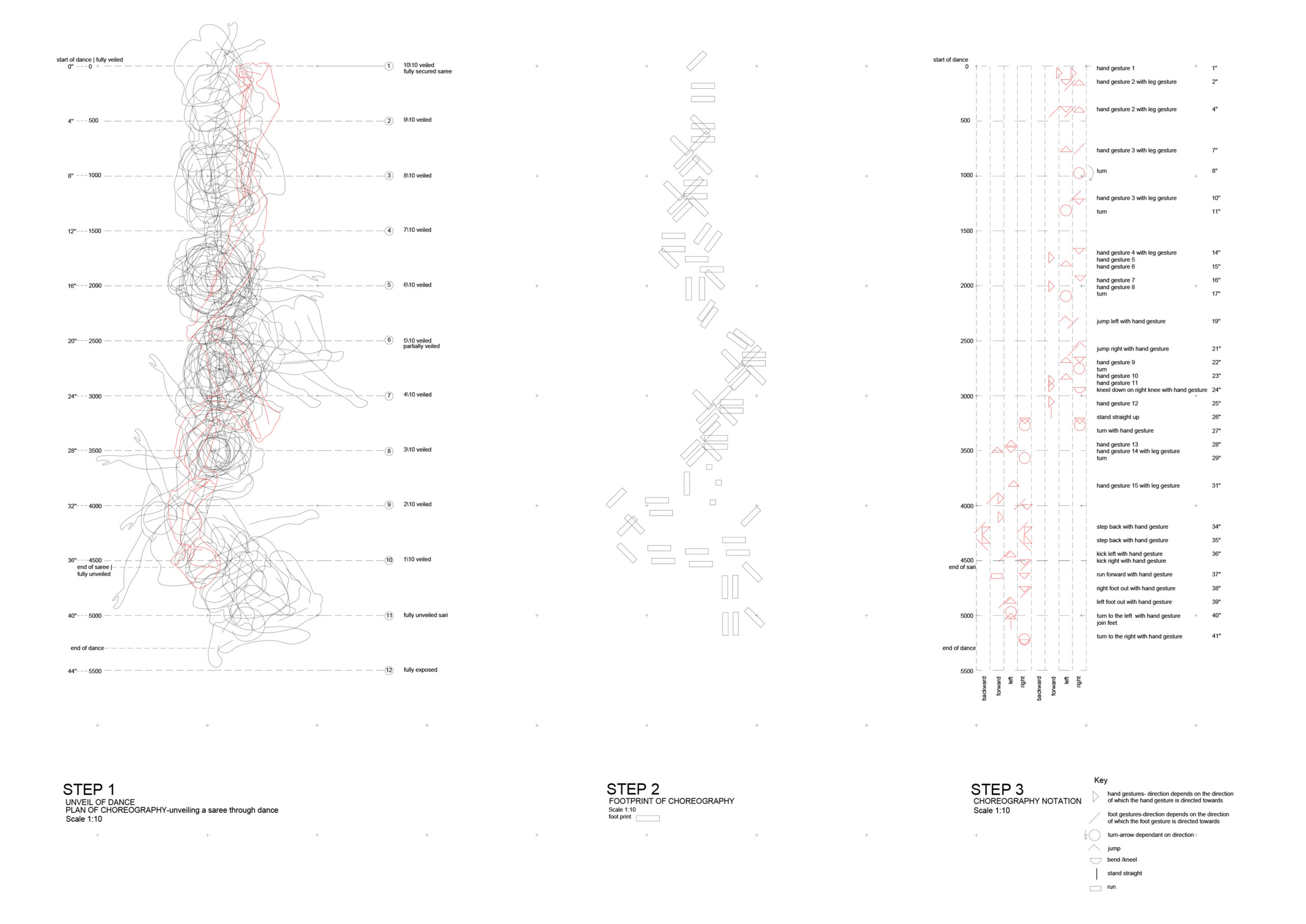
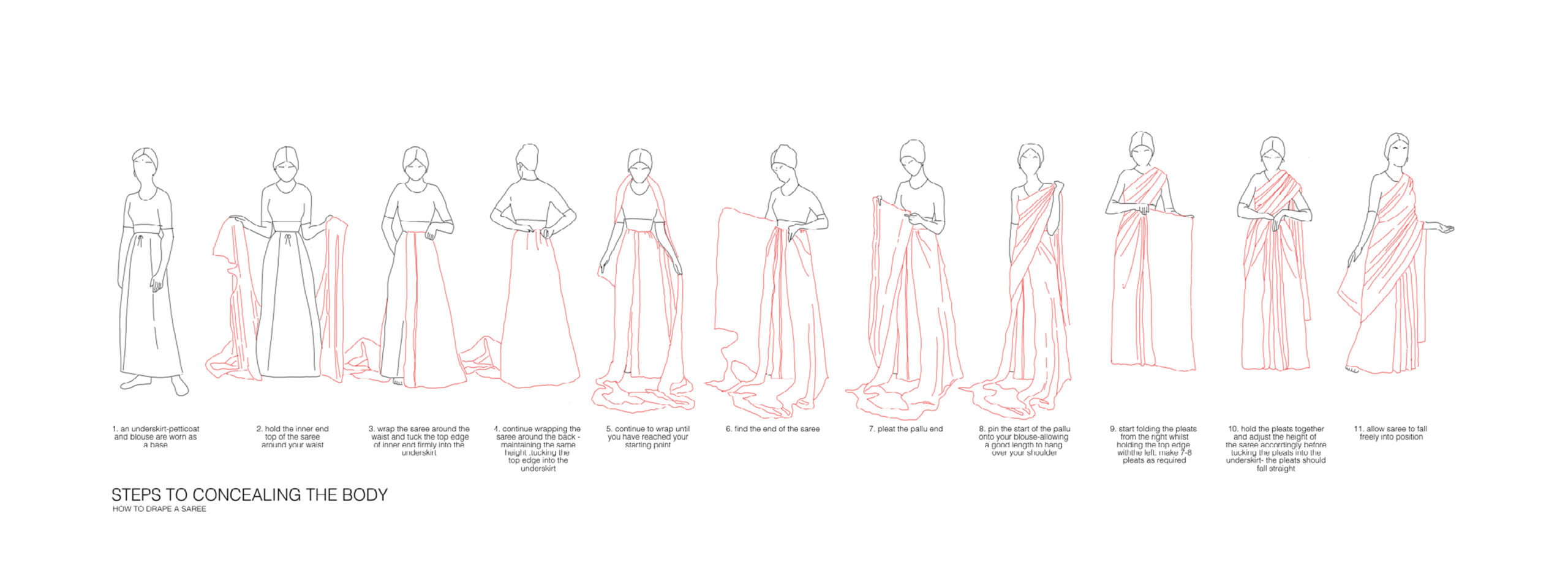
This work explores the evolution of sacred Hindu dance, specifically Kathak, from the perspective of a Hindu Gujarati woman, revealing the historical disadvantages and stigmatization faced by Hindu women. Dance, once a traditional worship practice, has transformed into an everyday norm. This shift significantly impacts perceptions of “the Hindu woman” and her body, mirroring changing societal attitudes towards women in Hindu culture. The traditional influence of concealment and revelation, often resulting in the imperative to “keep her hidden,” has shaped Hindu women’s lives. The proposal is envisioned as a garden in Johannesburg for Hindu Gujarati women, providing a judgment-free space free from patriarchal views and stigmas.
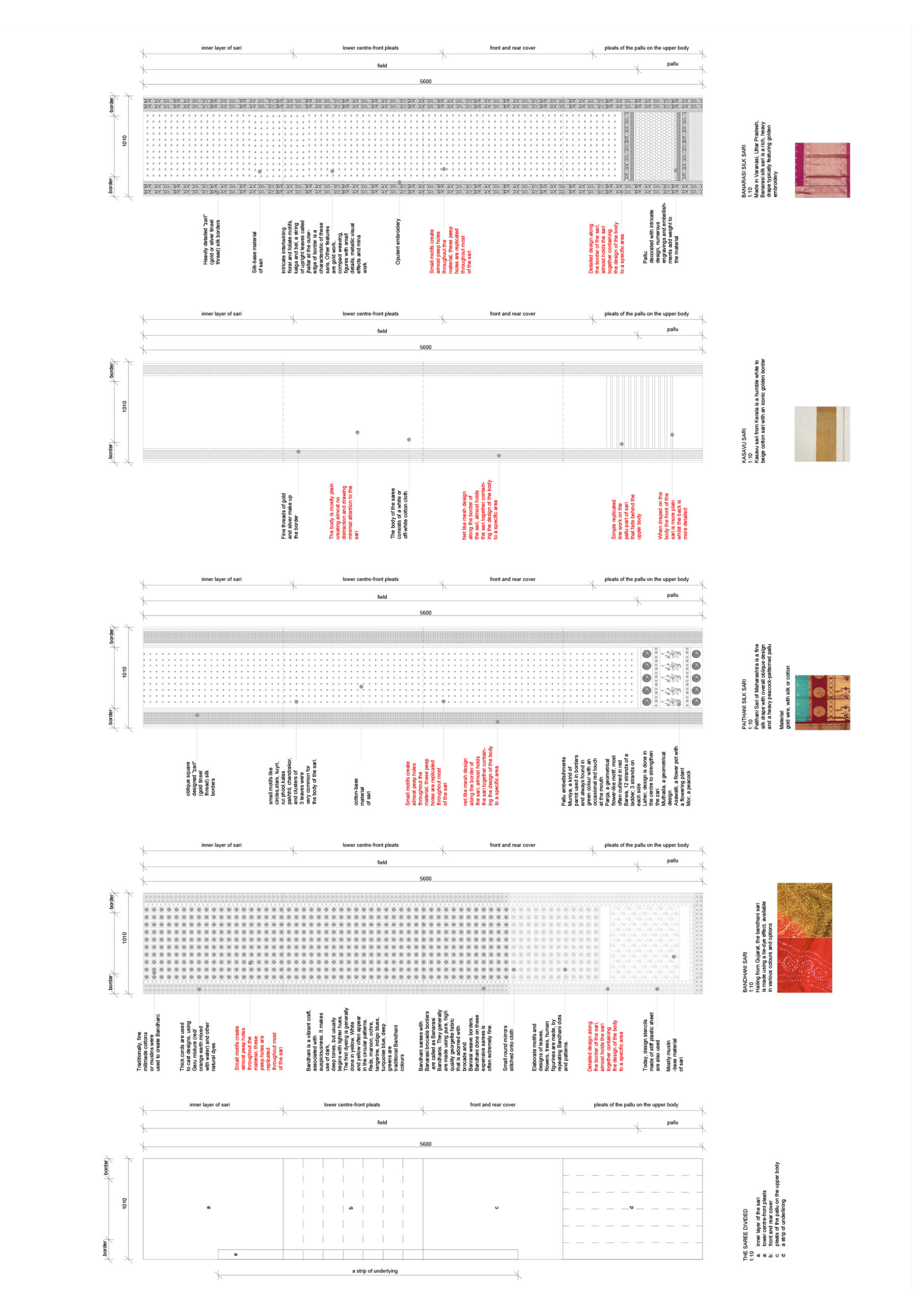
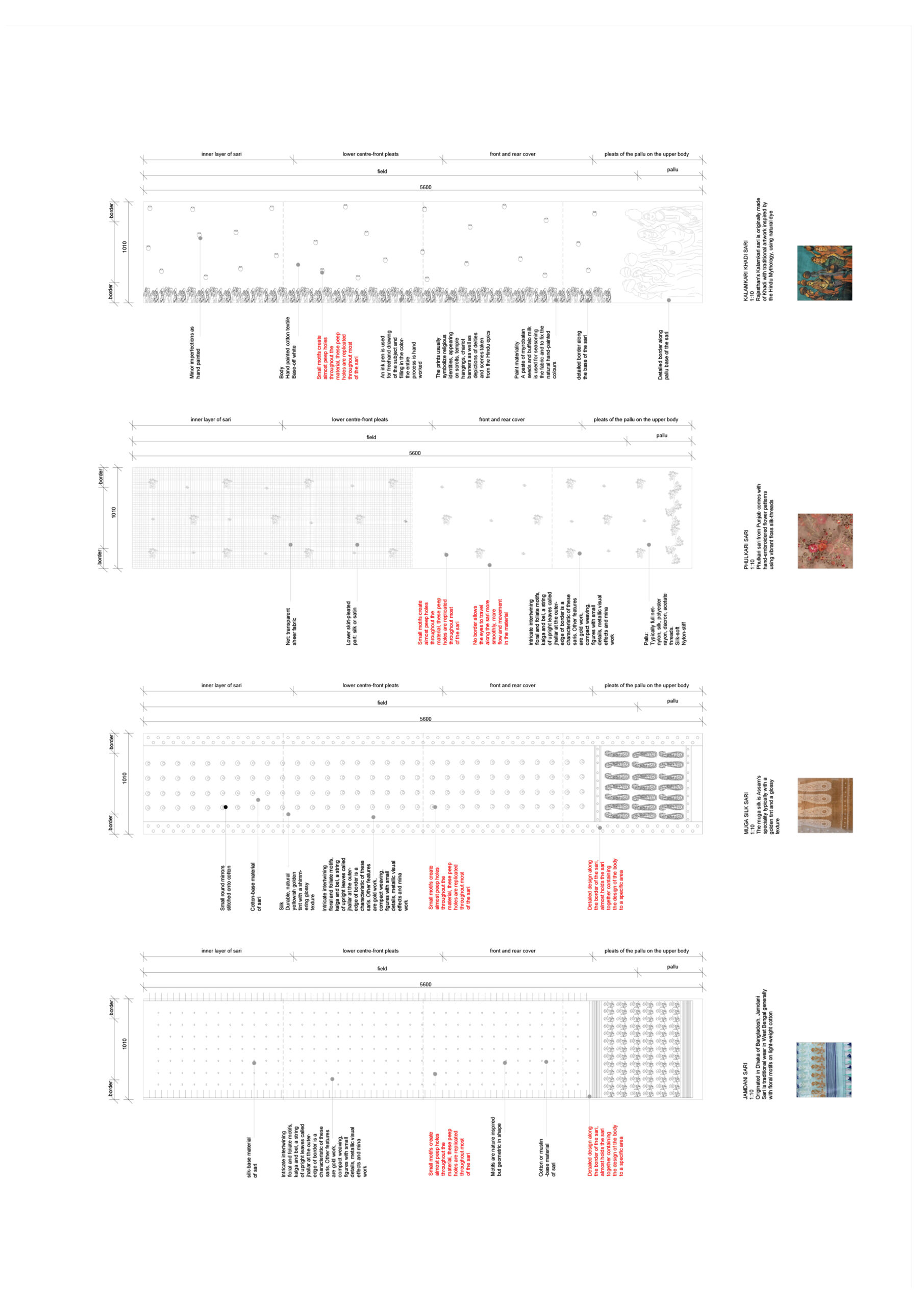
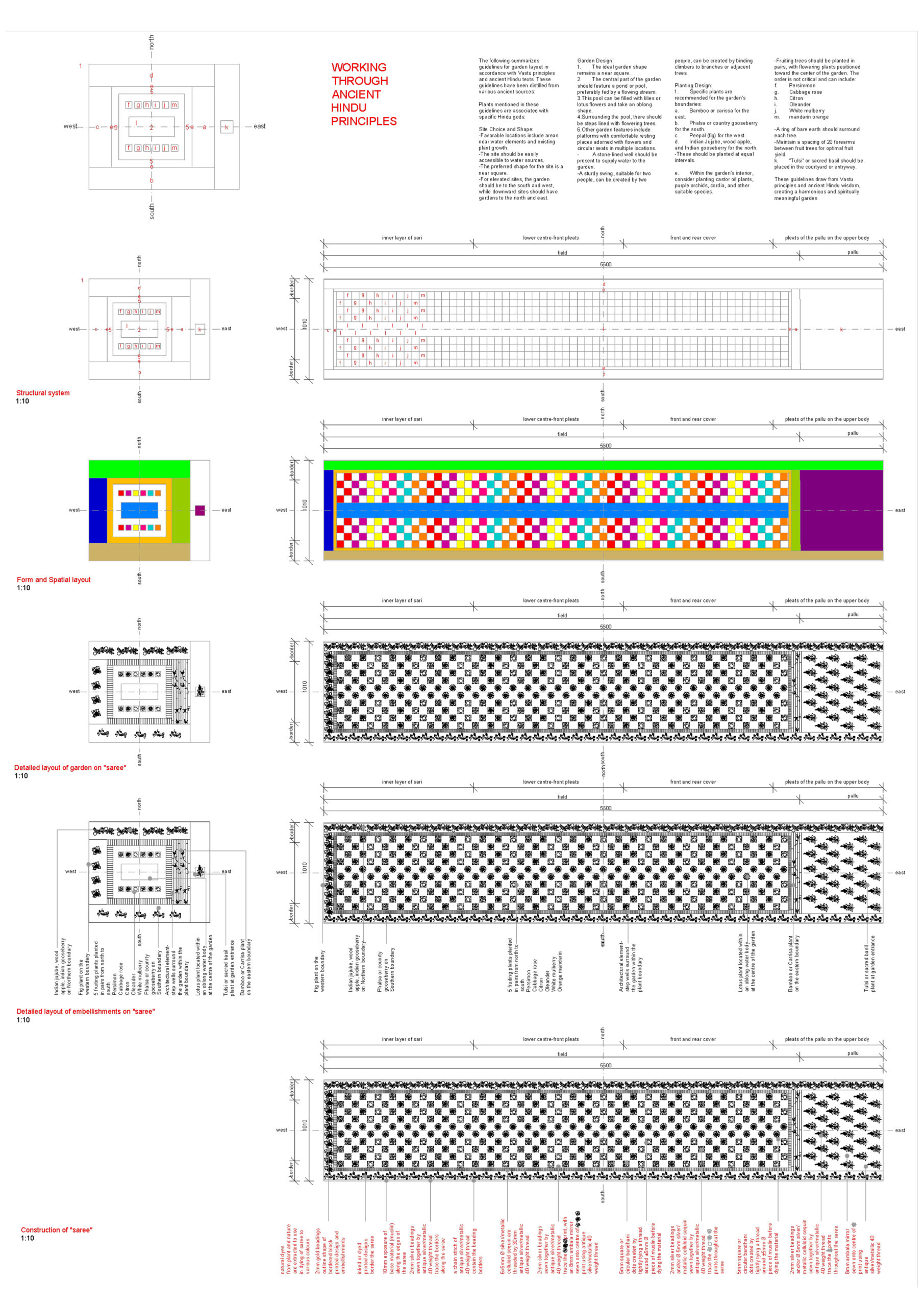
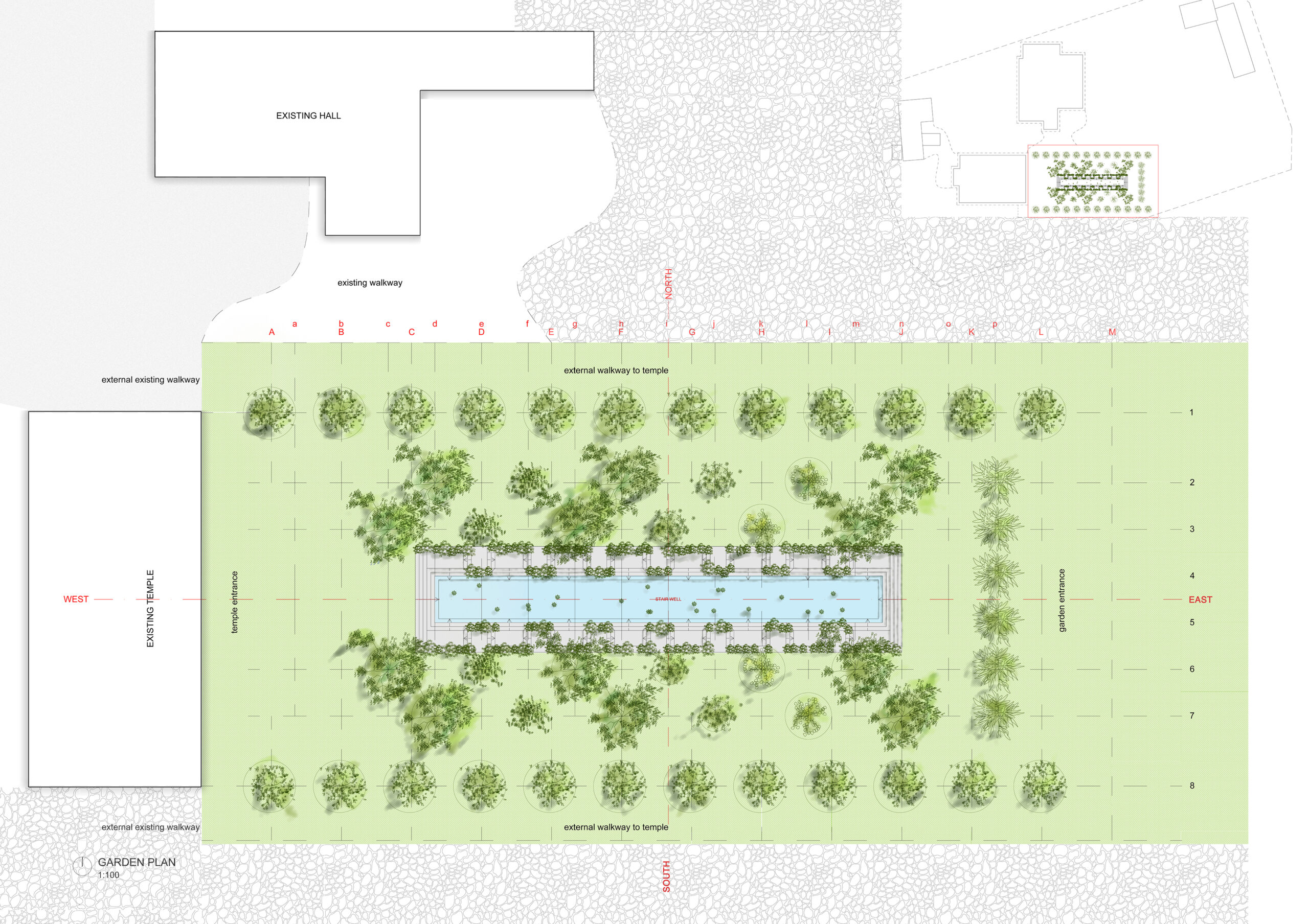
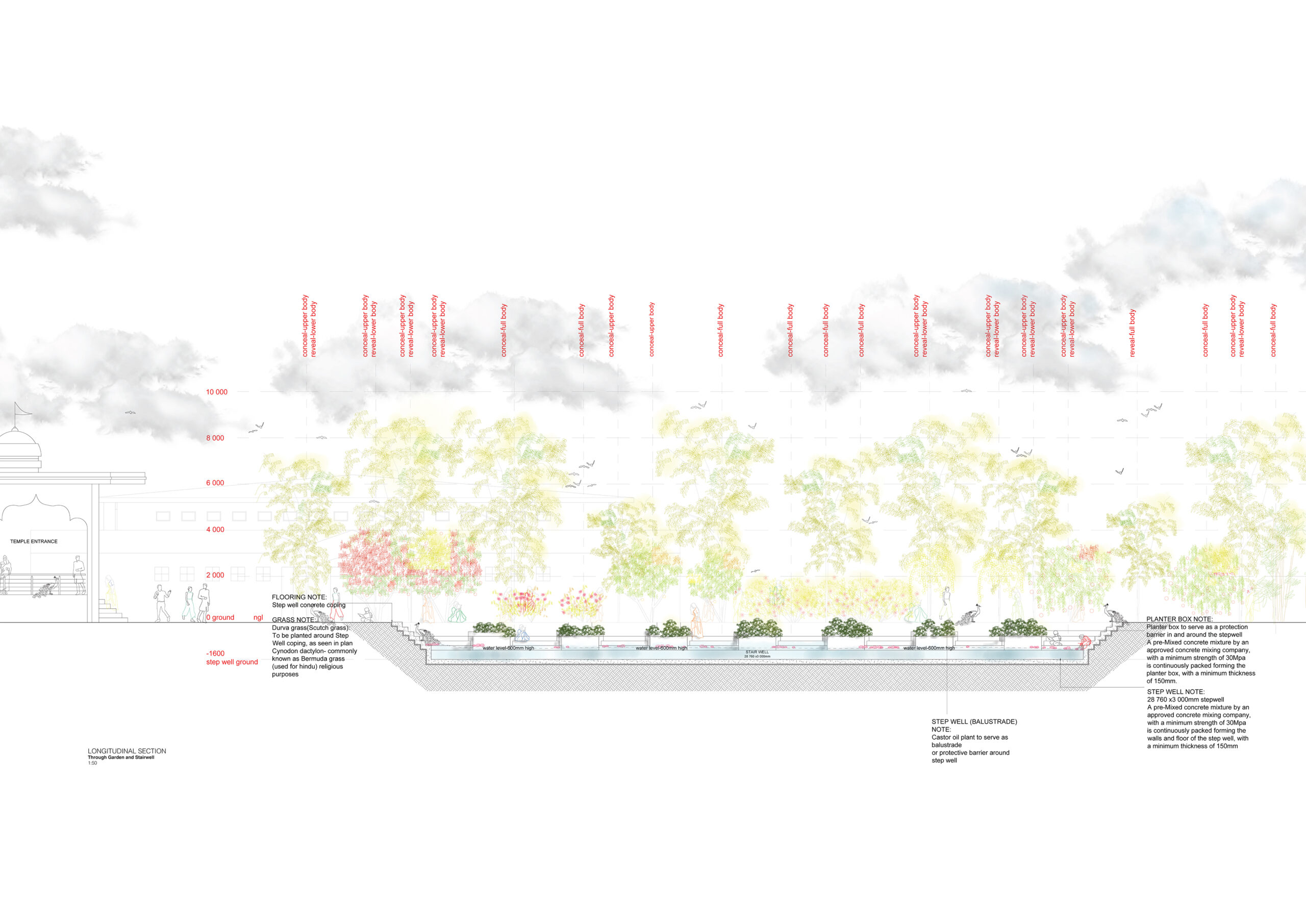
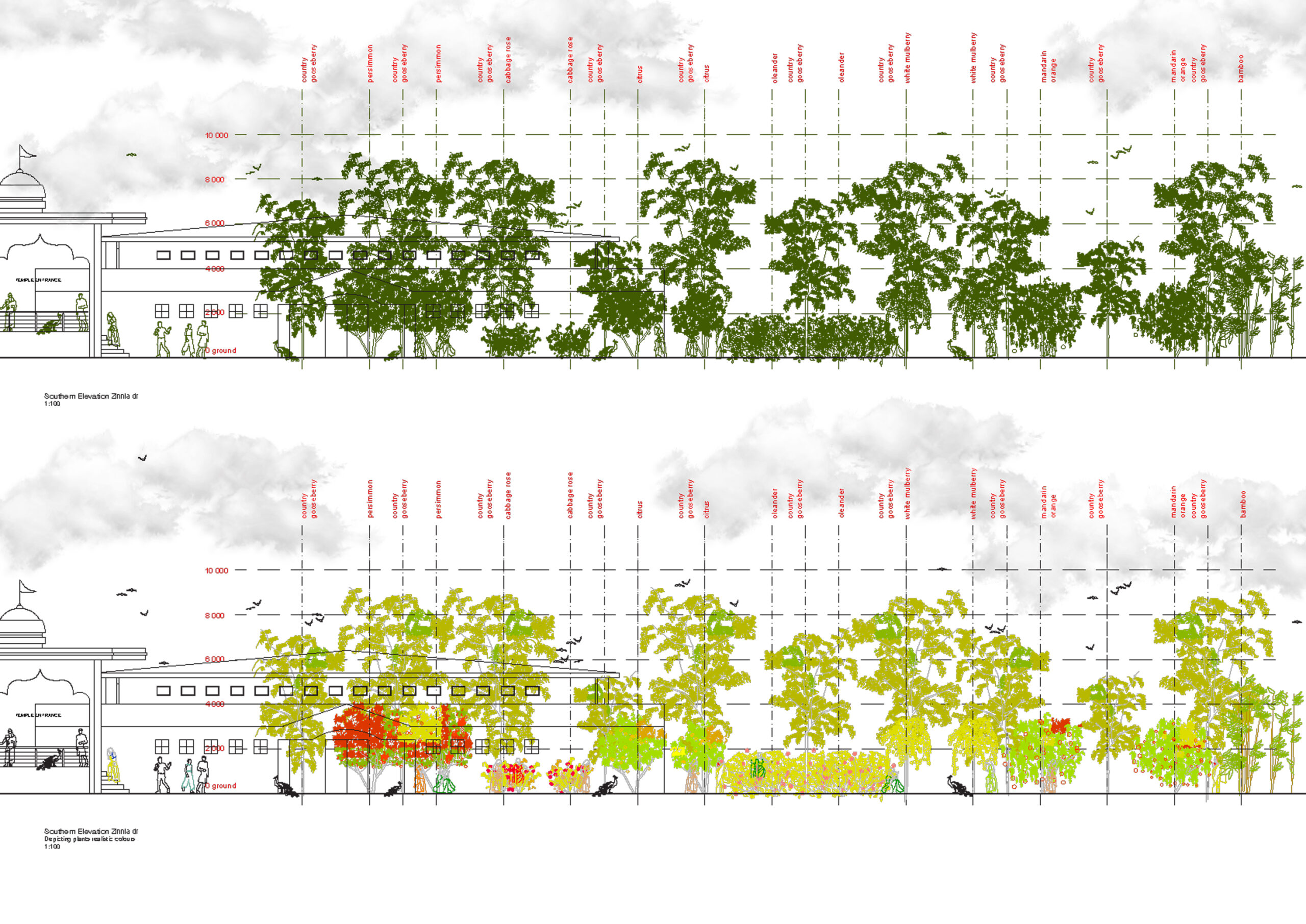
The saree emerges as a key element for Hindu Gujarati women, symbolizing concealment and revelation. Adorned with nature-inspired elements, the saree visually represents its originating landscape. A proposed saree serves as a guide, depicting a plan or map of the envisioned garden. Through intricate embroidery and plant-inspired embellishments strategically placed across its fabric, the saree not only symbolizes concealing and protecting the body but also leads one skillfully through the garden. This envisioned garden aims to be a sanctuary, housing sacred plants essential for daily rituals within a Hindu household.
Located within a Hindu temple in Johannesburg, the garden is accessible to diasporic Hindu women and the broader community. Drawing inspiration from ancient Hindu texts, including the “Ramayana” and “Mahabharata,” and various Vedic scriptures, the garden embodies design principles adaptable to different environments. These texts offer insights into site selection, layout, planting design, and associations of plants. Despite the historical focus on northern India, the principles can be adapted to diverse climates and soils. Thus, the saree/garden becomes a living representation of ancient Hindu Garden concepts, providing a timeless sanctuary for women in a contemporary setting.