[Po]Laerates of a Diaspora:
Excavations of Hindu Indian diasporic landscape(s)
This project draws inspiration from myths and storytelling to explore the assimilation of sacred religious practices in the context of a Hindu Indian diaspora. This investigation delves into the significance of rituals, pilgrimages, art, and dance as essential components, providing avenues for spiritual transcendence, especially crucial in the dislocated reality of the Hindu Indian diaspora. These practices become bridges to a spiritual realm that might otherwise be elusive in the diasporic experience.
Centered around the themes of Architecture as Myth, the project extends its focus to the examination of myths, practices, and religious connotations associated with Gold, Water, and Myth in the specific context of Johannesburg. This serves as a critique of our relentless pursuit of “Gold” and the global competition for finite resources. The project’s strength lies not merely in its physical manifestation but in the transformative ideologies linked to the typologies of Temples and Gold Mines, reshaping our perceptions of these spaces and the city itself.
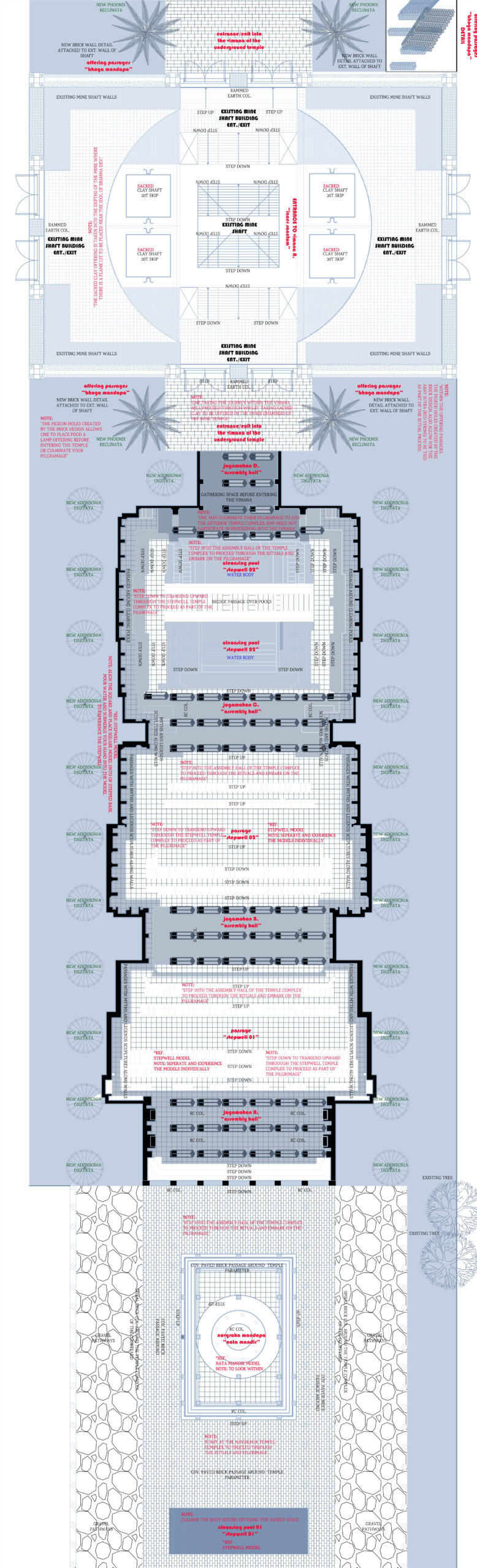
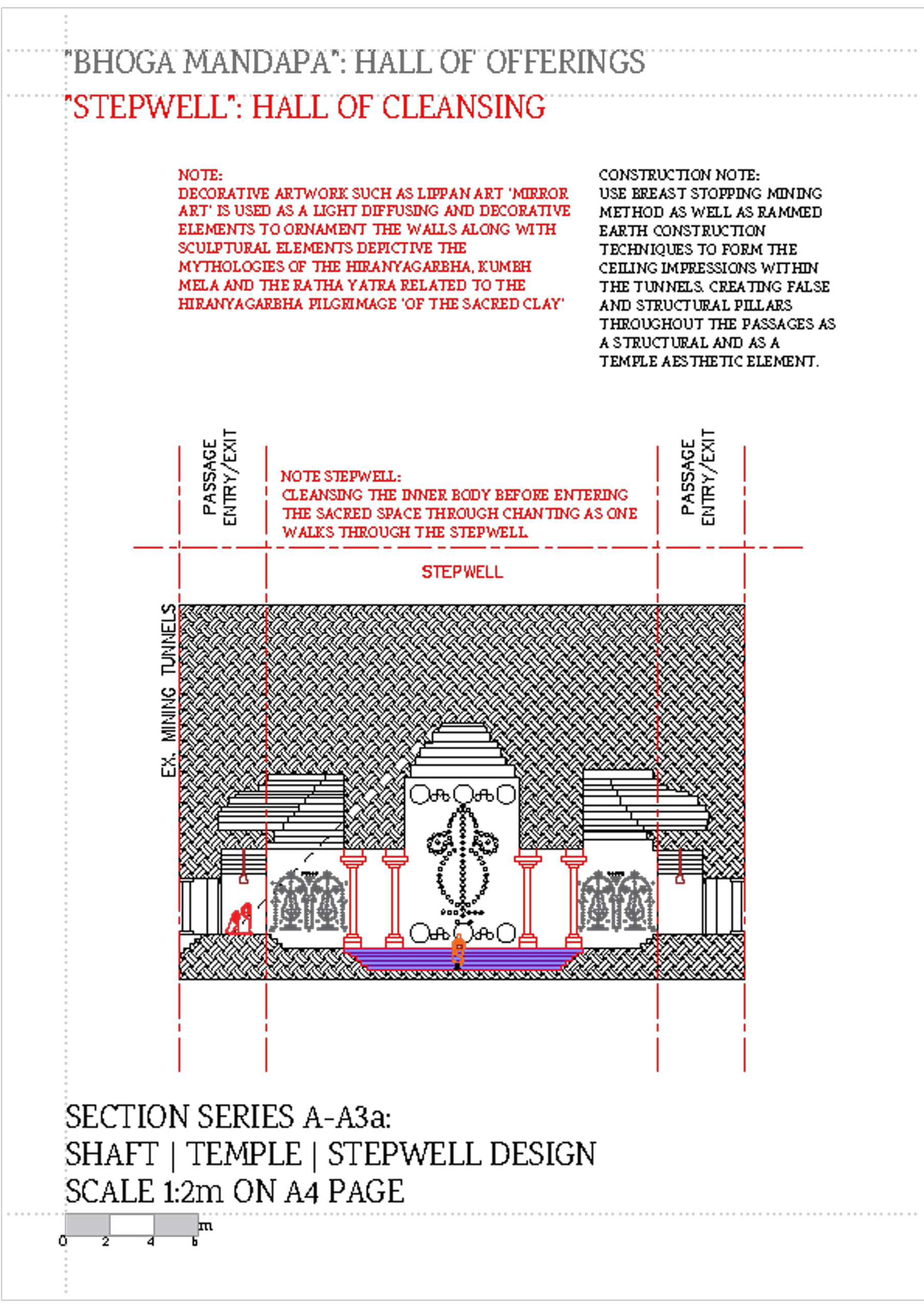
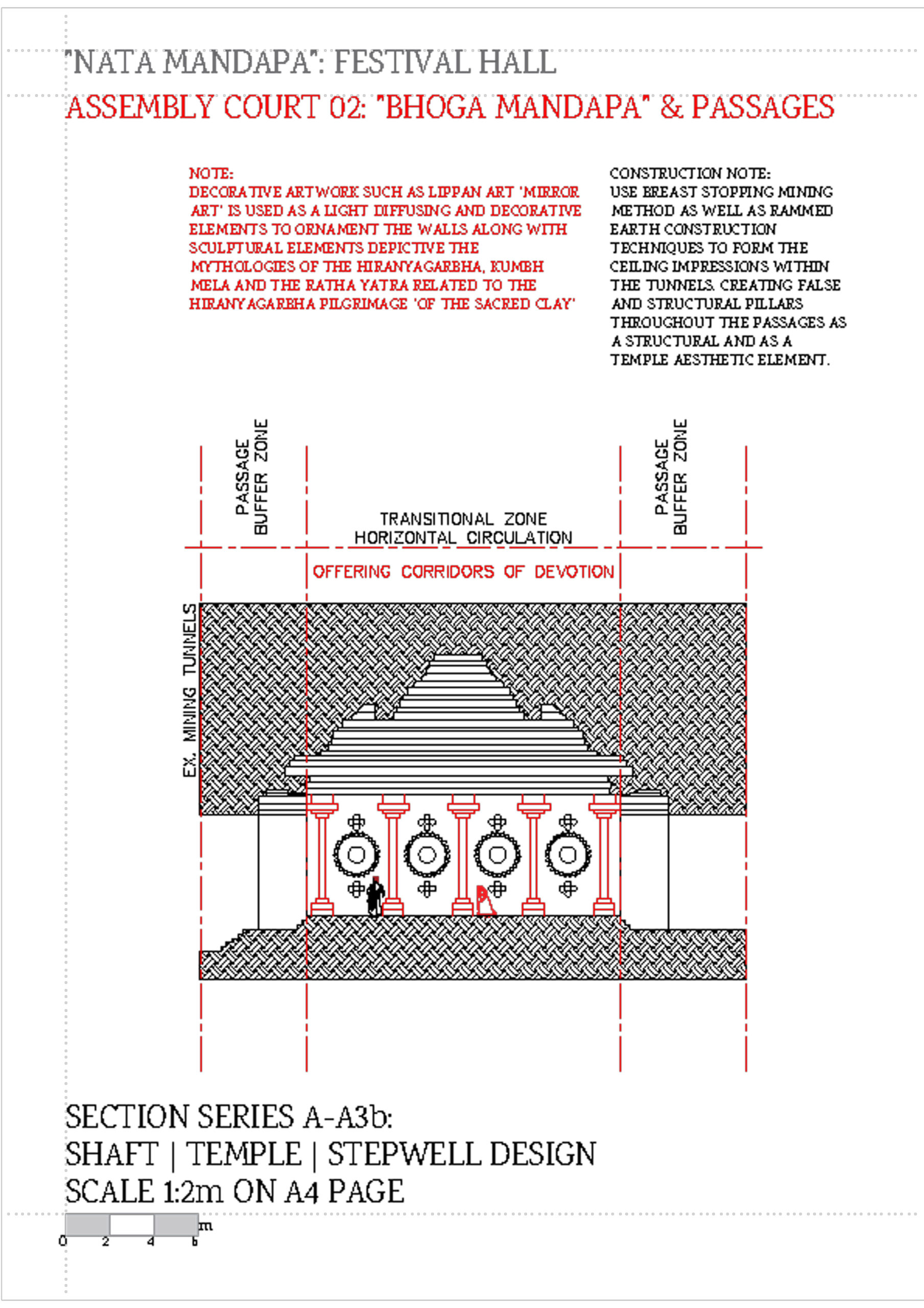
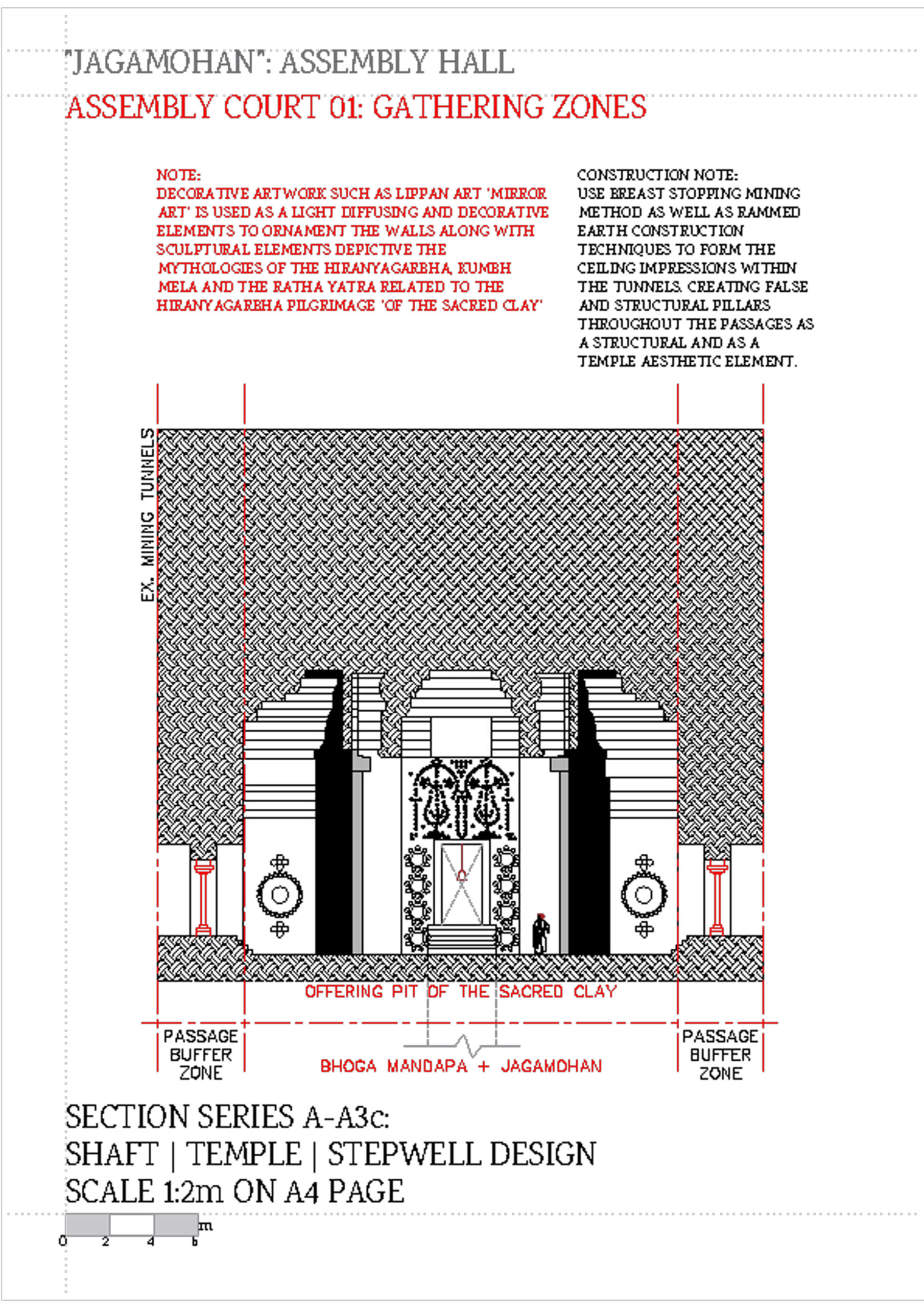
The broader context within the Unit’s framework envisions a future African City that transcends conventional notions of physical architecture. It challenges ingrained colonial ideas about growth, development, and success, prompting a reevaluation of our relationship with cities and their creation. While initially conceptual, the project strives to translate these abstract notions into architectural form. This the context of this project, an inverted temple is manifested in the terraformed landscapes of the gold mine that are continuously excavated in search of more. Through spiritual cleansing and practice, we re-evaluate our relationship to our resources and the origins of Johannesburg that surface the discovery of gold, slavery, and colonization.
1 [Po]laerates – The title of the Major Design Project infuses two words to describe the cultural displacement of a diaspora through comparative research. The name “Laertes” is a boy’s name meaning “gatherer of the people”. This serves reference to the rituals, and events specifically contextualised by pilgrimages. Laertes is also in reference to the character in Shakespeare’s Hamlet. His character is defined as being gullible, dishonourable, and paired with compulsive actions which can be seen being embodied by Mythologies captured by the Hindu Indian Diaspora and the notions of capitalism and social structures of the secular/sacred landscapes. The word “Polaris” refers to an axis. Geographically, it marks two opposite points, contexts, and/or locations of the Hindu Indian Diaspora from the East, India as the place of origin to the displaced landscape of the South, being South Africa.