The Fallen Capital:
Exploration of identity through the Khoisan protest
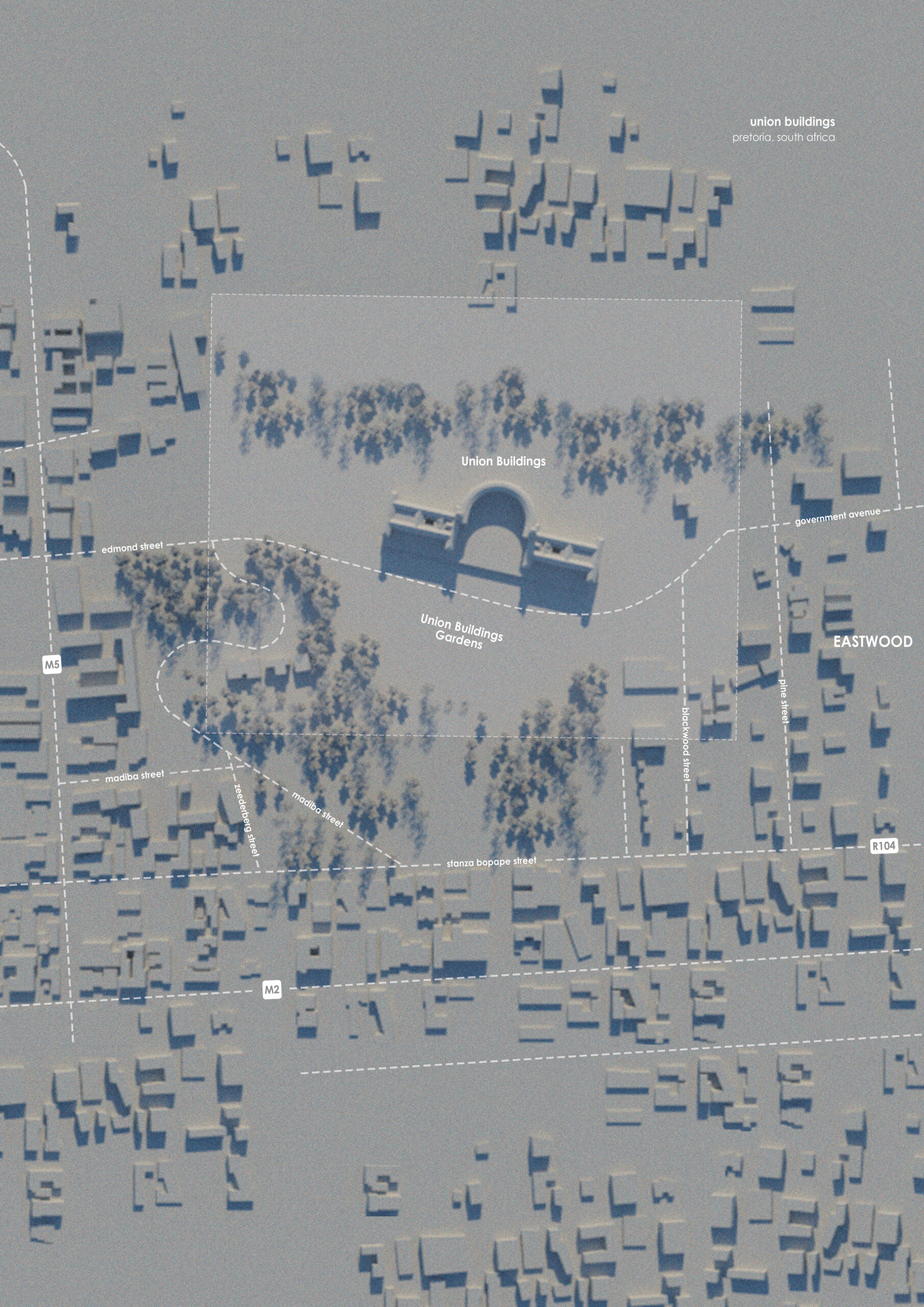
Set at the administrative capital of the country, Pretoria, where power and silenced narratives are unexplored. The project investigates power dynamics and the concept of identity reclamation through spatial transformation at the Union Buildings following the 5-year long protest of the Khoisan people in their quest for legislative recognition.
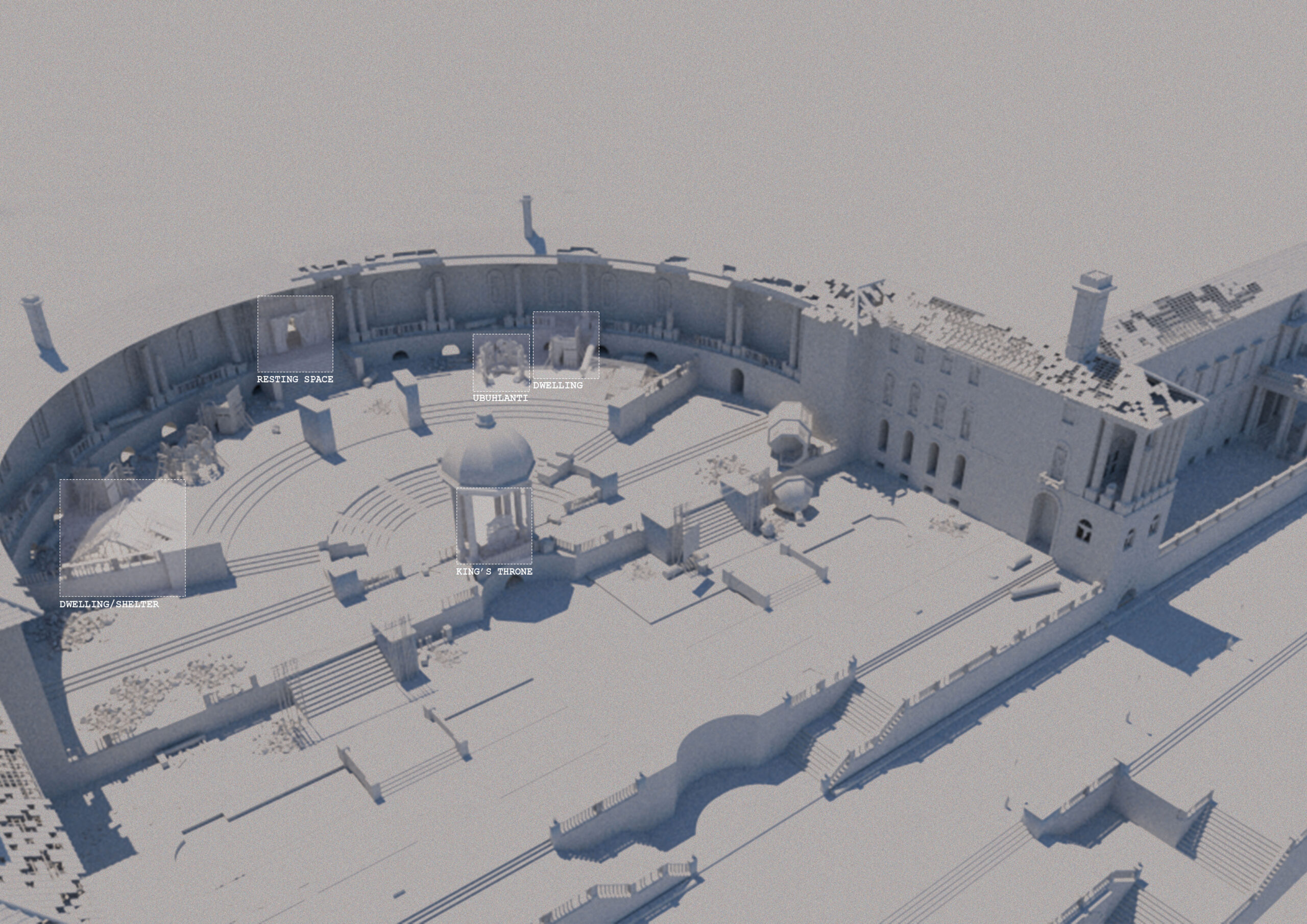
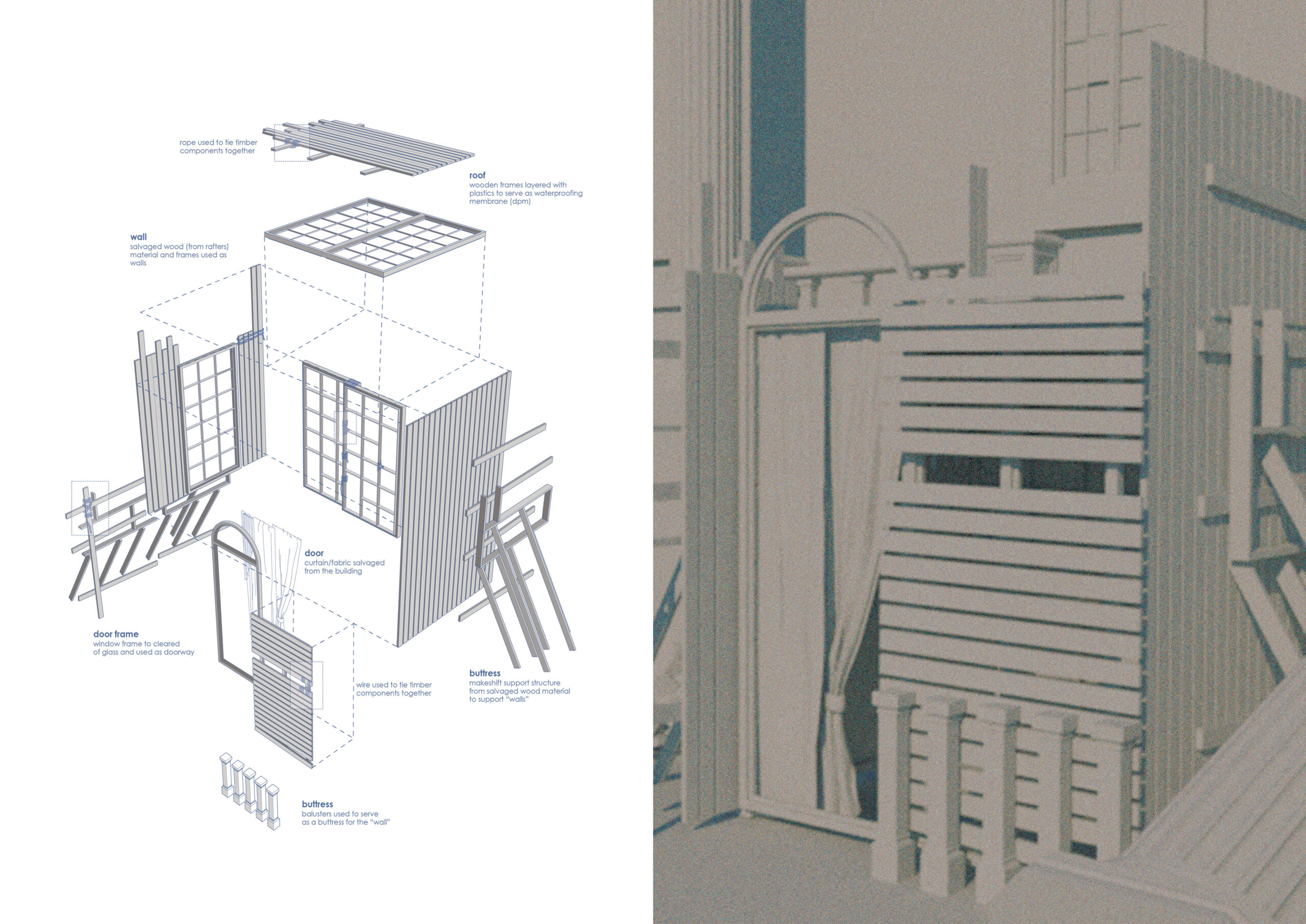
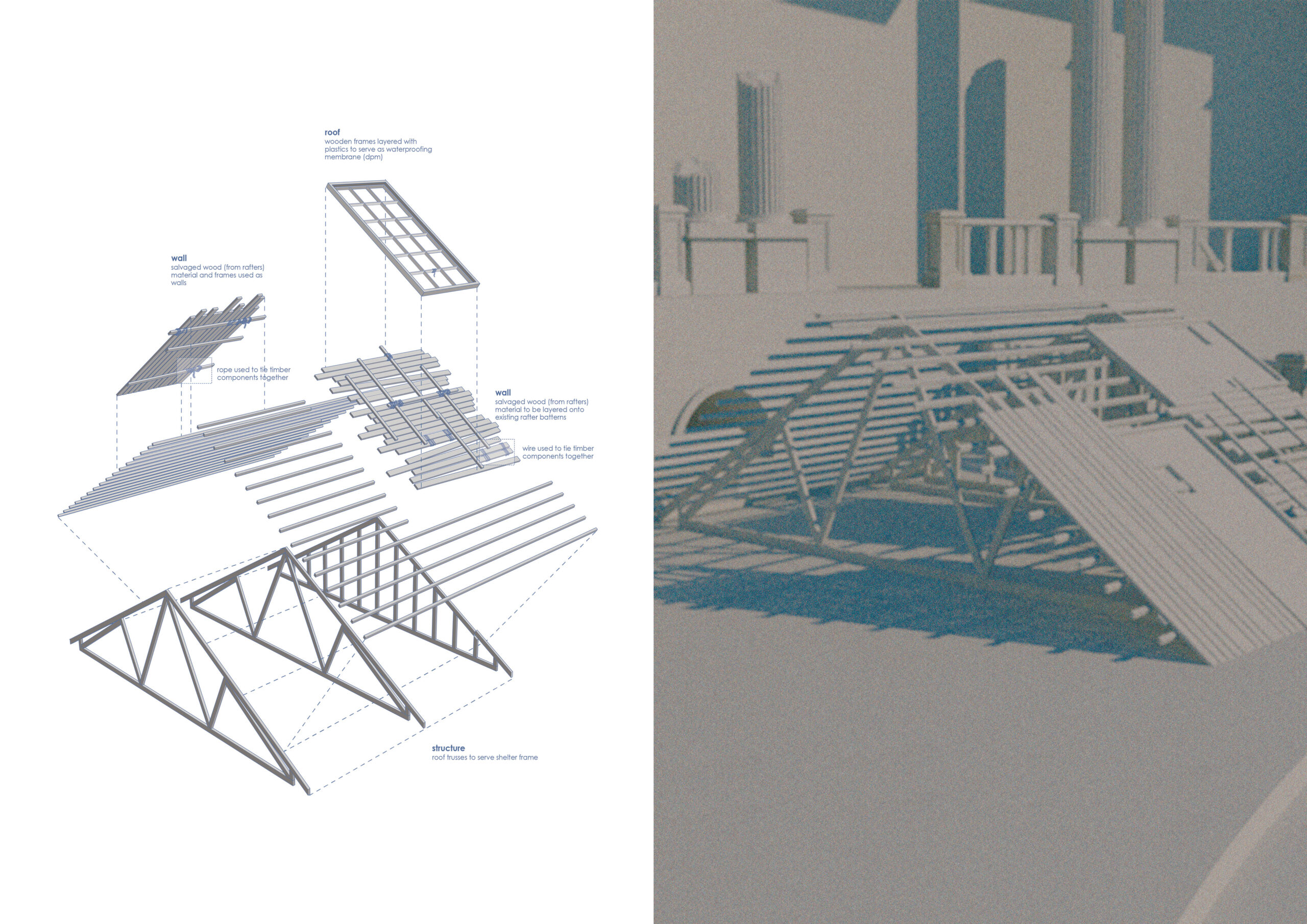
The project makes use of speculation, in consideration of the sensitivity of this subject, to stretch the explored idea of decolonizing this civic space, Union Buildings. It unfolds a tense response of political upheaval in which the Khoisan tribe overthrow the administrative seat as a means of challenging power and identity reclamation through the transformation of space.
The fabric of the project’s proposition is embedded in the theoretical framework of Lebbeus Woods’ work in his book: Radical Reconstruction. Woods (Woods 1997) discusses the connections between architecture and natural disasters, political upheaval, and war. Unpredictable and usually uncontrollable forces of both natural and human origin have harmed structures and the urban fabric, necessitating new methods for reconstruction. Such changes affect not only the physical buildings and areas, but also—and maybe more significantly—the modes of life they support
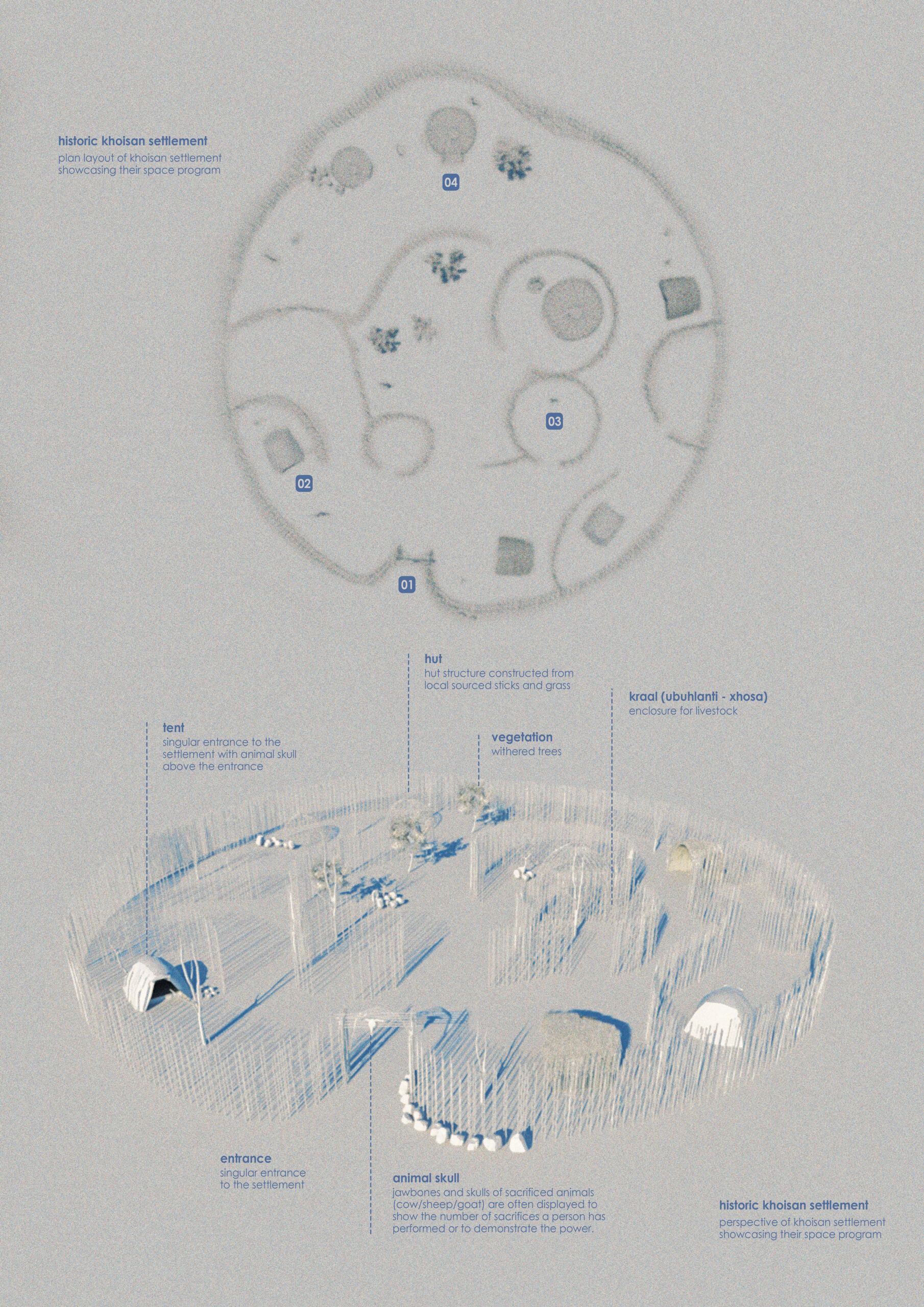
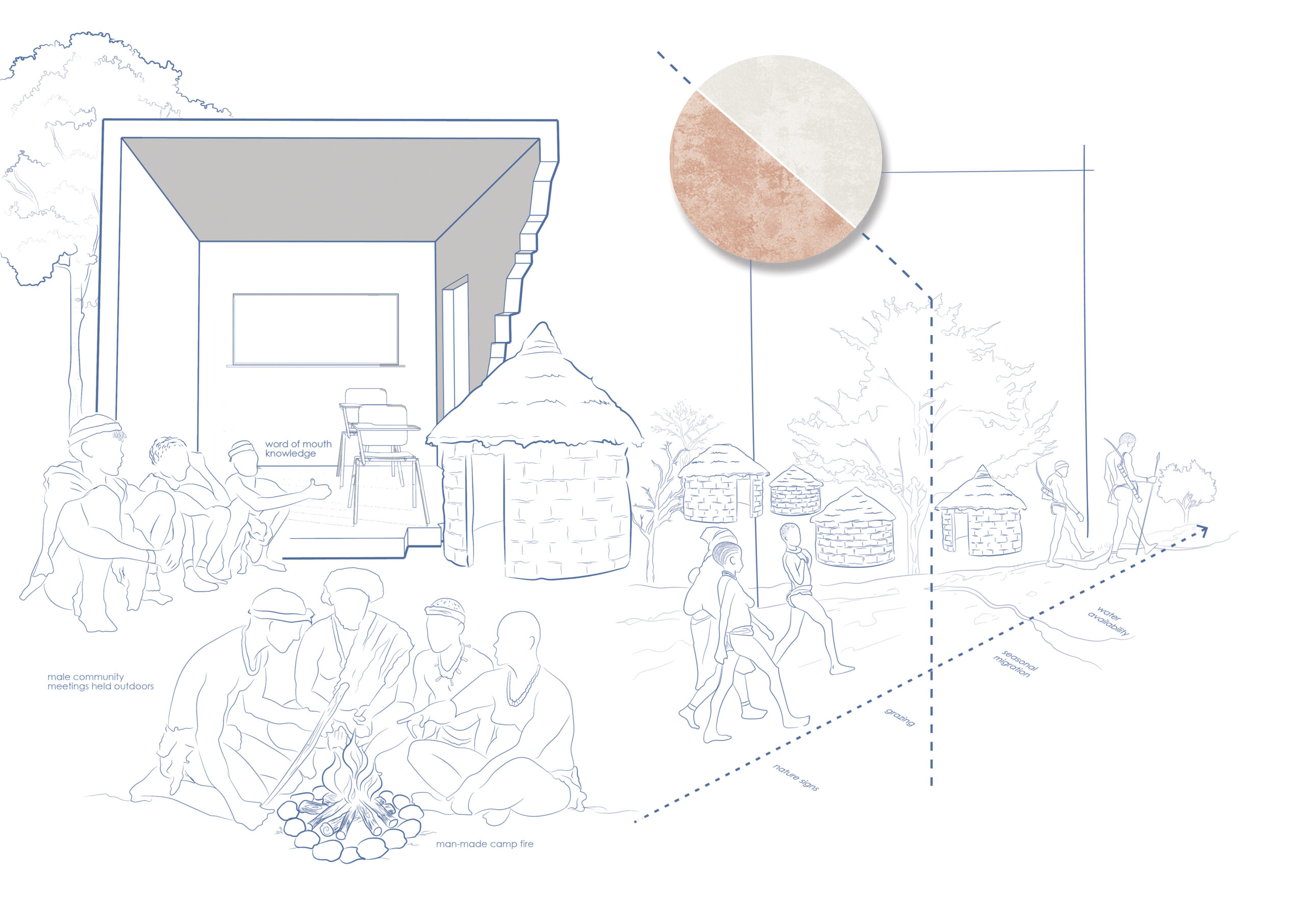
The project offers a thought-provoking exploration of architectural identity, power dynamics, and the potential for spatial transformation in the context of the Khoisan protest in Pretoria. This highly speculative approach envisions a reconstructed civic space by the Khoisan, utilizing indigenous construction skills as a means of challenging power and decolonizing spaces. The aim is not to erase the past but to explore possibilities for decolonized civic spaces in extreme circumstances.