The project, titled “Zama-Zama Dream-Building Tactics on Johannesburg’s Post-Mining Landscapes,” explores the urban transformation of Johannesburg from its origin as a city driven by the pursuit of material wealth, as discussed by Nuttall and Mbembe in “Elusive Metropolis.” The focus is on the Langlaagte site, the original gold discovery location, where topographical changes have been mapped in ten-year intervals since 1885. The research delves into the urban social theories shaping the city and narrows down to a connection between the site and the informal settlement, Zamimpilo.
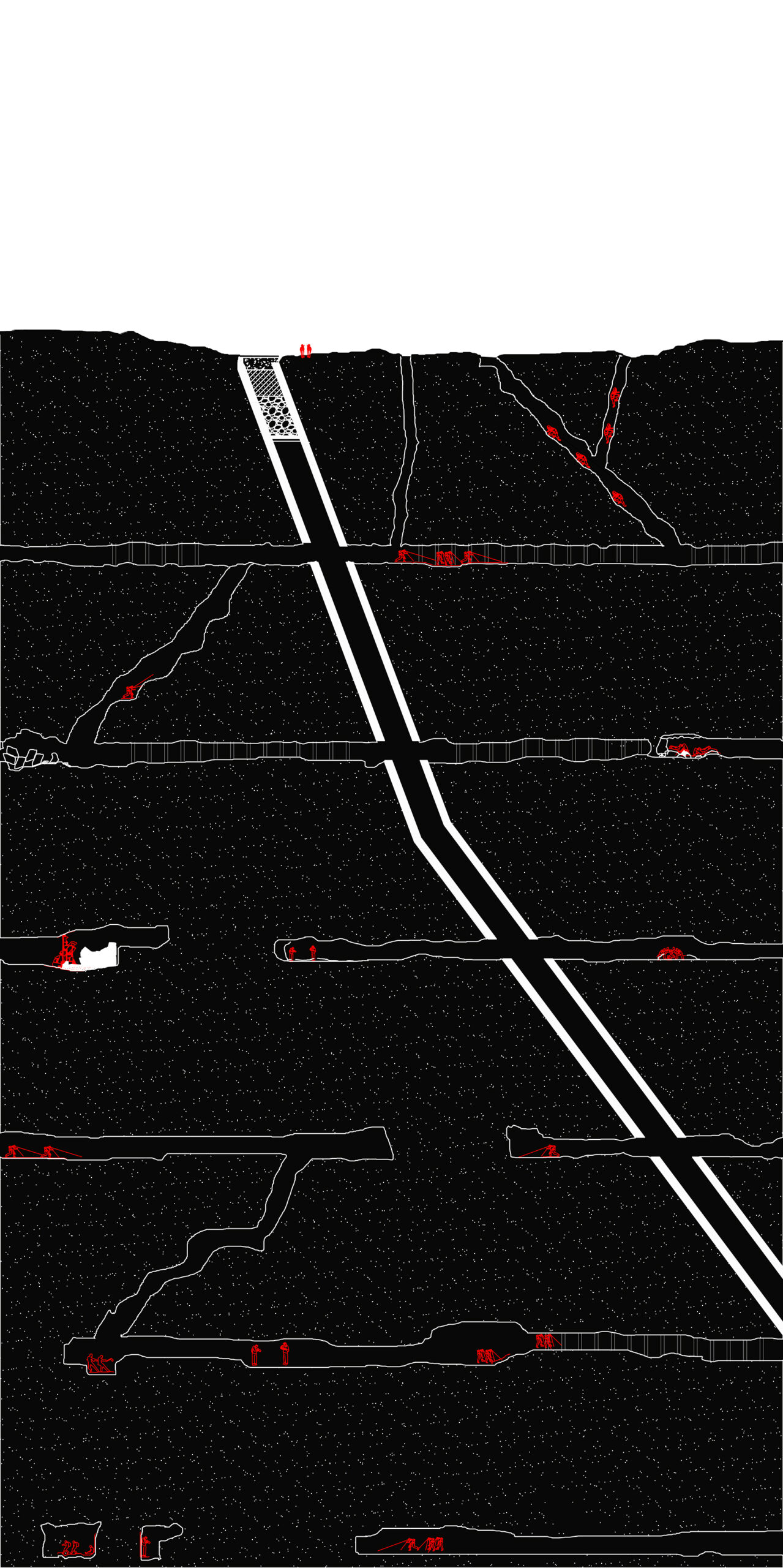
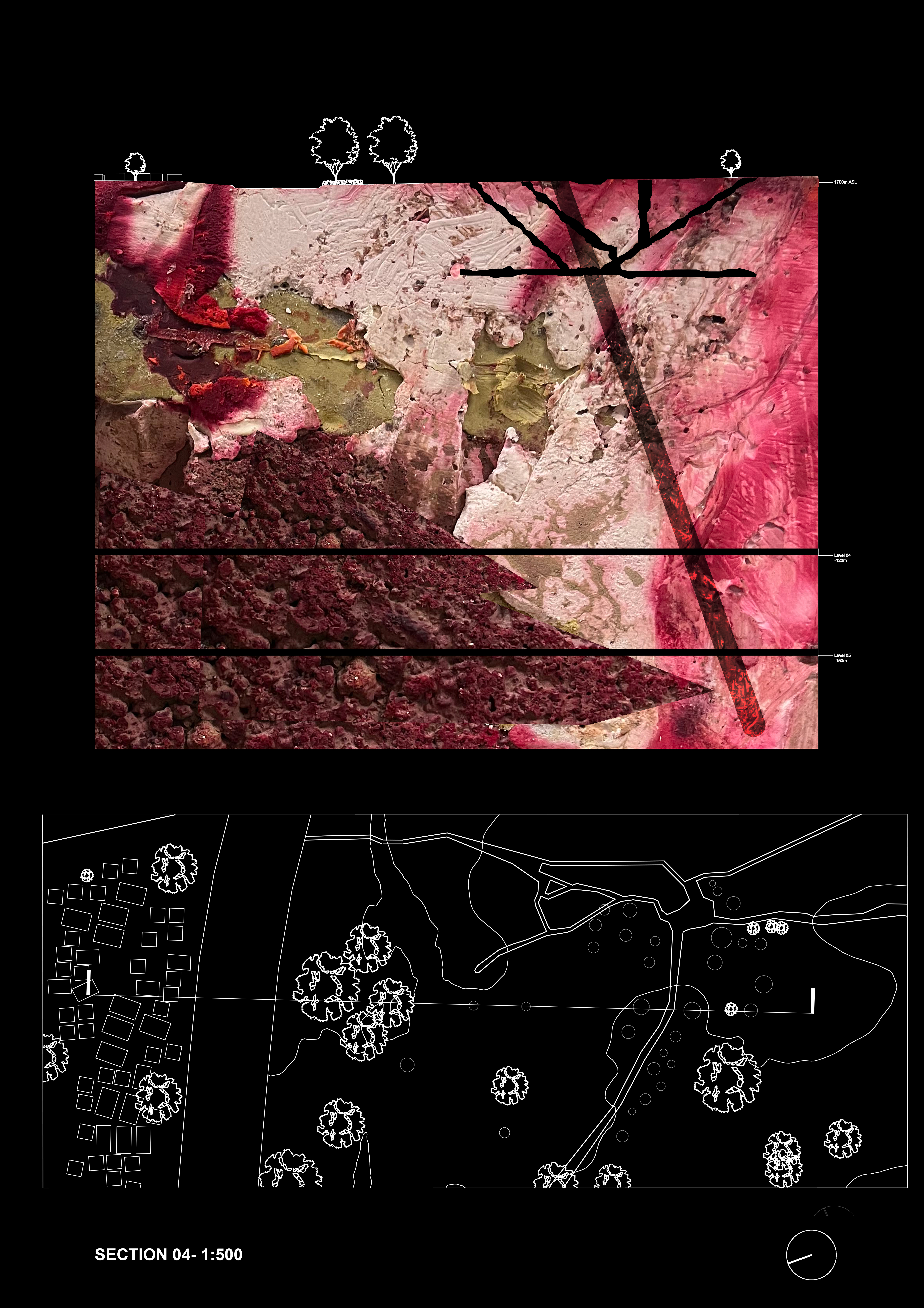
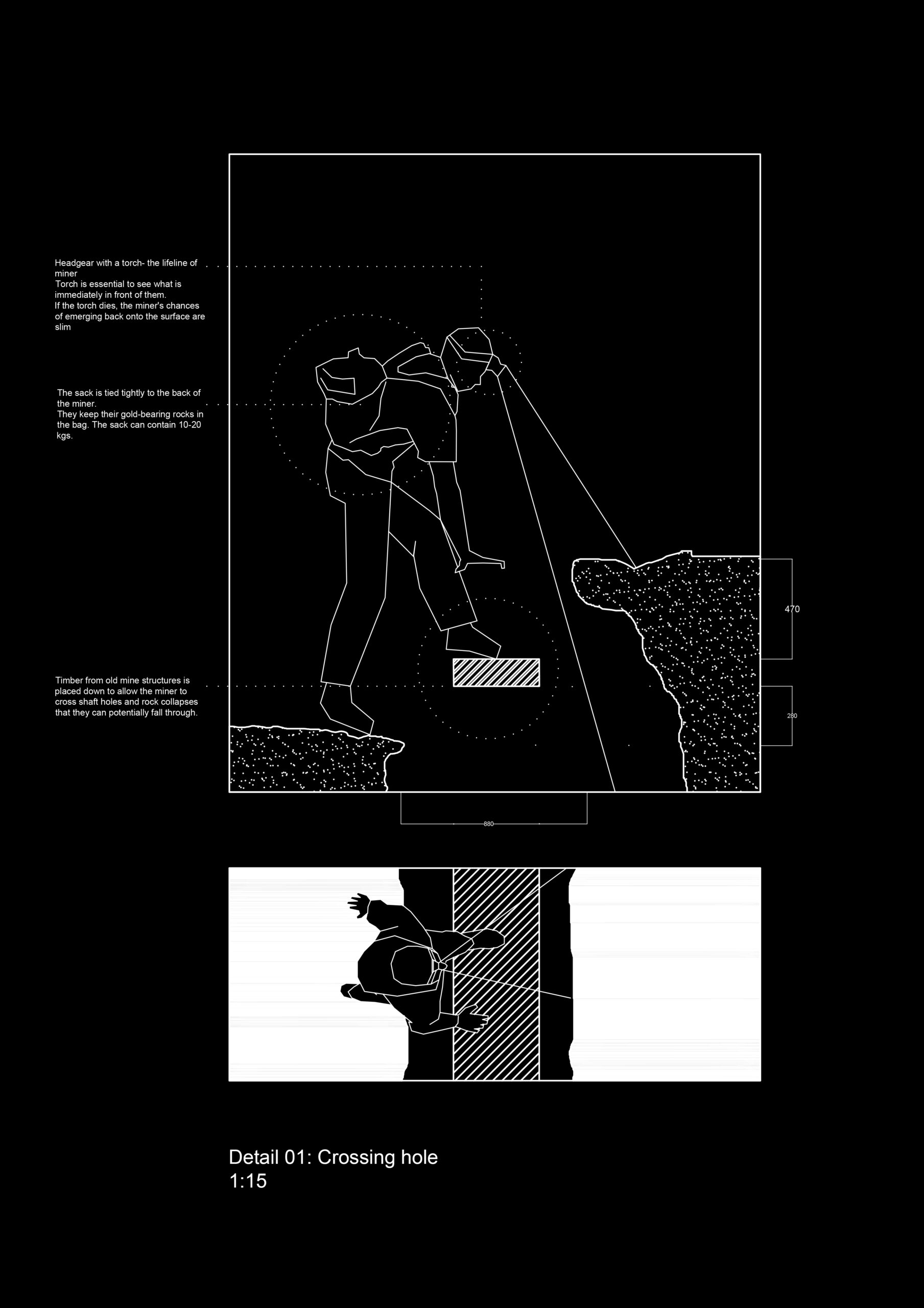
Operating on two scales—the body of the miners and the mine in the city—the project examines the spatial occupation of miners underground using historical drawings. This exploration leads to the Wits historical archive and mining chambers, where geological maps are interpreted as architectural sections. These exercises, initially representational, turn into a desktop study due to active turf wars on the site.

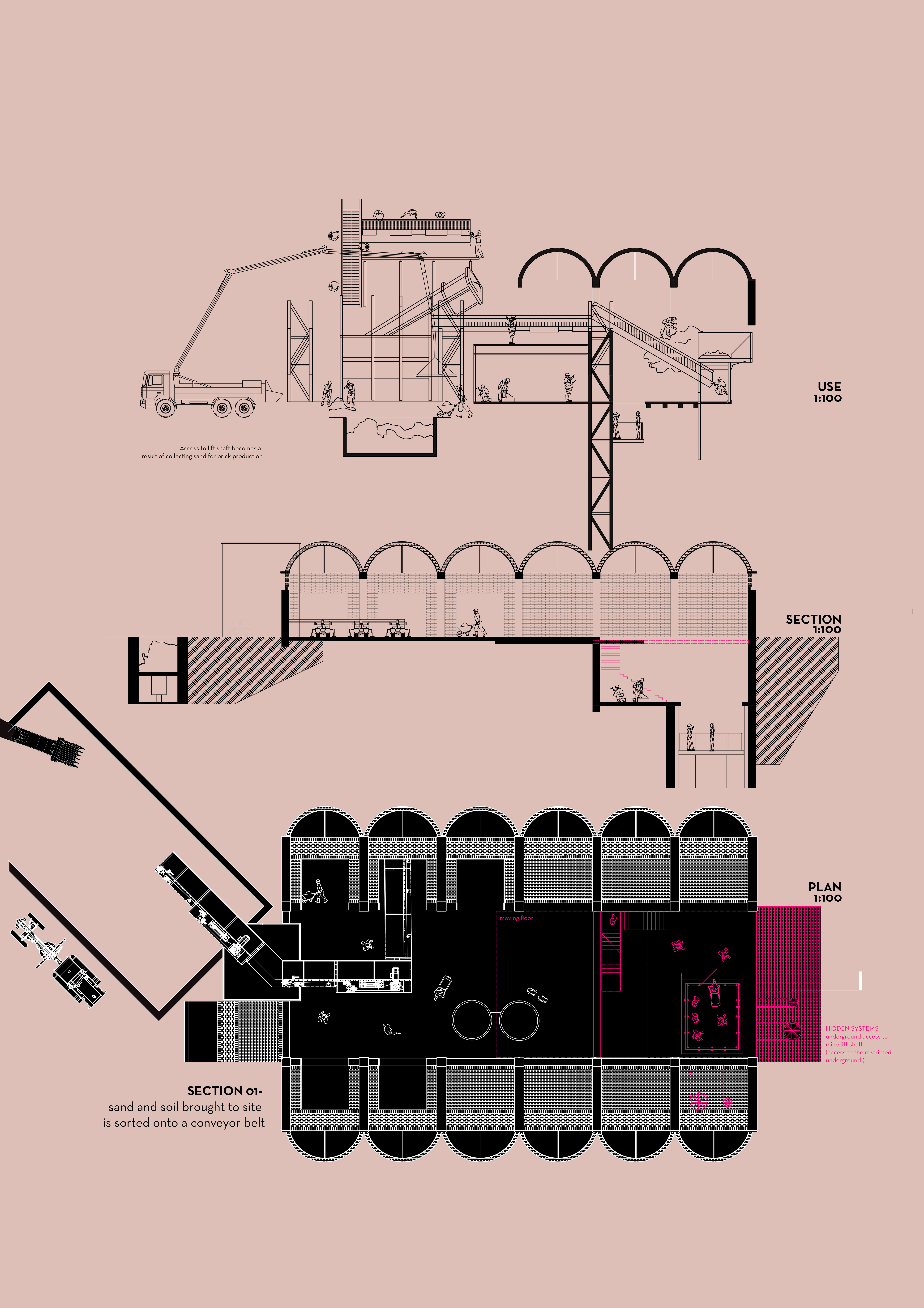
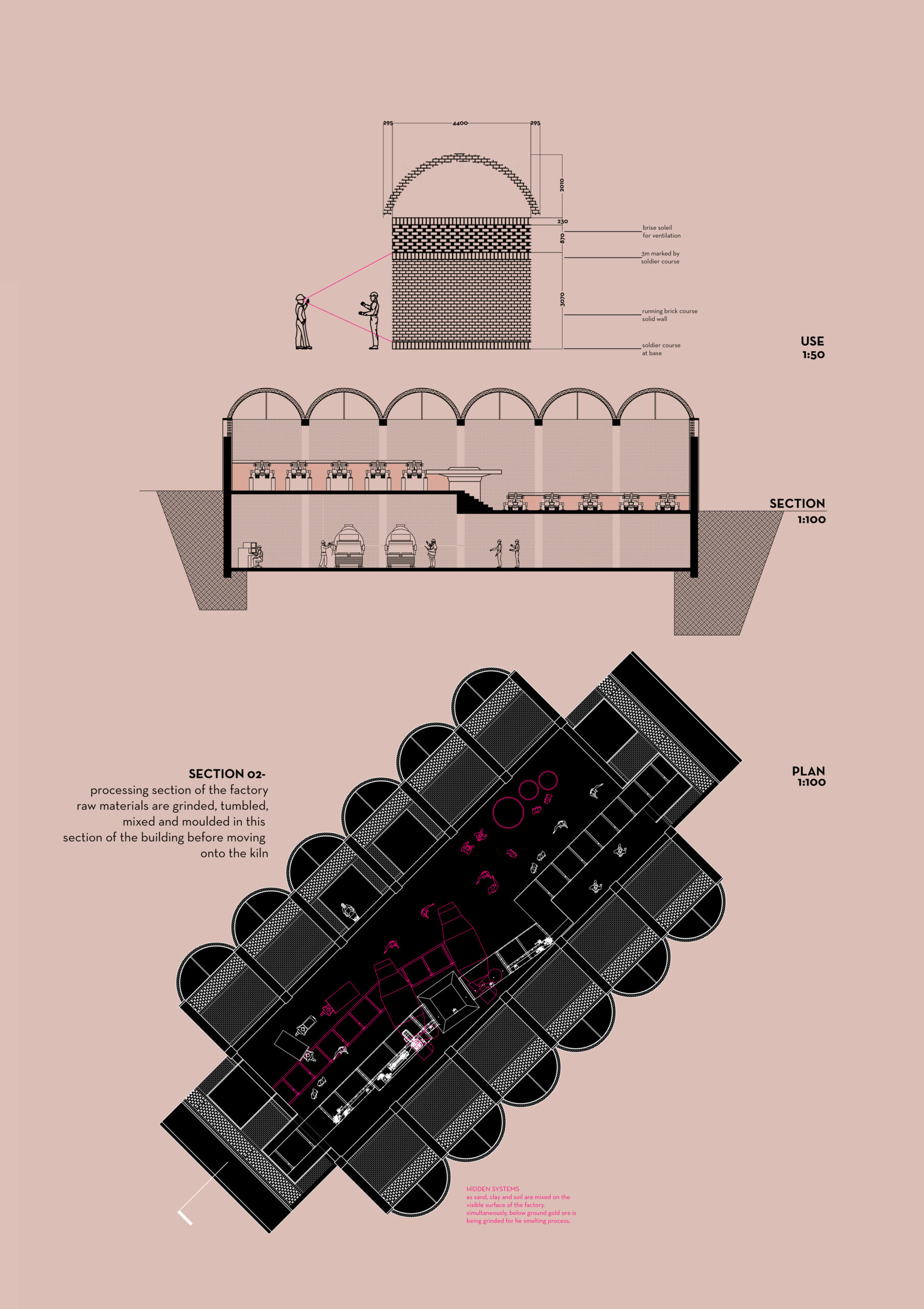
The proposition responds to the limited 30 years of mining by proposing a brick factory as a means of sustaining economic activity beyond mining. Drawing inspiration from Johannesburg’s early history and the reliance on brick as a building material, the building is strategically placed over explorative holes, using vaulting and brick laying to conceal its form.
The project extends to a study of illegal mining practices, viewing them as tools for dream-making on the surface through the abandoned mines of Johannesburg. The concept of “veneering” is introduced, describing tools used by migrant communities to negotiate inhabitation, providing a tactic for spatial organization. In the context of only 33 years left of gold mining, the architecture and built forms act as veneers concealing illegal mining, allowing for more time in the pursuit of dreams.

The proposition involves a four-phase process, incorporating a brick factory to mirror the industrial mining process. Soil brought to the site conceals earth movements, triggering floor shifts to reveal mine shafts. The soil is mixed with clay, water, and aggregates for brick formation, with the process concealing gold ore grinding. The clay is fired in a kiln doubling as a gold smelter, and gold bars are embedded in brick courses for undetected removal, ensuring economic sustainability beyond the mining period. Reflecting on the importance of geology, the project seeks to understand the Zama-Zama condition, offering a solution that buys them more time for their dream-making endeavors.