Architectural Agency:
A critical examination of ownership and practice in Mayfair
This project delves into the unit framing of uncertainty and micro-practices of inhabitation within the city, centring on Laanglagte. Employing diverse methods like text, construction, drawing, observation, and site exploration, the investigationunfolded through collaborative exercises. The initial perspective identified the city as chaotic or problematic, prompting a profound exploration of the underlying reasons—perhaps rooted in a suburban upbringing or shaped by a limited undergraduate education with a focus on neat modernist blocks.
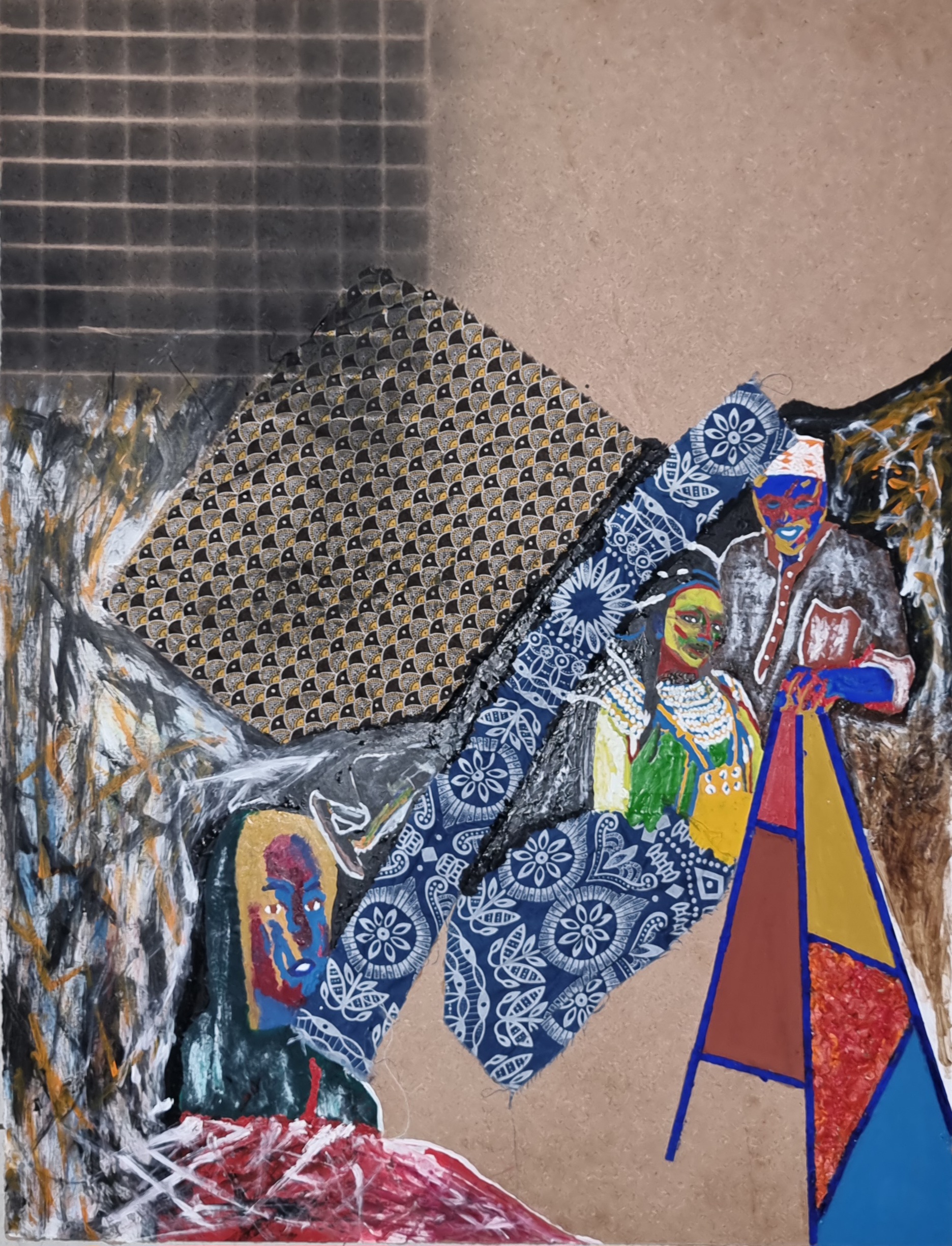
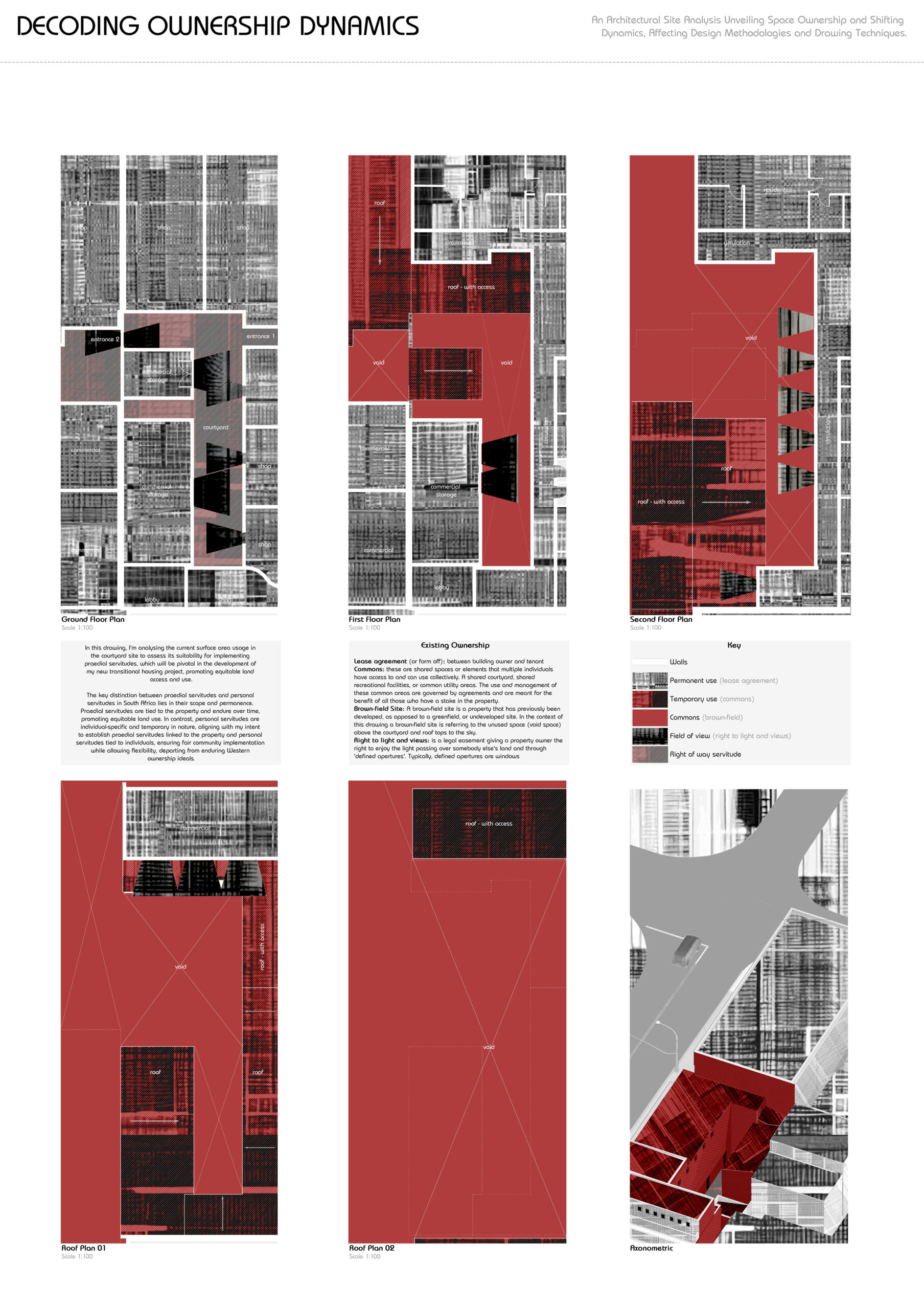
Early investigations involved dissecting the city through the metaphor of the grid and drawing inspiration from local artist Pat Mautloa’s alternative reading of the urban environment. The subsequent focus on a specific Mayfair corner scrutinised historical drawings, delving into infrastructure, approvals, building use, and ownership dynamics, revealing how architecture is embedded in the mining narrative of the city.
Challenges arose when transitioning to contemporary city analysis due to the absence of drawings and vague legal
ownership. The observed legislative obedience in drawings contrasted starkly with the complex reality of Mayfair, depicted in an axonometric drawing showcasing a building officially unowned yet fully utilised.
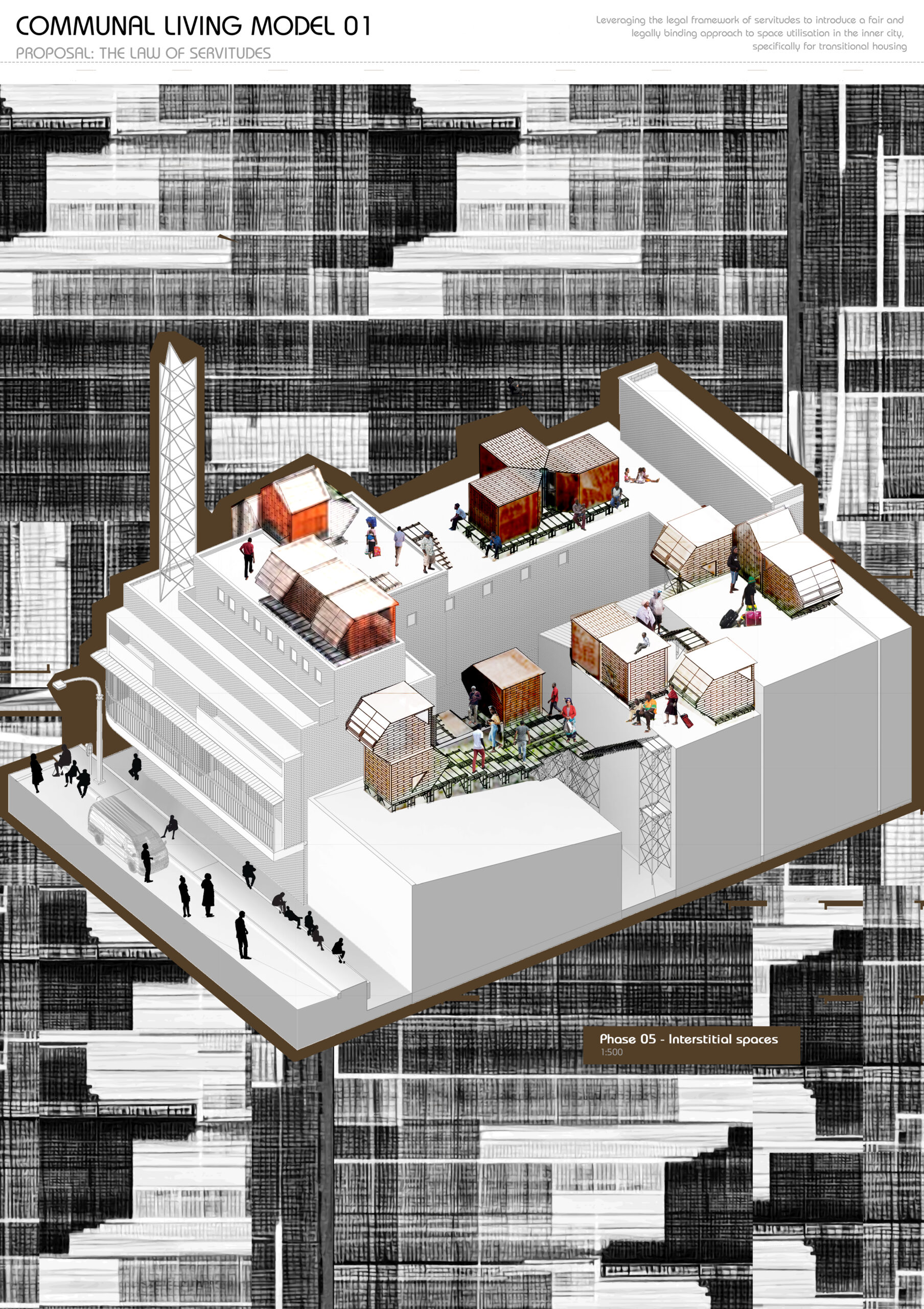
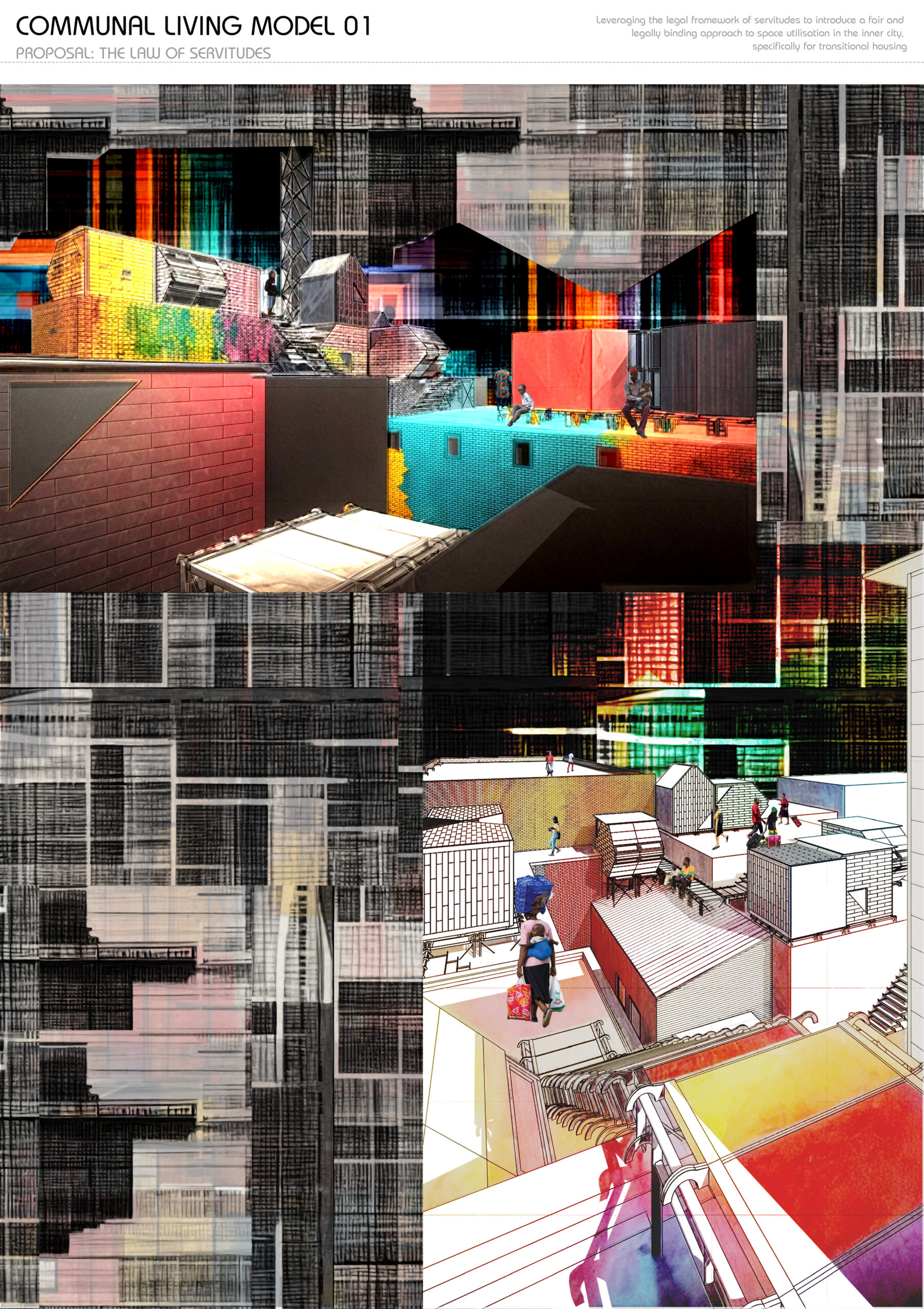
Ownership emerged as a pivotal framework, leading to a proposed “Institute for Deprogramming Architects.” However, recognising the need for a more realistic approach, the project revisited site drawings, identifying a shared courtyard space entangled in ownership complexities. The law of servitudes became a strategic engagement tool, with a focus on negotiated personal and praedial servitudes.
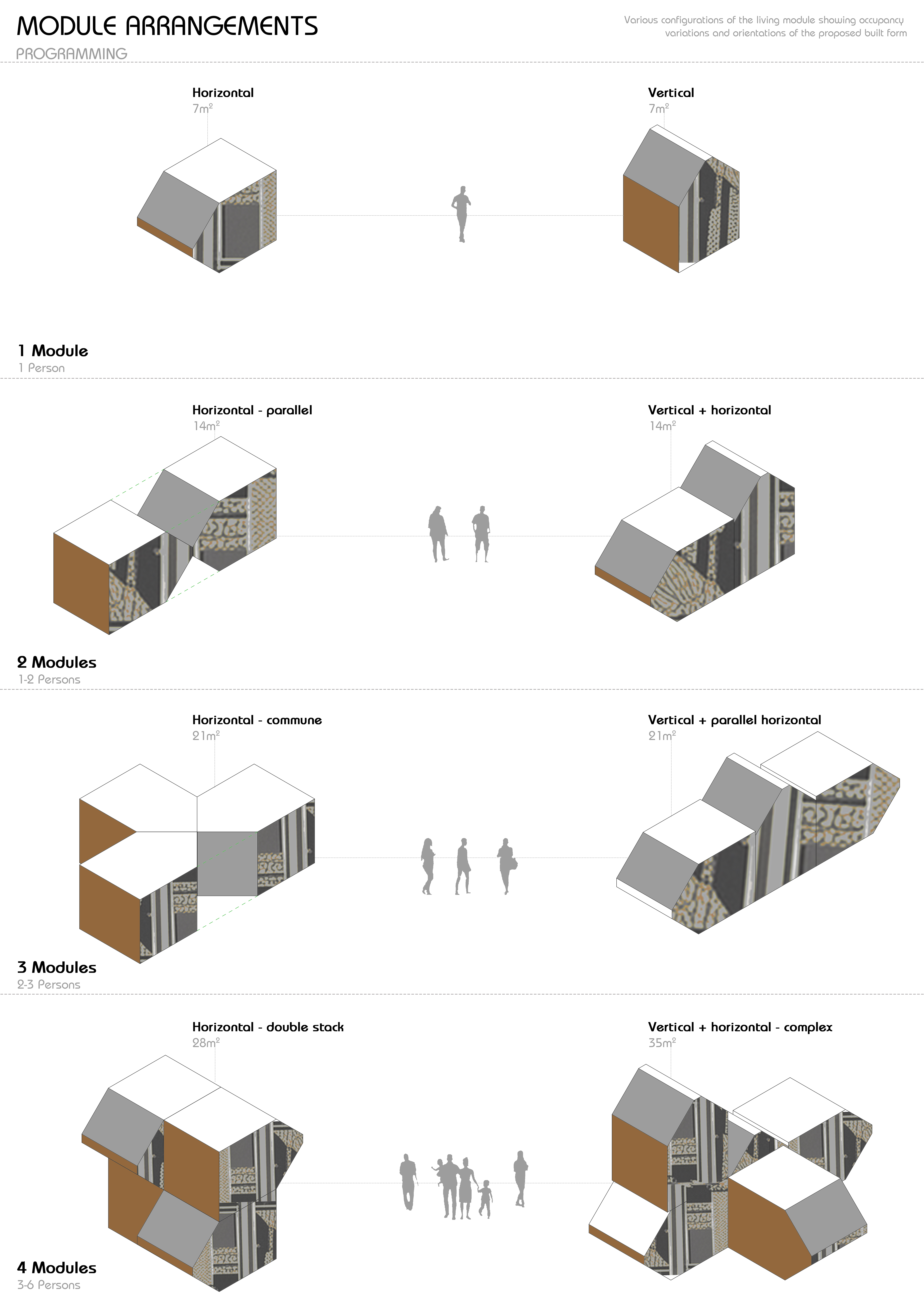
Mapping and programming explored how servitudes could inform flexible ownership arrangements, laying the foundation for a unique architecture supporting such patterns. The concept evolved into modular housing using scaffolding, aligning with Mayfair’s context and bypassing alterations to existing buildings.
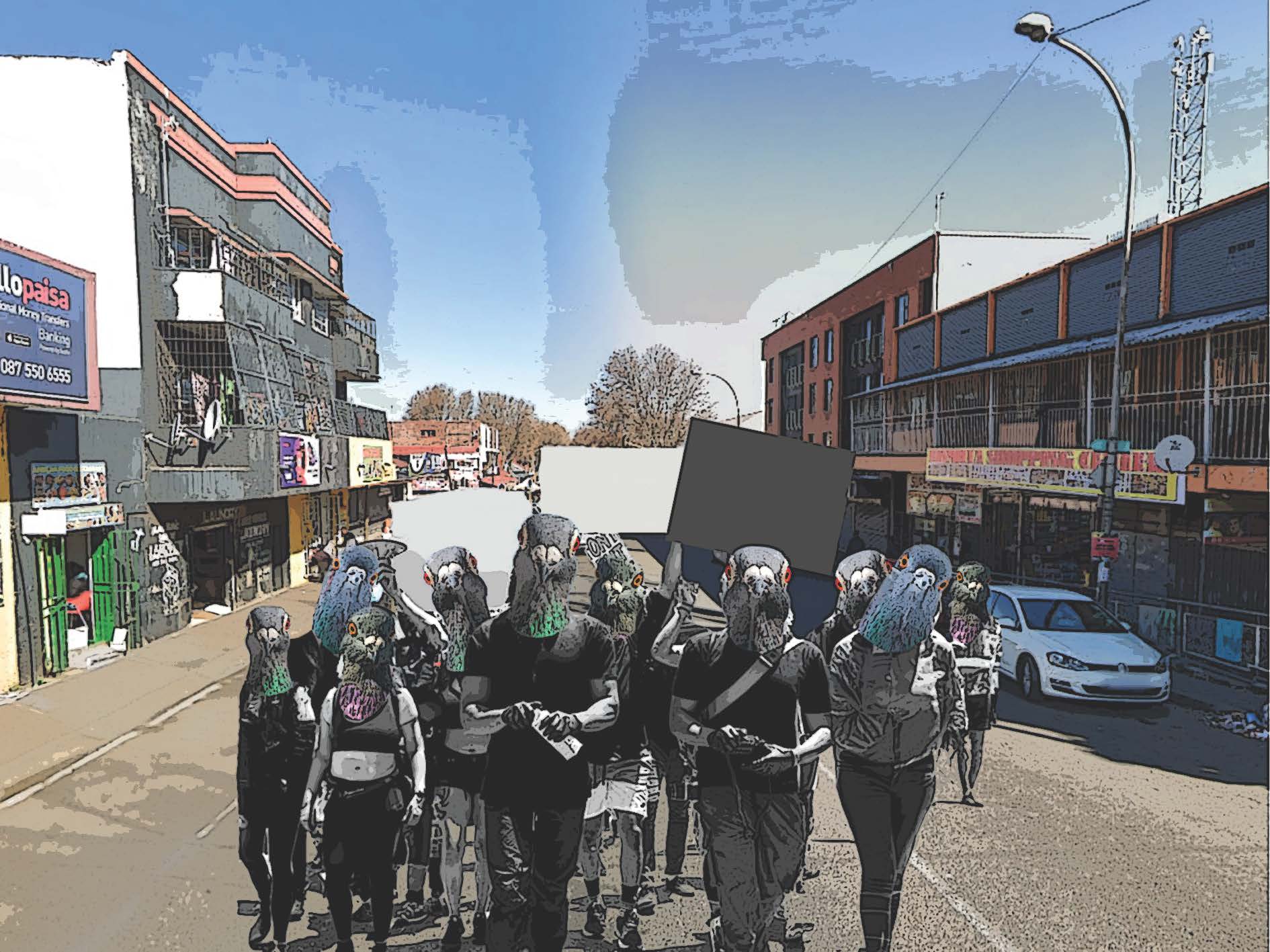
This ongoing exploration, marked by the desire to reshape architectural education and practice, reflects the transformative power of critical thinking. The project not only navigates uncertainty within the city but also holds the potential to instigate meaningful change within the field of architecture.