The Anti-Necropolis:
Recognising the cultural rights of the dead to the occupation of the city
Johannesburg – a city which was built around gold-mining, a metropolitan type which includes significant conceptions of space, death and dignity that are rooted in black cosmogeny, specifically that relate to the Nguni people. Working as ‘Umqambi wama Hlubi’ – an Architect of the Nguni-Hlubi people, this research opens a discussion on how to reform our ontological framework of urbanism, planning and legislative instruments, and actual practice to expand ancestral and contemporary forms of spatial inclusion and justice.
In the M1 phase, the study focuses on understanding the notion of “home” by documenting the spatial practices of the ‘Hlubi’ Nguni tribe in Palmietfontein, Eastern Cape. It extends to the translation of these practices into funerary rituals in black townships, highlighting cultural resistance in response to land acts.
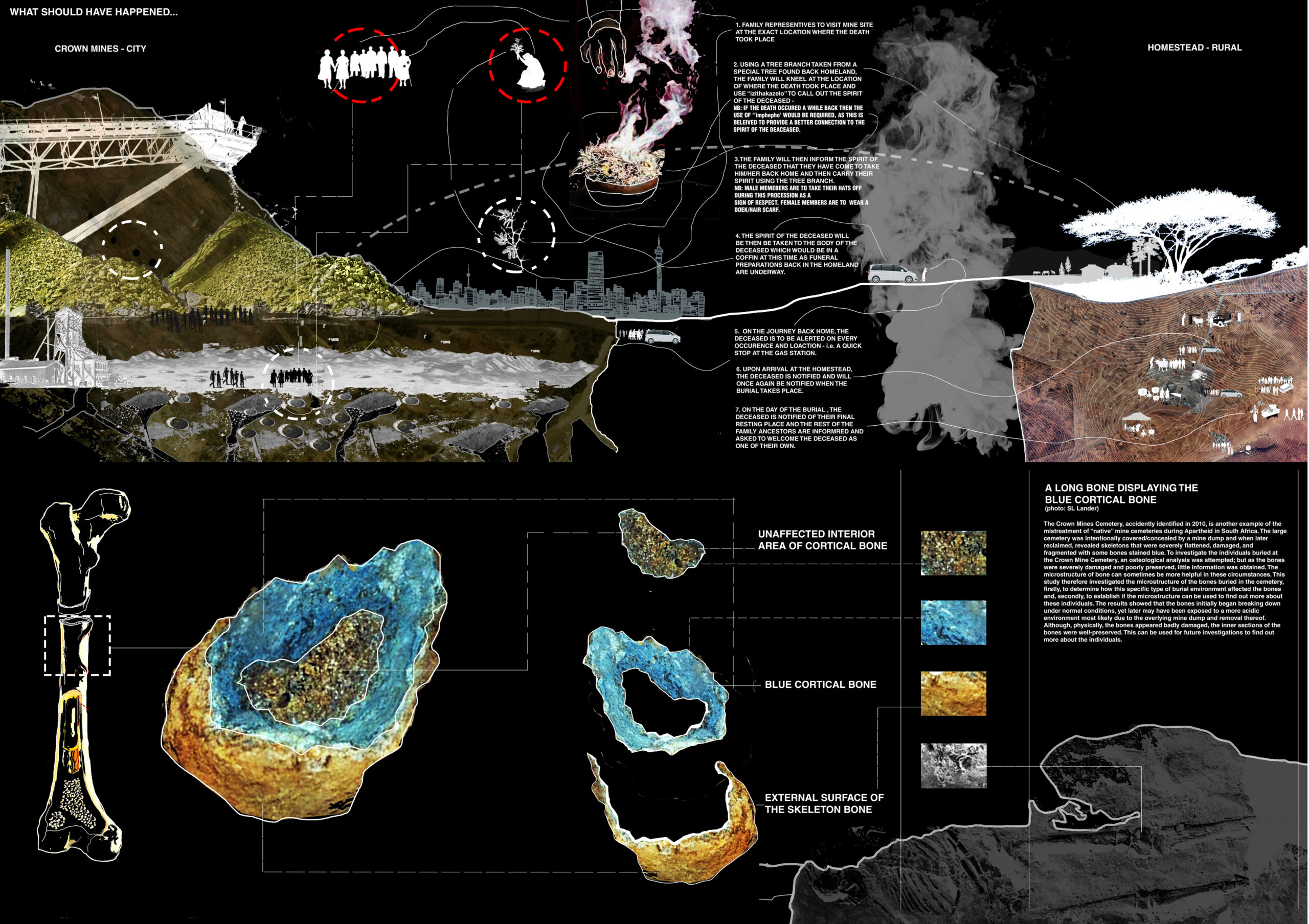
The M2 phase delves into the erasure and treatment of Black mineworkers’ bodies in gold mining, grounded in the Crown mines area of Langlaagte. The discovery of over 600 skeletons in 2010 becomes a metaphor for intentional burial and subsequent rediscovery, guiding the investigation into the significance of the deceased in mining and their treatment.

The proposal aims to explore the implications of this discovery on Nguni cultural practices, emphasizing death and ancestry. By scrutinizing transgressions against the resting place of the deceased, the research seeks to rectify these wrongs through the establishment of an “anti-necropolis.”
Drawing on prior research, the literature review contributes to understanding the significance of uncovering a cemetery site beneath a mine waste dump. It addresses racialized urban landscapes, societal prejudice, and the reshaping of the land surface. Relict mining landscapes are likened to cemeteries, symbolizing an industrial past intertwined with cultural identities.
The project’s objectives include analyzing the negative consequences of exhuming and reburial of mineworkers’ bodies on Nguni cultural beliefs, investigating potential cultural rights exploitation, and examining cultural trespassing caused by the discovery.
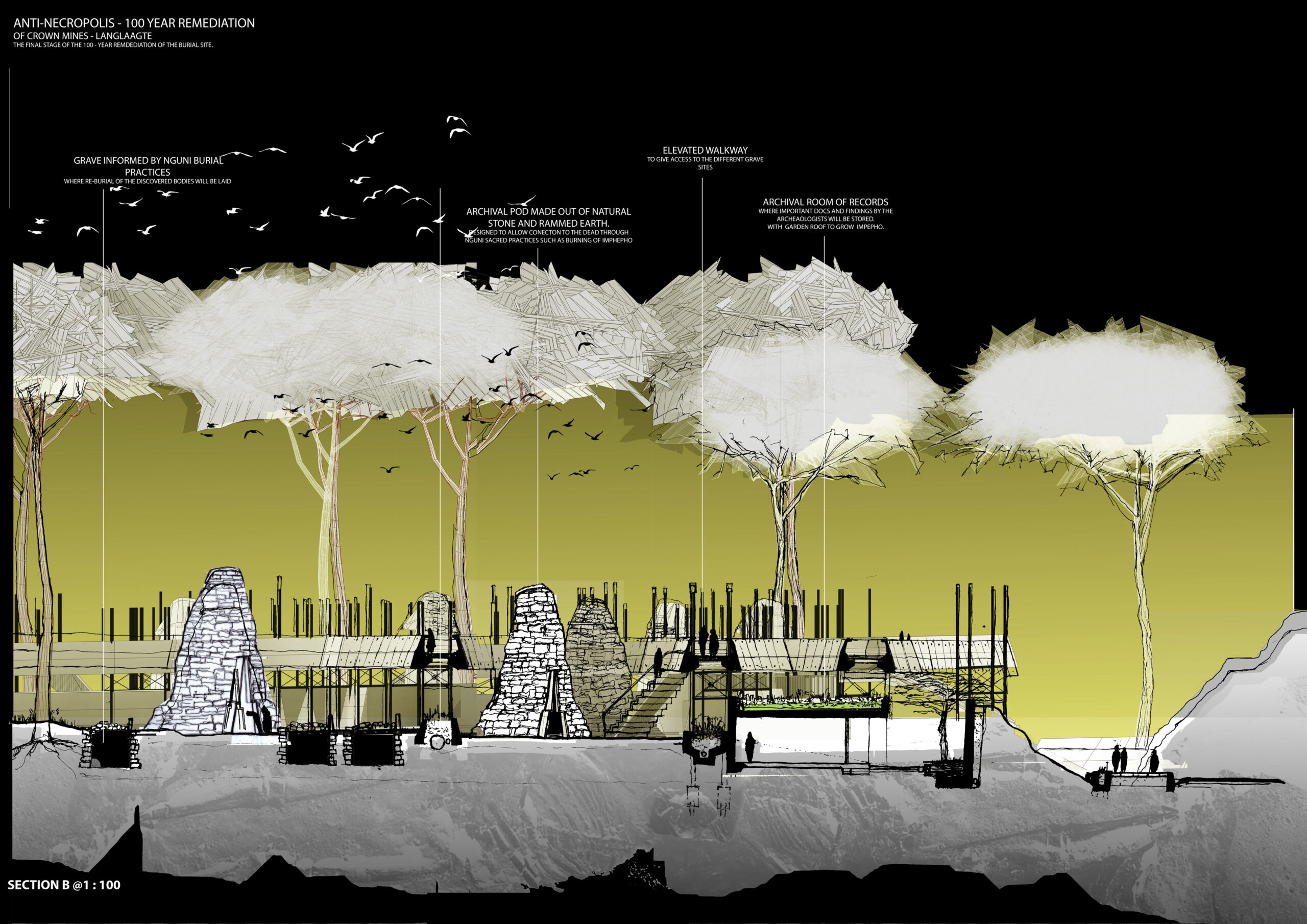
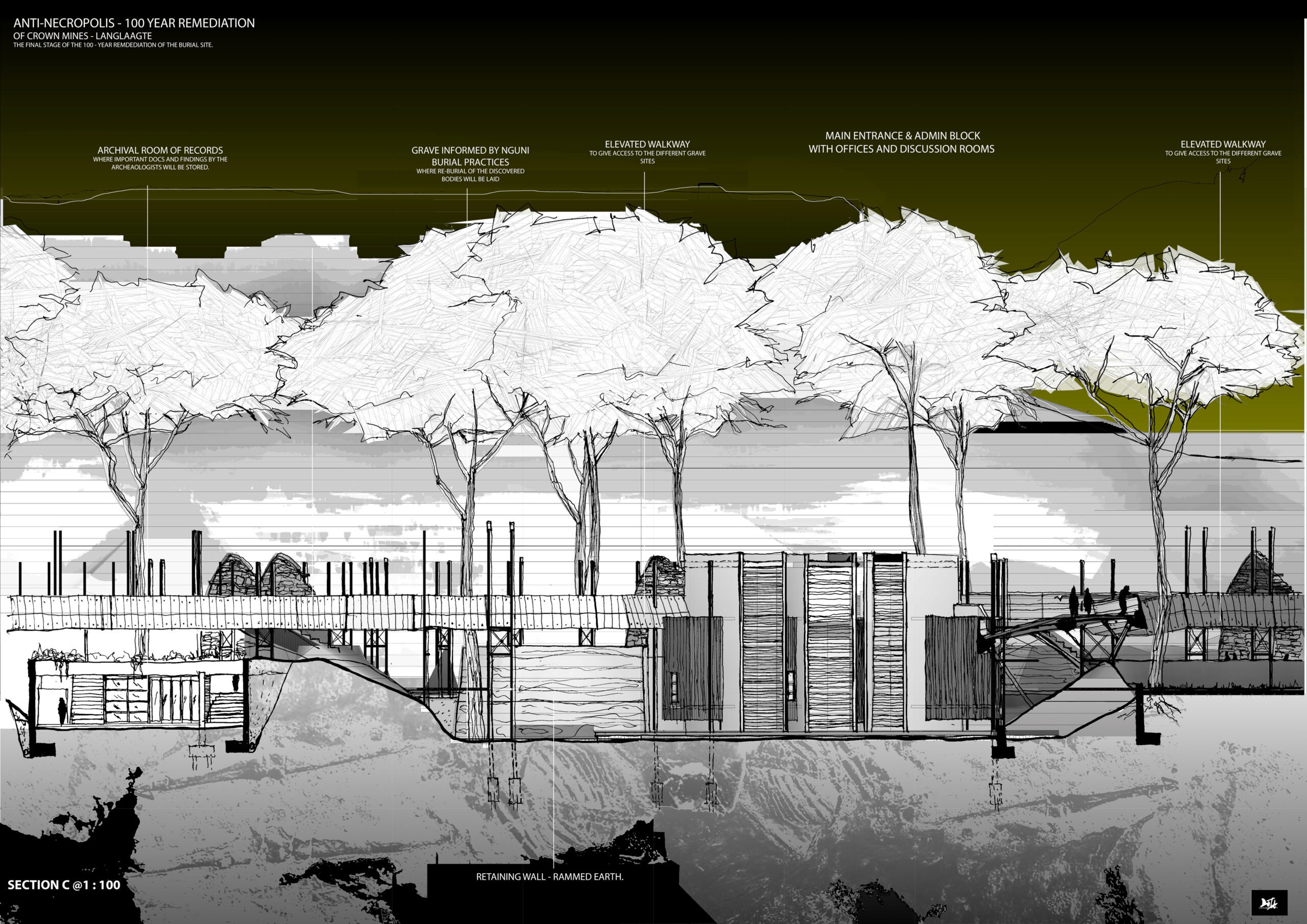
The design proposal suggests the creation of anti-necropolis spaces within the city to reallocate the lost rights of deceased mineworkers. It explores new forms of anti-necropolis to address ongoing transgressions related to the treatment of deceased miners through a phased 100-year cultural remediation process.
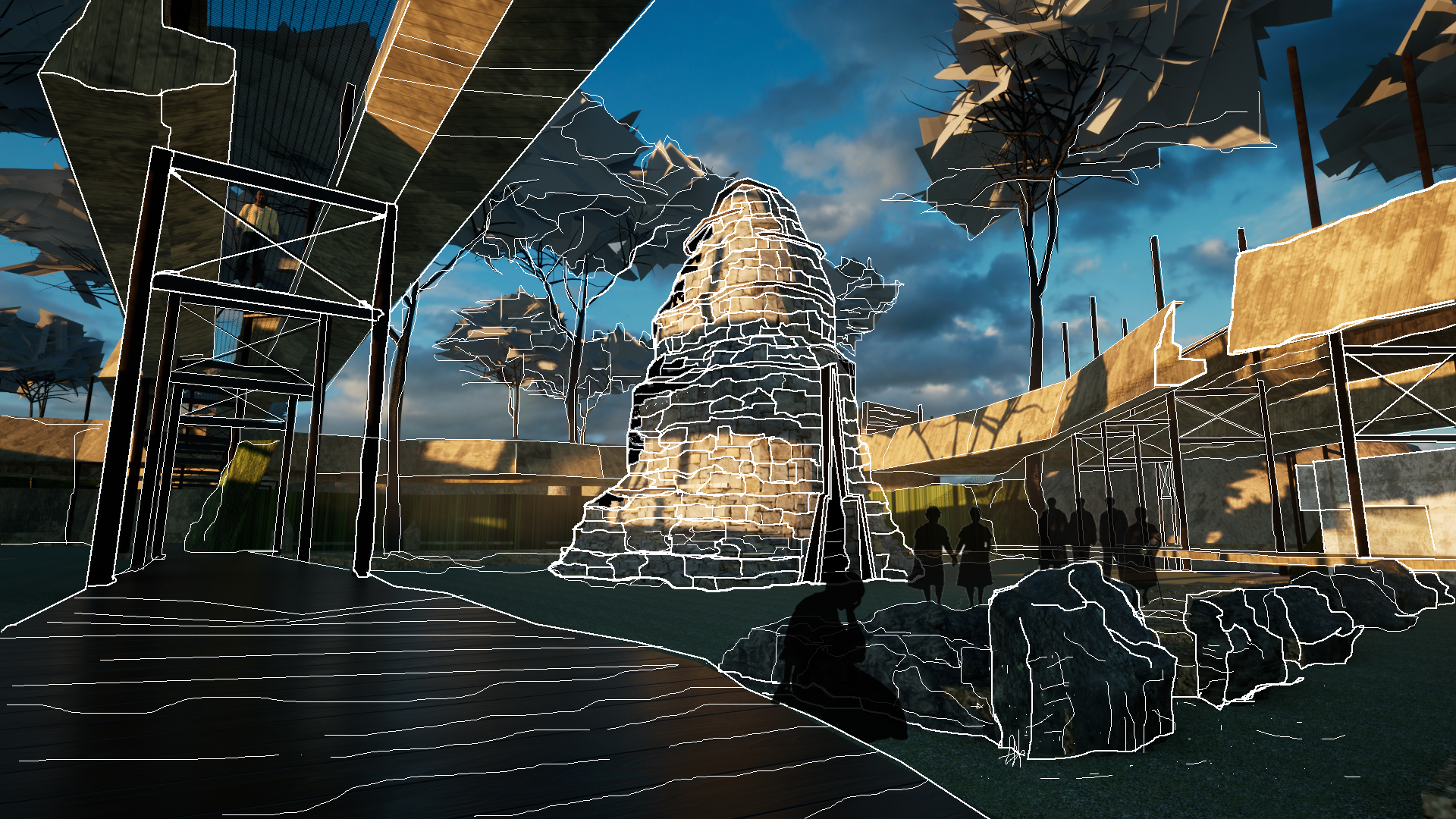
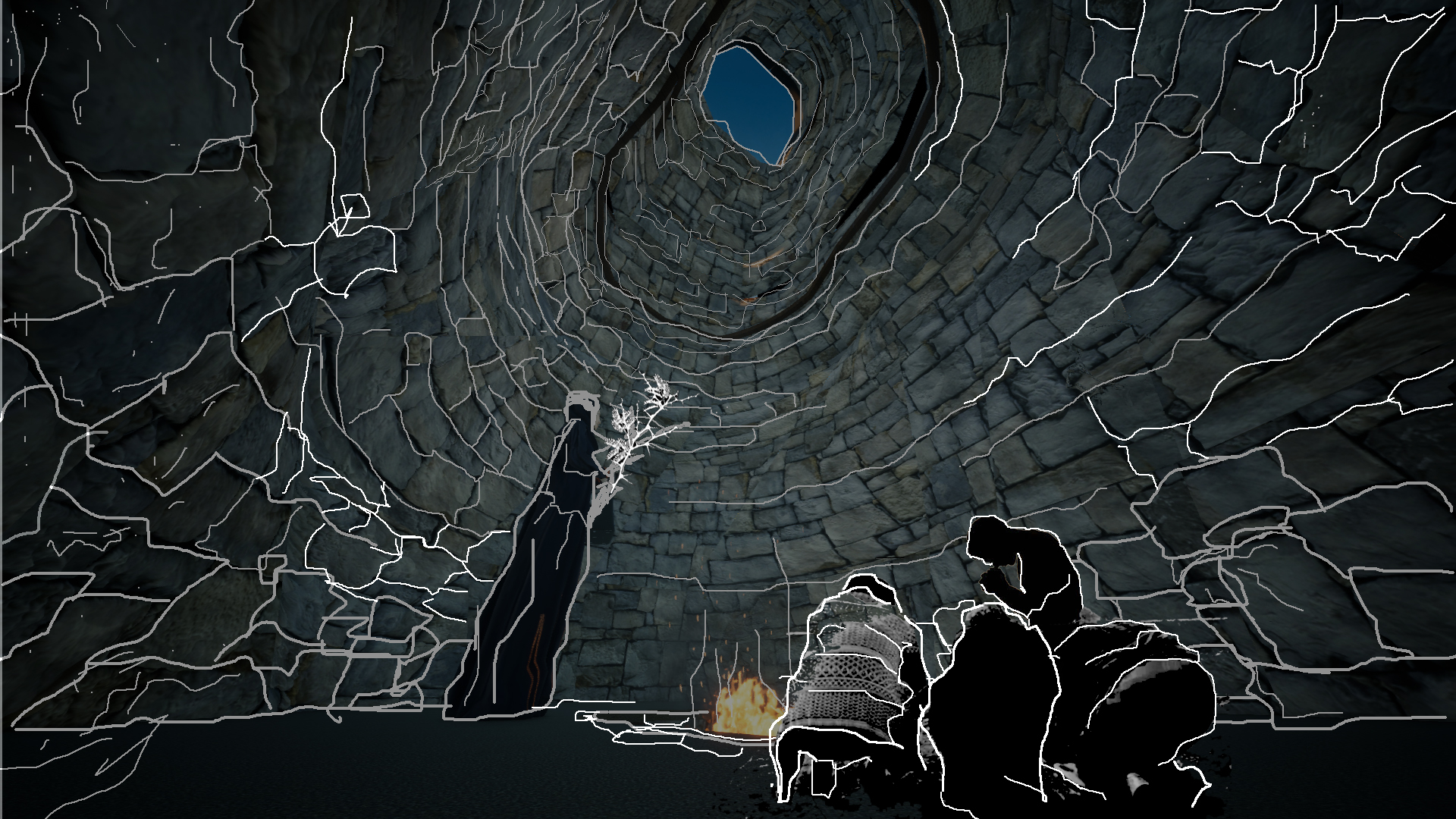
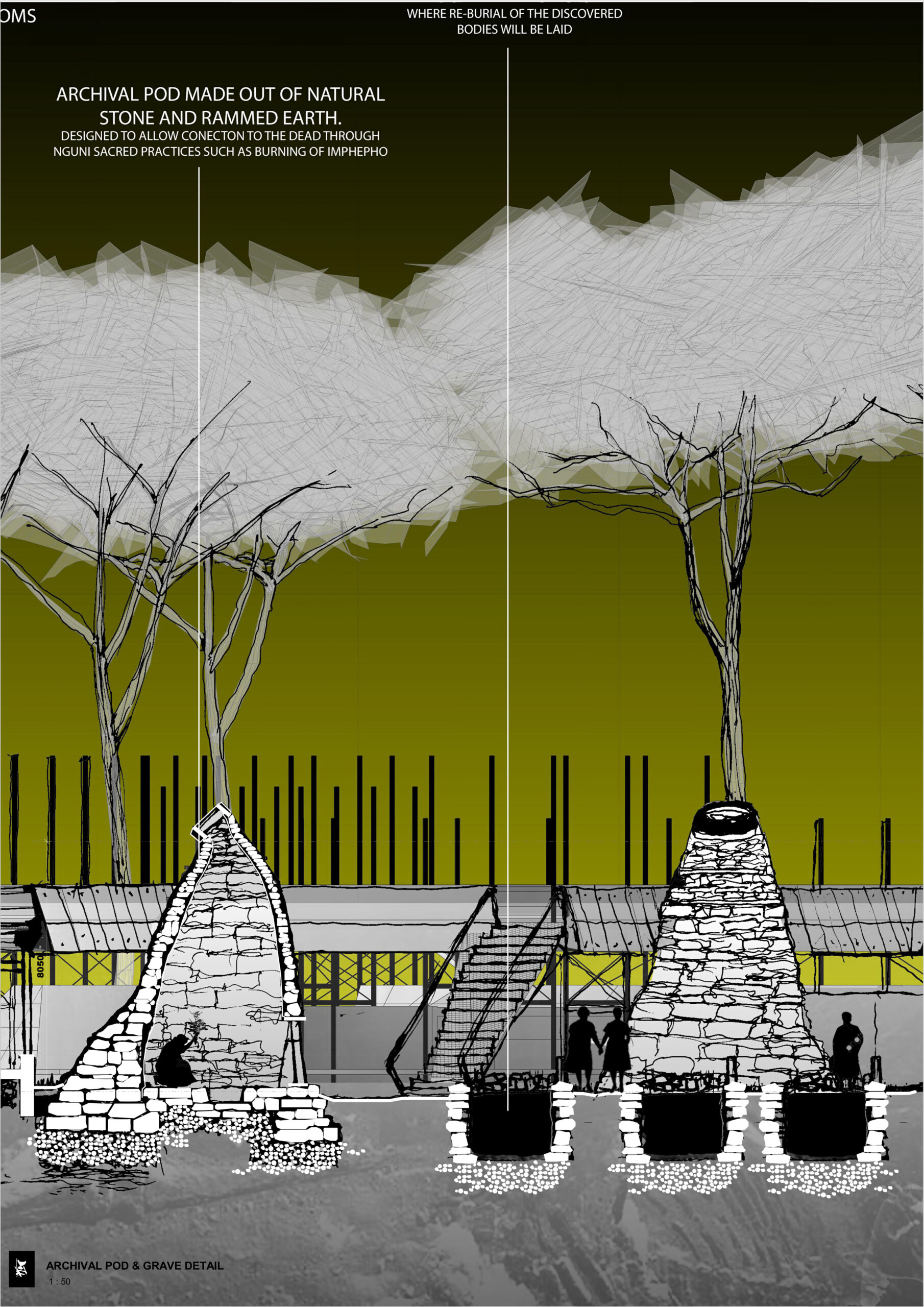
An underground world, the Anti-Necropolis, connects the dead with the living, aiming to restore dignity through Nguni practices. The final proposal involves three archival typologies—Archival Pod, Record Room, and Reburial—as sacred spaces dedicated to cultural burial practices, archives of transgression, and architecture restoring black bodies to the urban landscape.
In conclusion, this research proposal utilizes cartography, drawings, and modeling techniques to record cultural trespass, examining the “rights of the corpse as ancestor” and identifying corrective measures. By delving into cultural practices within urban landscapes, the study contributes to the discourse on spatial justice, cultural heritage, and the preservation of black South African traditions in an urban context.