Corridors of Memory:
The living memorial
This design project aims to investigate the repercussions of segregationist spatial planning. It will examine the magnitude of the effect of those in power on how memory and history is portrayed. It will look at how the very base of urban planning sets the stage for a city’s growth and the living memory of the citizens. Through viewing a city’s plan as a single memorial, raises the question if all Colonial and Apartheid cities serve as
memorials for the oppressors that designed them.
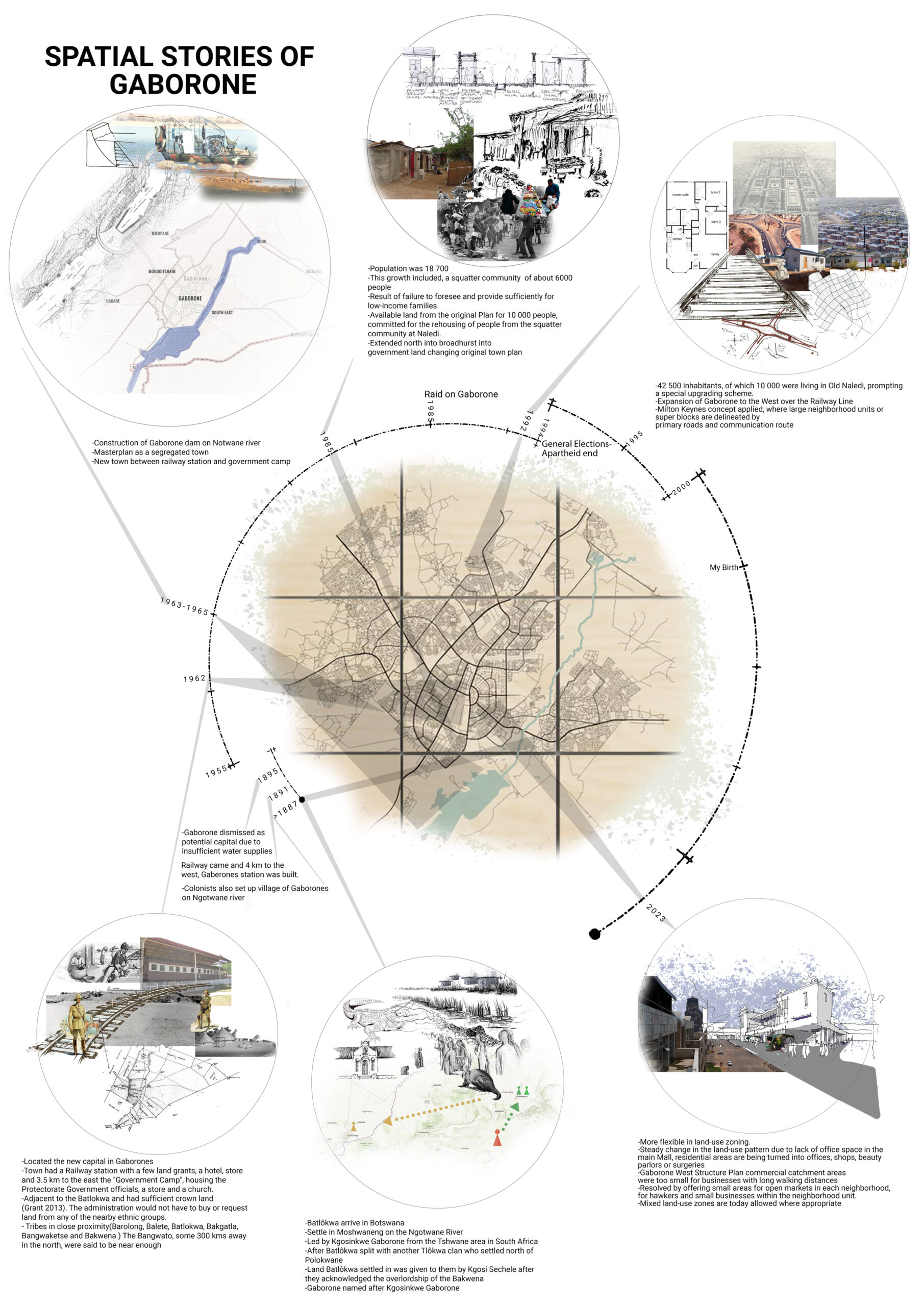
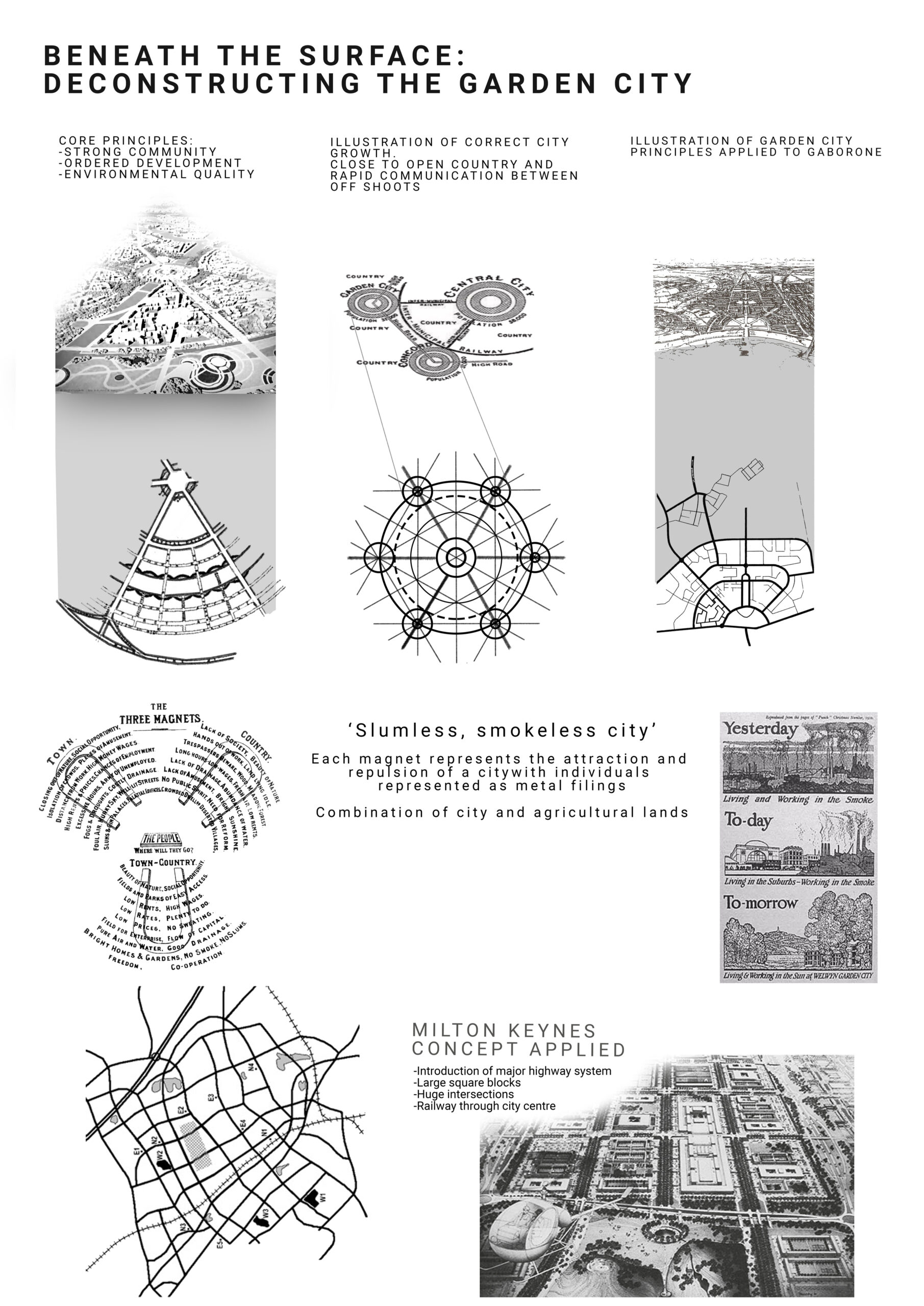
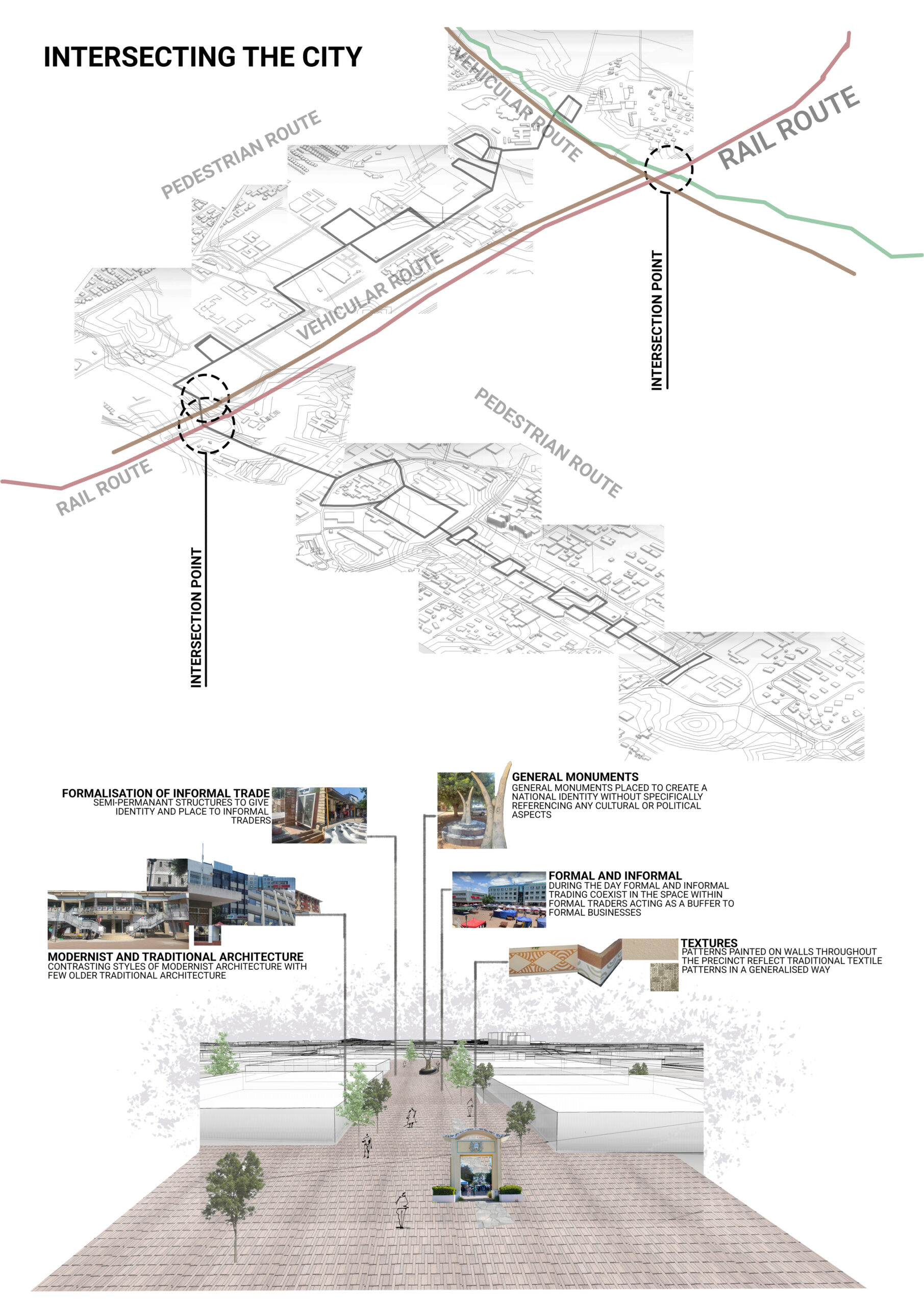
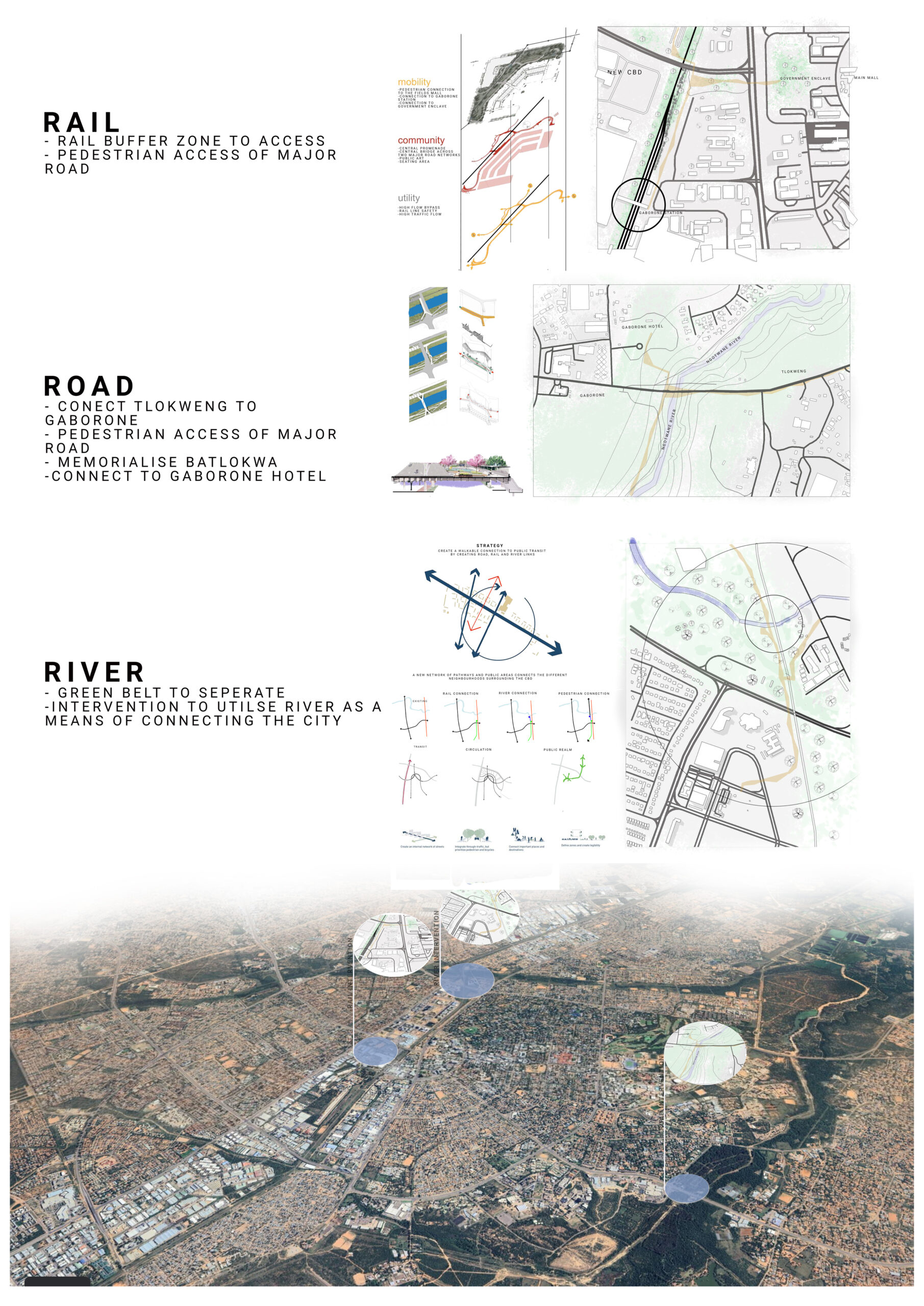
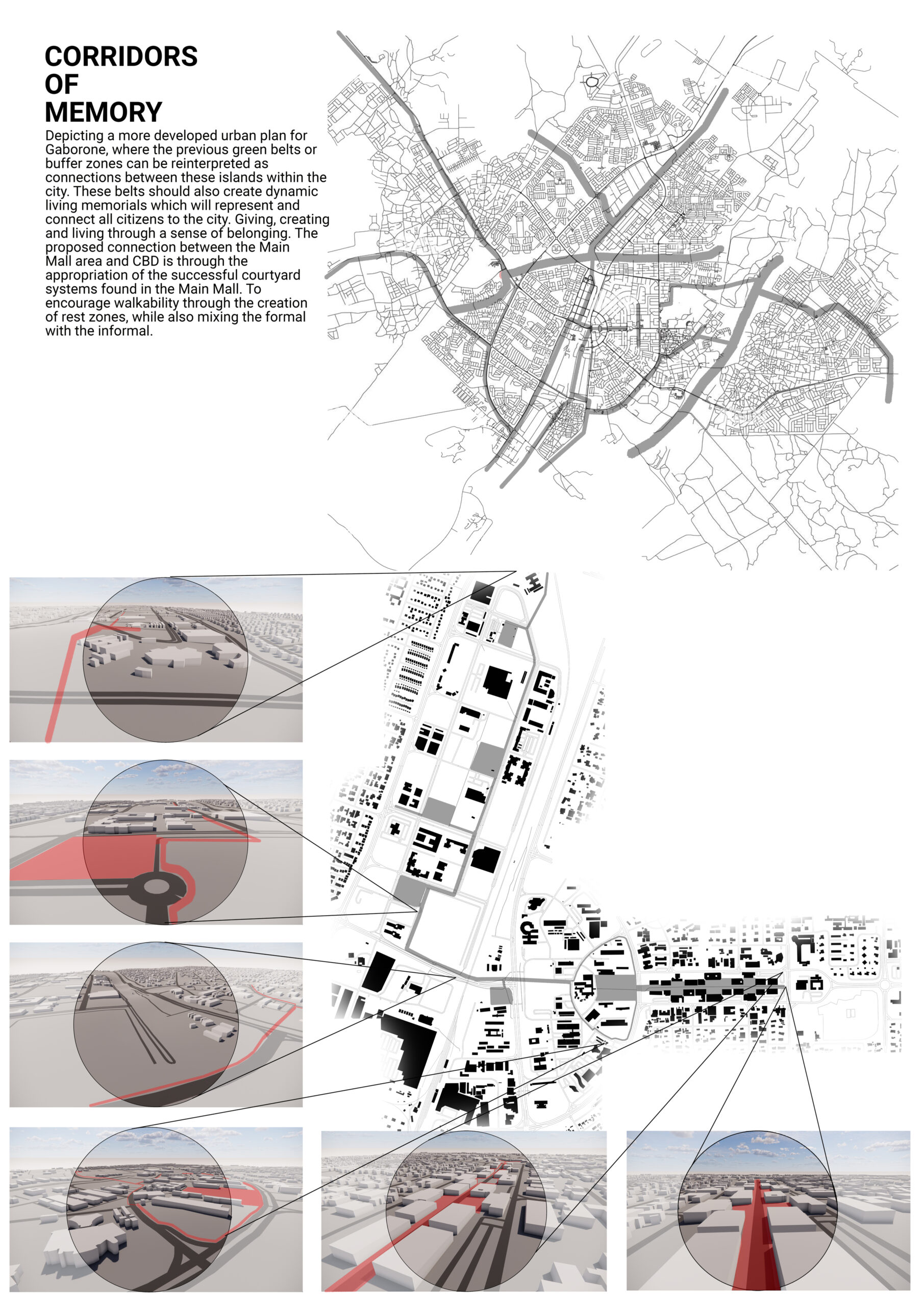
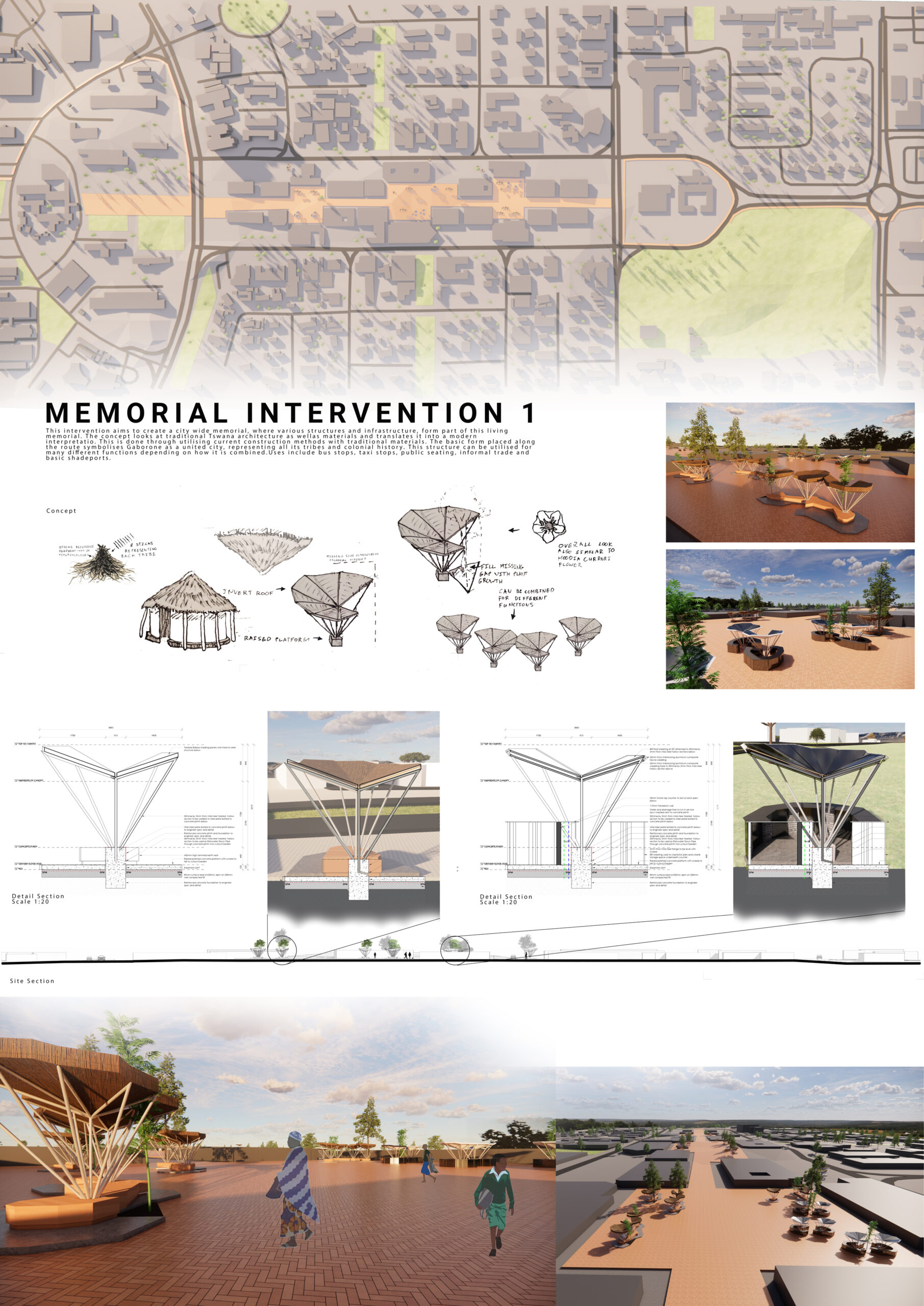
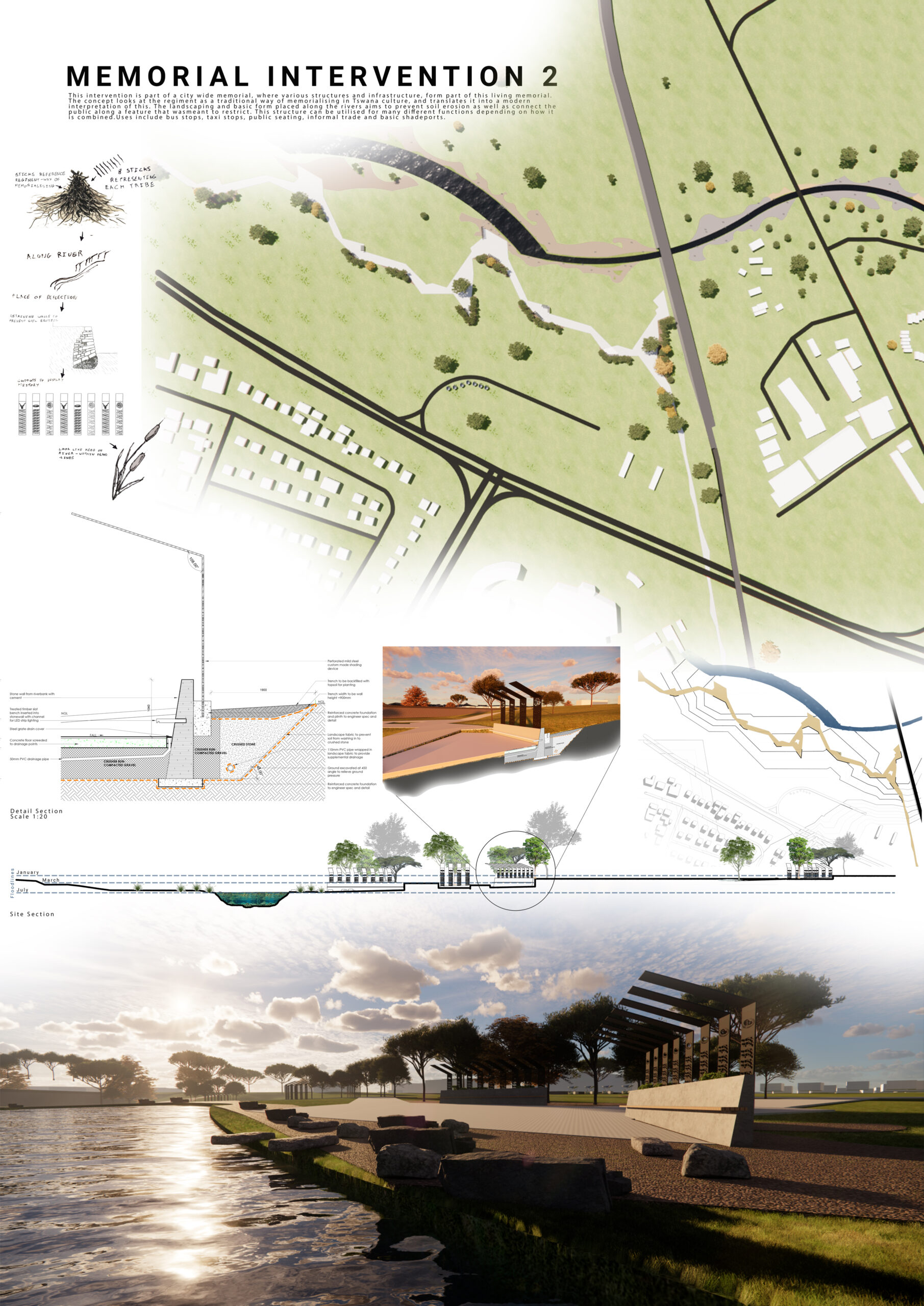
The project then utilizes and redirects the tools (urban planning) of oppressors to ensure that a more inclusive history is portrayed to future generations, allowing the effects of memory to reverberate through generations just as the effects of oppression did. The project is set in the city of Gaborone, Botswana and considers the initial urban planning intent of a Garden city. It examines the principles set out by Ebenzer Howard and the use green belts and radial planning as a means of control and seclusion of populations. The project then further looks at three elements that cut through the city, namely the rail, roads and river. An urban design approach is then developed across these three elements using a combination of a top-down and bottom-up approach, allowing for an integrated approach in connecting the city while still allowing residents to dictate how spaces will be used.