Dance as an Instigator of Future Memorials
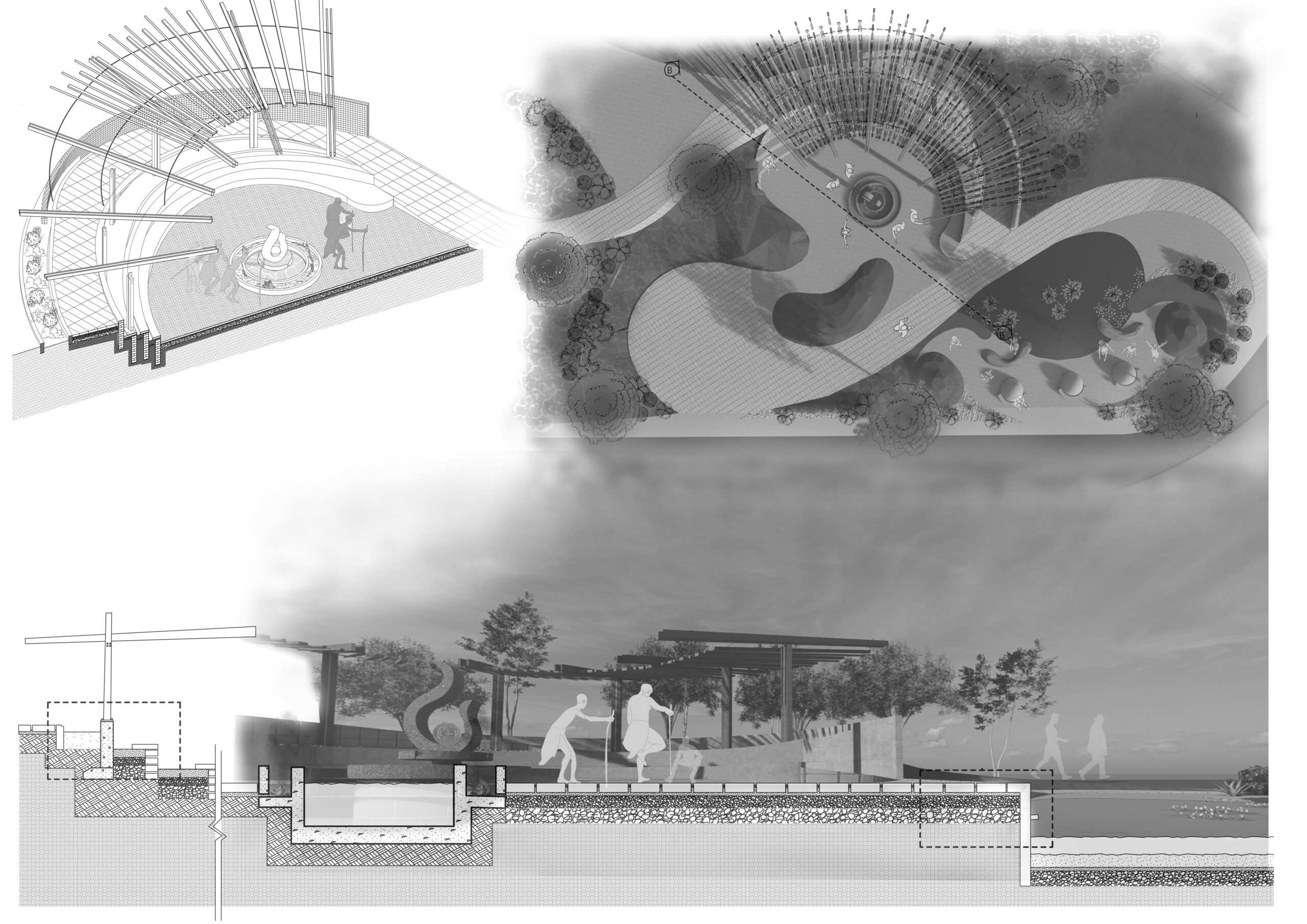
The Project Investigates the complexities of memory, particularly in a post-colonial context, using the example of The Three Dikgosi monument in Botswana. The author, Sinte, observed the marginalization of the Basarwa and Bakalanga tribes in the memorialization process and sought to address this by studying the potential of folklore dance to transform and contextualize the monument.
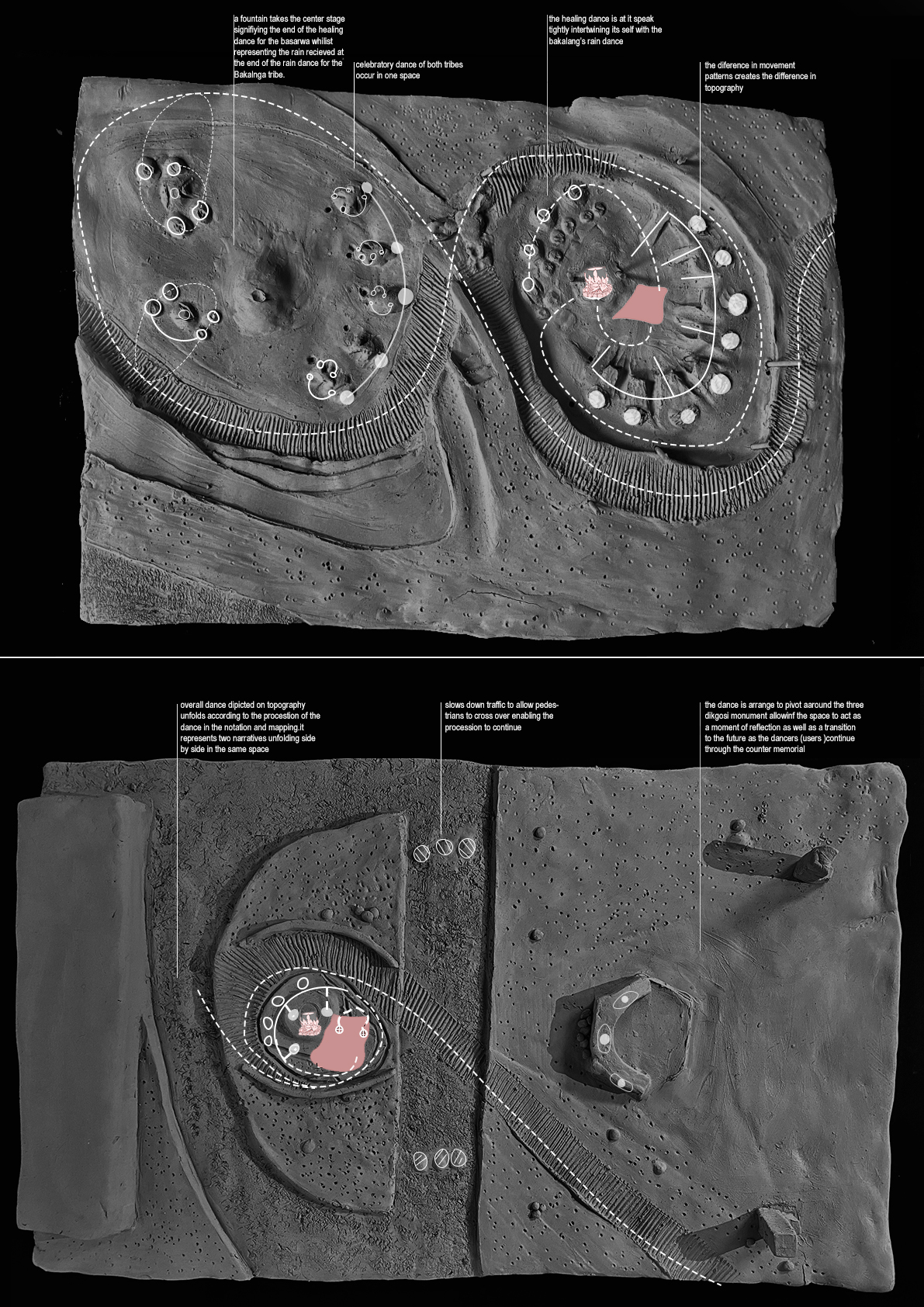
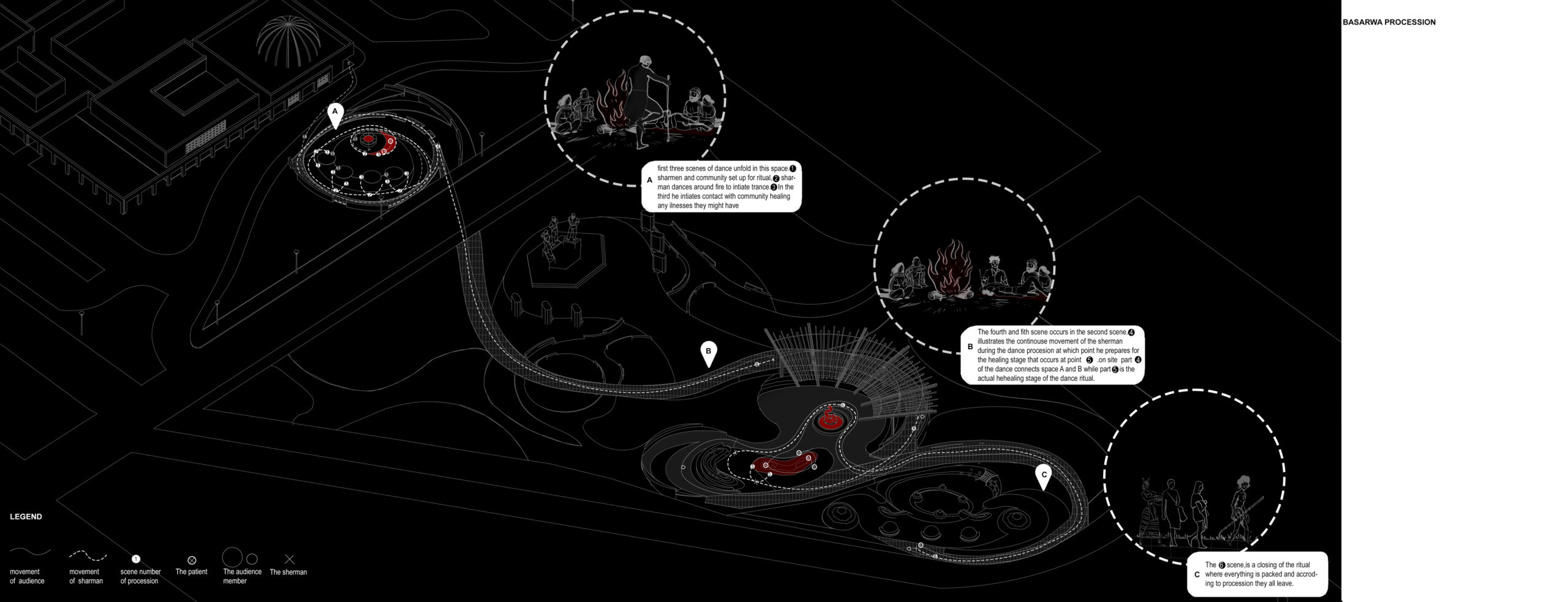
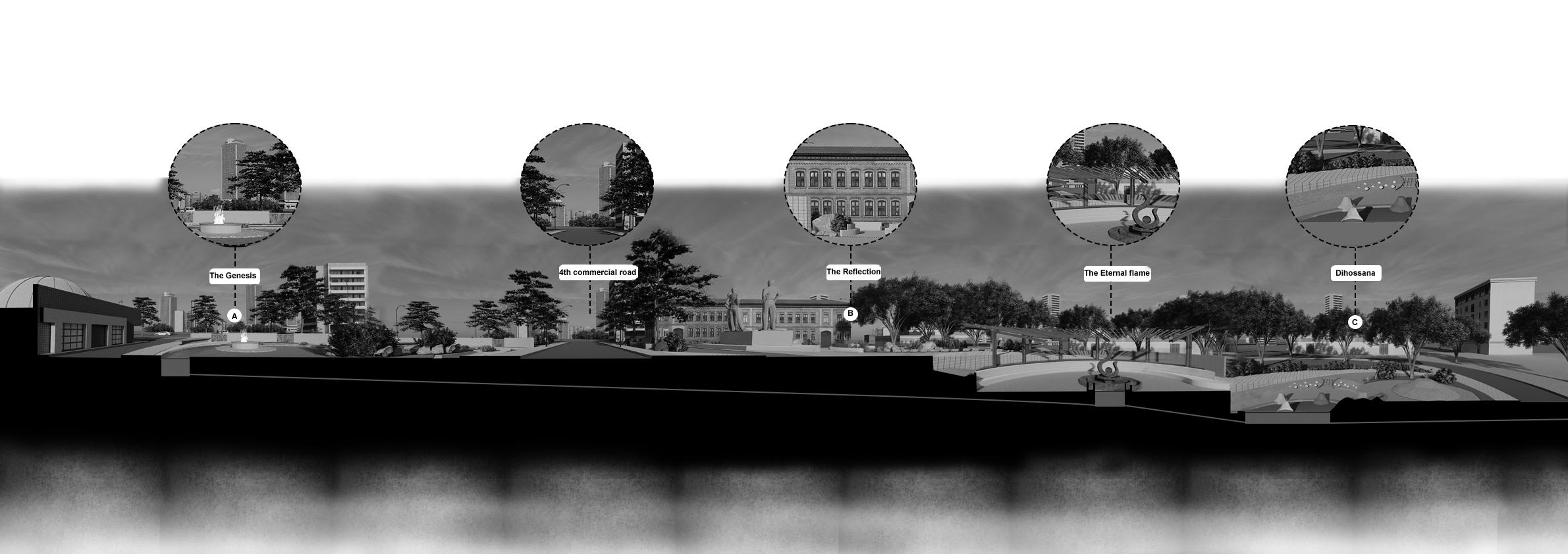
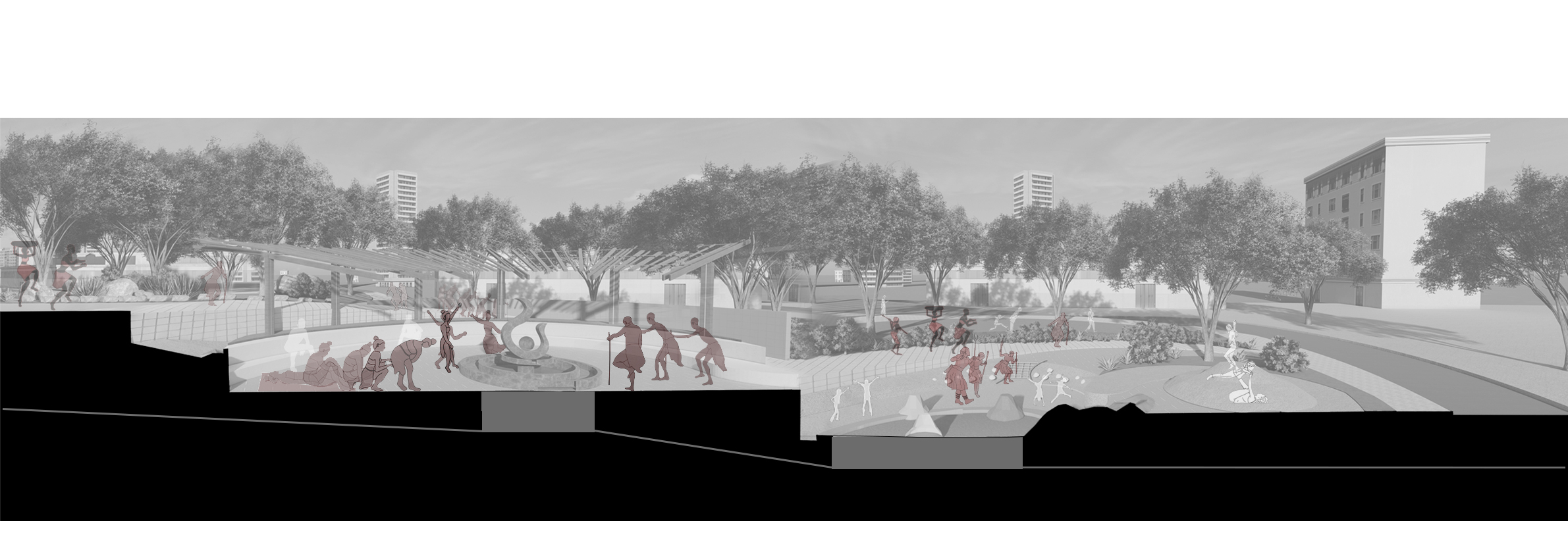
To analyze the responsiveness of the site to its indigenous people, Sinte applied Ian Bentley’s five principles on public spaces, revealing a lack of sensory links and alignment with the vision of uniting various tribes. In response, she created dialogical drawings that uncovered hidden narratives related to pain, loss, slavery, colonialism, and modern oppression. These drawings established a historical timeline, highlighting folklore dance as a crucial link to the past and cultural heritage for marginalized tribes. Sinte further researched methods of documenting these narratives through dance, developing a dance notation, and exploring spatial representation through abstracted models. To physically capture the dancer’s imprints and narratives, she used geological features to create clay models, referred to as “Dance stones.” The “Dance stone” then becomes the proposed design for the Three Dikgosi monument, serving as a heritage reconciliation project with three main objectives: countering imperial, foreign, and patriotic influences in heritage memorials in the global south, transforming the site into a memorial park that invites people to experience Botswana’s culture, heritage, and landscape through dance in the Gaborone Central Business District, and fostering a contextual multinational public space.