The Territorial Terrain:
Reconciling the interrelation between the people, land and water in Soweto Protea City
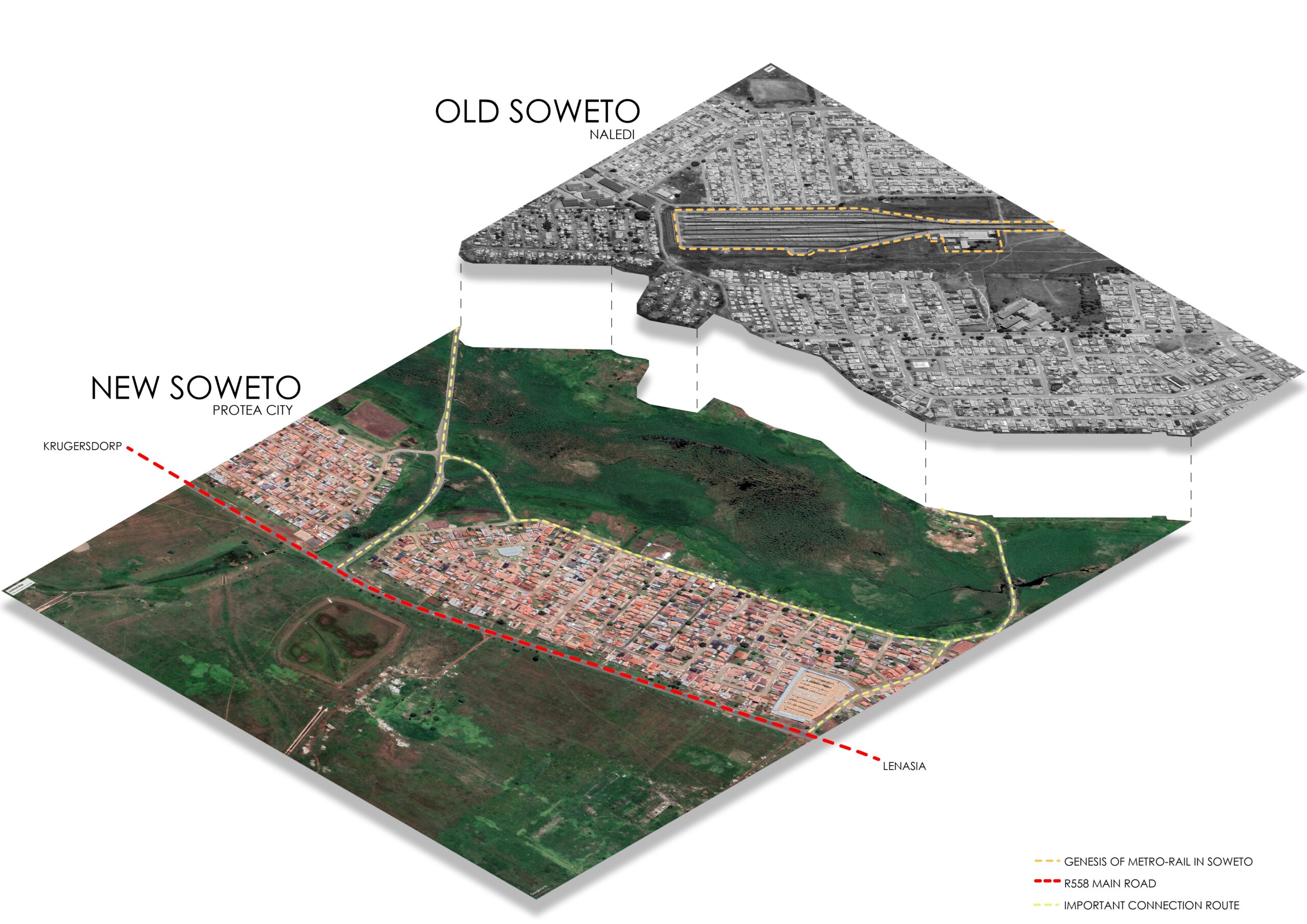
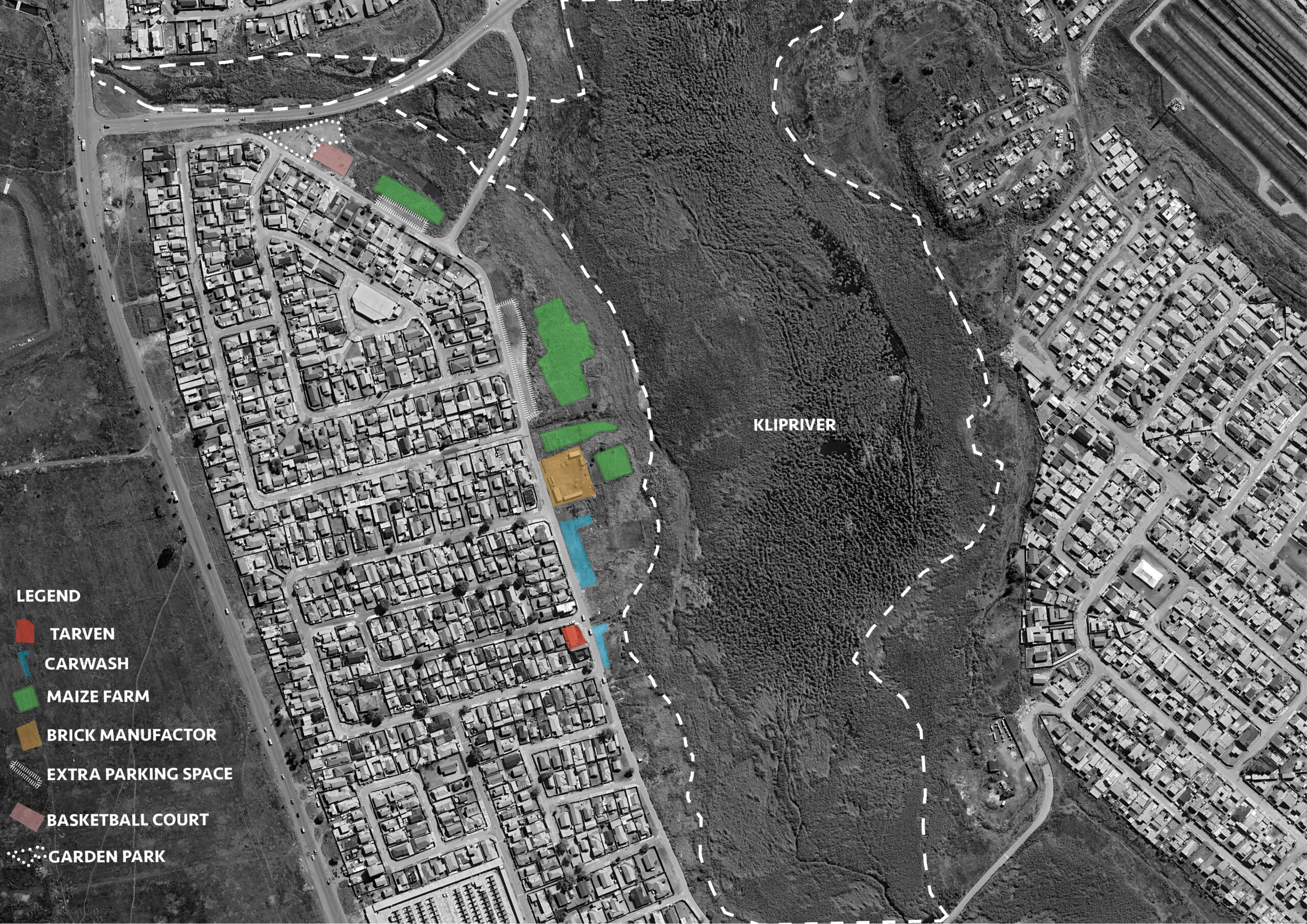
The chosen body of water is called Klipriver in SOWETO (Southern Western Townships) between Old Soweto (Naledi) and New Soweto (Protea City). The original establishment of Soweto was designed as an apartheid labour camp to control and minimize the movement of black people, who came from the Bantustans seeking employment. Post World War two which led to mass industrialization and inclusion of some Black workers, most of them being factory workers, mining workers and domestic servants with insufficient housing close to the industries a lot of them had to rent on backyards.
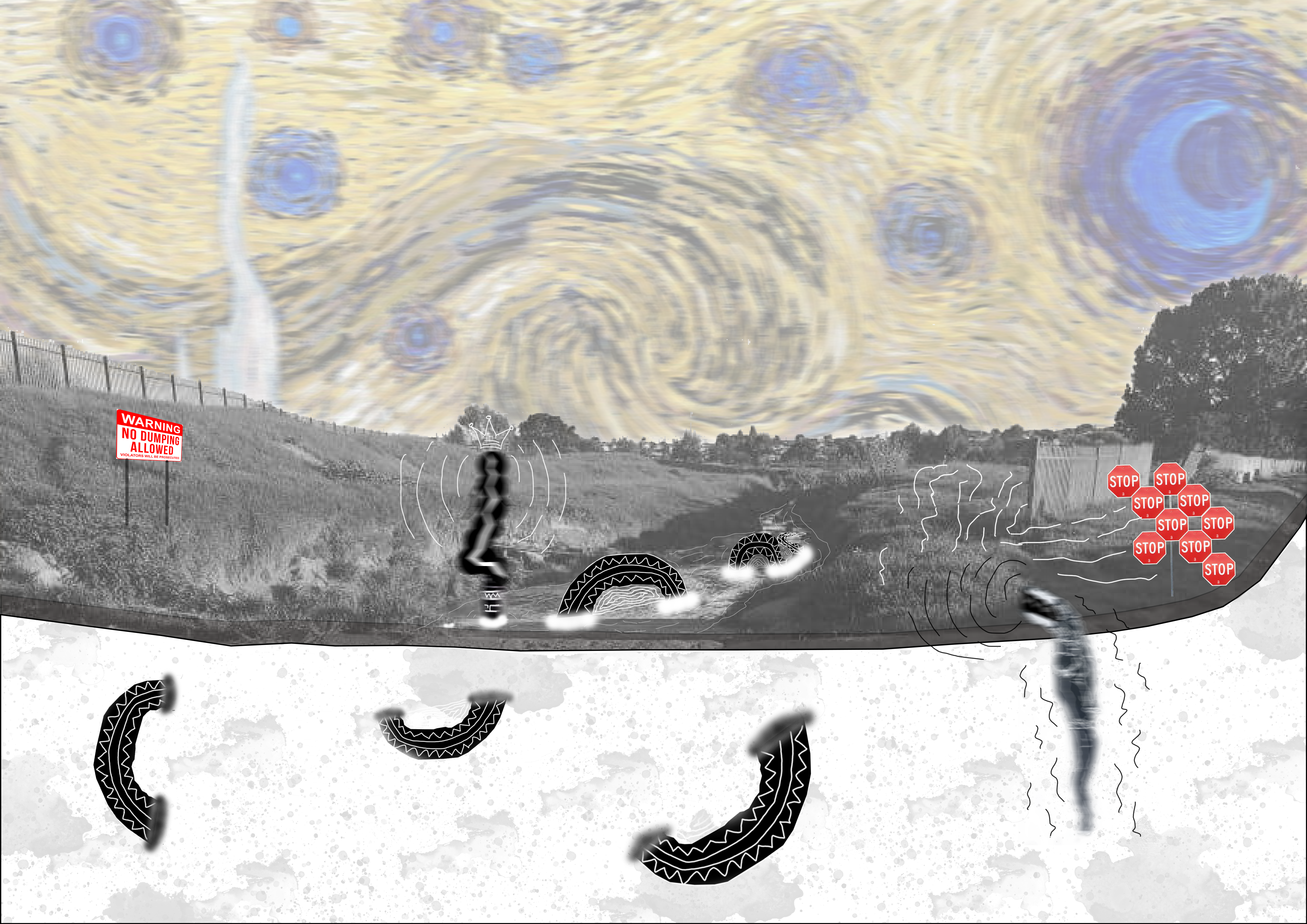
The people who live in the Soweto are diverse people who come from different homelands and practicing different culture but mostly they share similar relationship experience with the river because of the mythological stories of the water snake known as Umnikazi (the owner), the stories that were told from the young age it was to protect children from drowning in the river. The water snake is known to be territorial with the body of water so people would rather avoid engaging with the river unless there is serious reason like cleansing, because we believe that moving water possess powers to remove bad spirits.
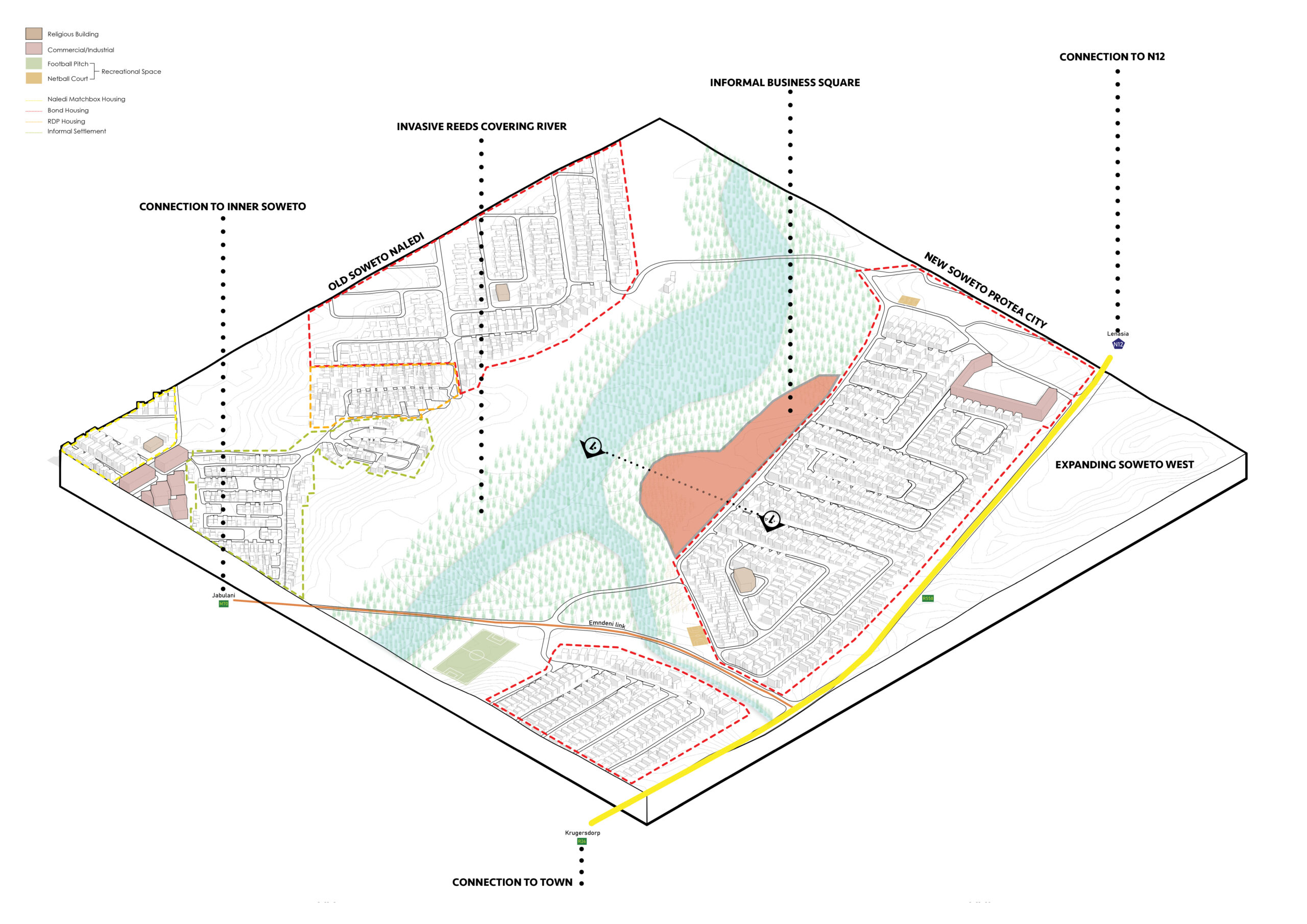
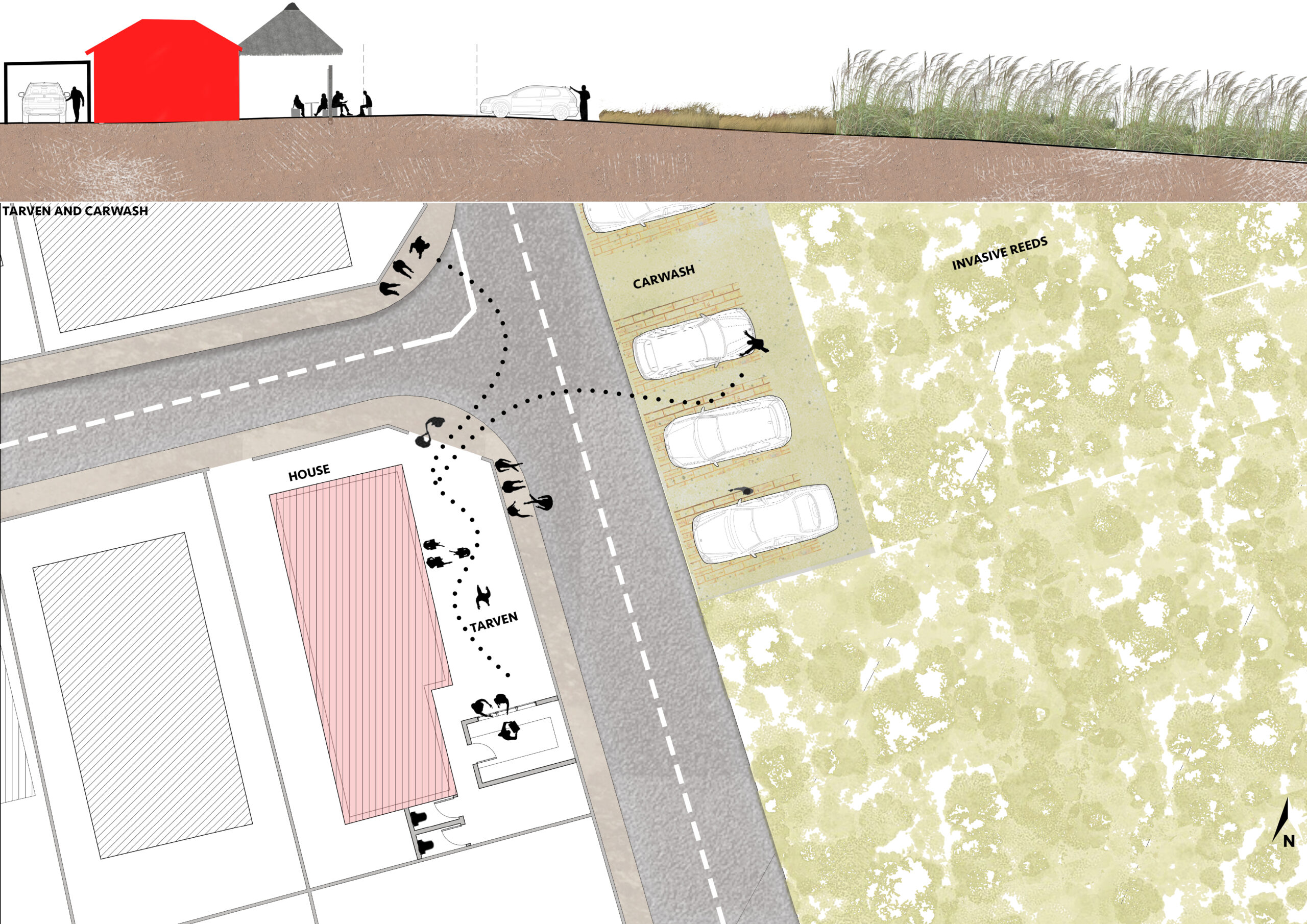
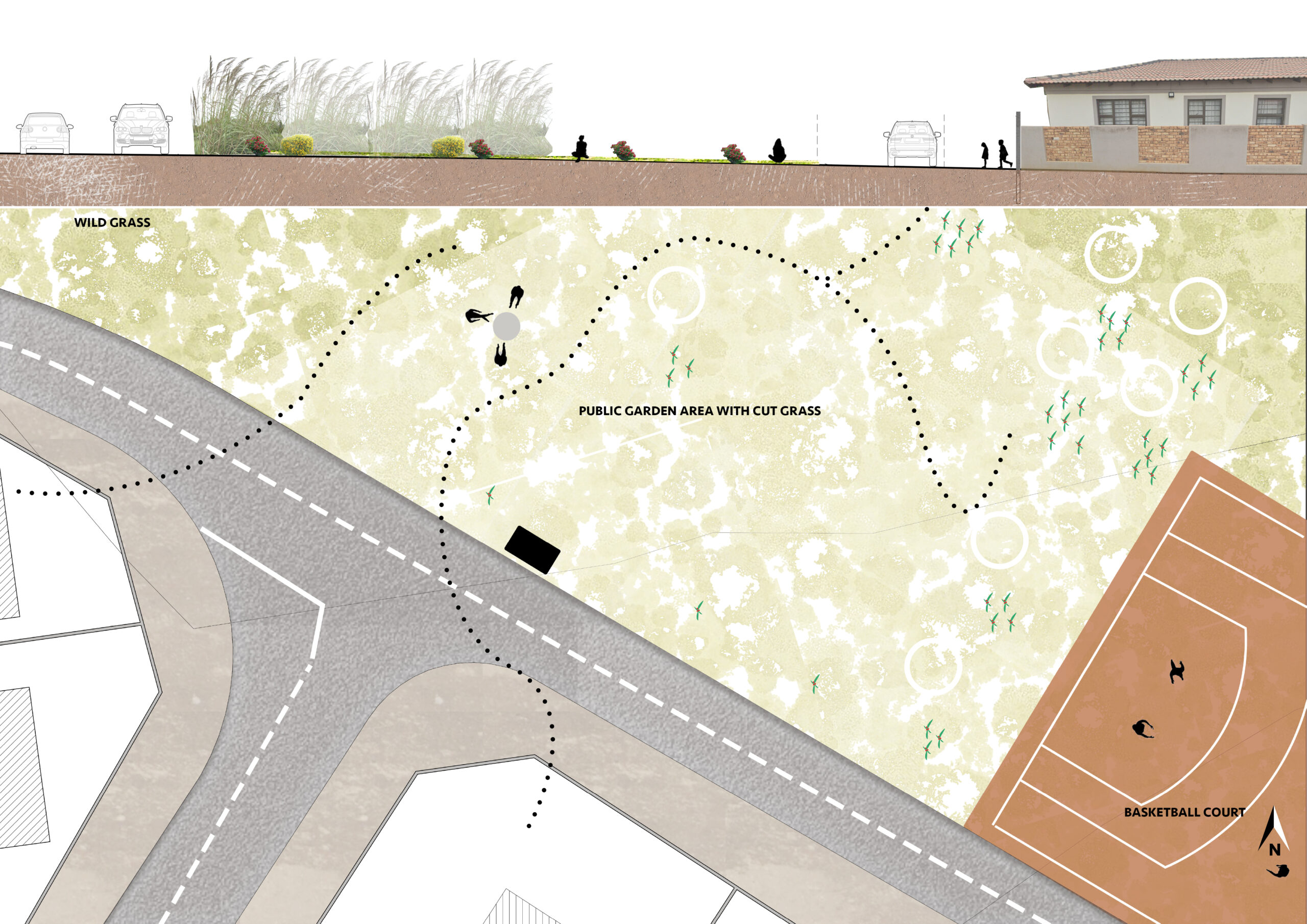
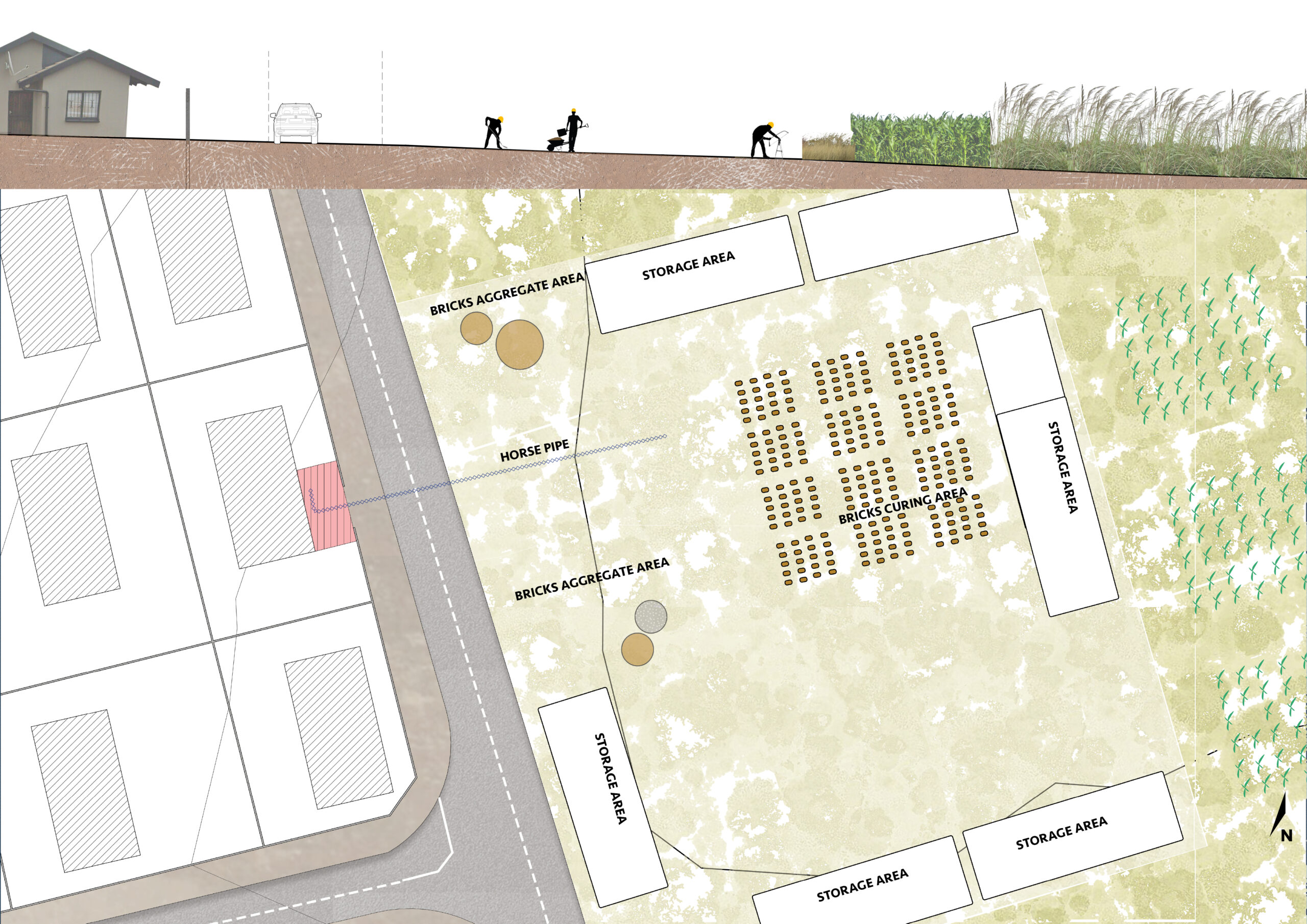
But my interest in the area began when seeing people taking back the space that has been annexed by the invasive reeds and using the space as for different reasons. There are different activities I have investigated like the public garden, basketball court, extra public parking, informal maize farming, brick block manufacture, carwash and Tavern. These activities keep the space activated and directly have a relationship with the river space. The river was previously used as a boundary that isolates the old Soweto to the surrounding areas by the apartheid government, in the Westrand (Coloured community), Lenasia (Indian community) and Krugersdorp (Afrikaner community). Now with the expansion of Soweto to the West areas, the river no-longer serves as barrier but as a potential square of the emerging informal businesses. The initial design proposal was meant to activate the space and surroundings of the body of water by clearing out the reeds but after some thorough research about reeds and its relationship with water from Envirotec article called ‘Managing reed growth safely’ there were findings of how difficult it could be removing the roots of the reeds and it could result in ecological problems like erosion and destroying the top soil, which will lead to flooding the area.
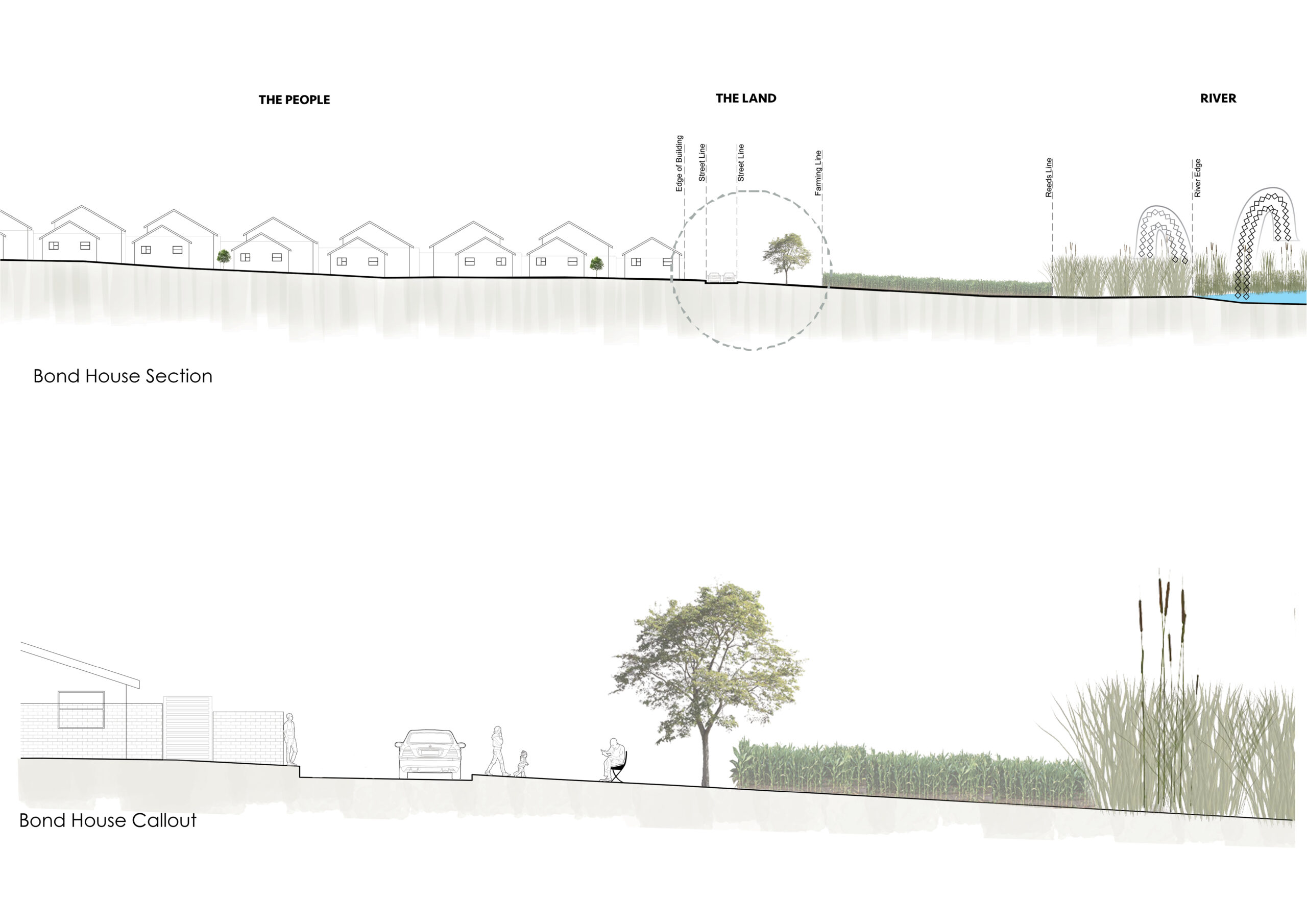
So, I then focused in enhancing the current existing activities on the side of the river, understanding the relation of the people. The land and water, designing a space with conscious decision being sensitive to the spirit of the place. The proposal should be able to drive the people, land and water to coexist. With time the area should be developed as a space for social integration, where the people come together to exchange ideas and opportunities for the individuals who seek to utilize the space and create a new relationship engagement between the community, the land and the river.