Co‐habitation of Humans and Other Animals:
Transition from human‐centered design to multi‐species design
The exponential expansion of cities is minimizing natural spaces and displacing animals. These animals are either adapting to harmful environments or becoming endangered.
The current urban environment prioritizes human‐centric design, and in many cases, the architecture aims to repel other animals. Research shows that human actions led to a 66% decline in wildlife in Africa between 1970 and 2018.
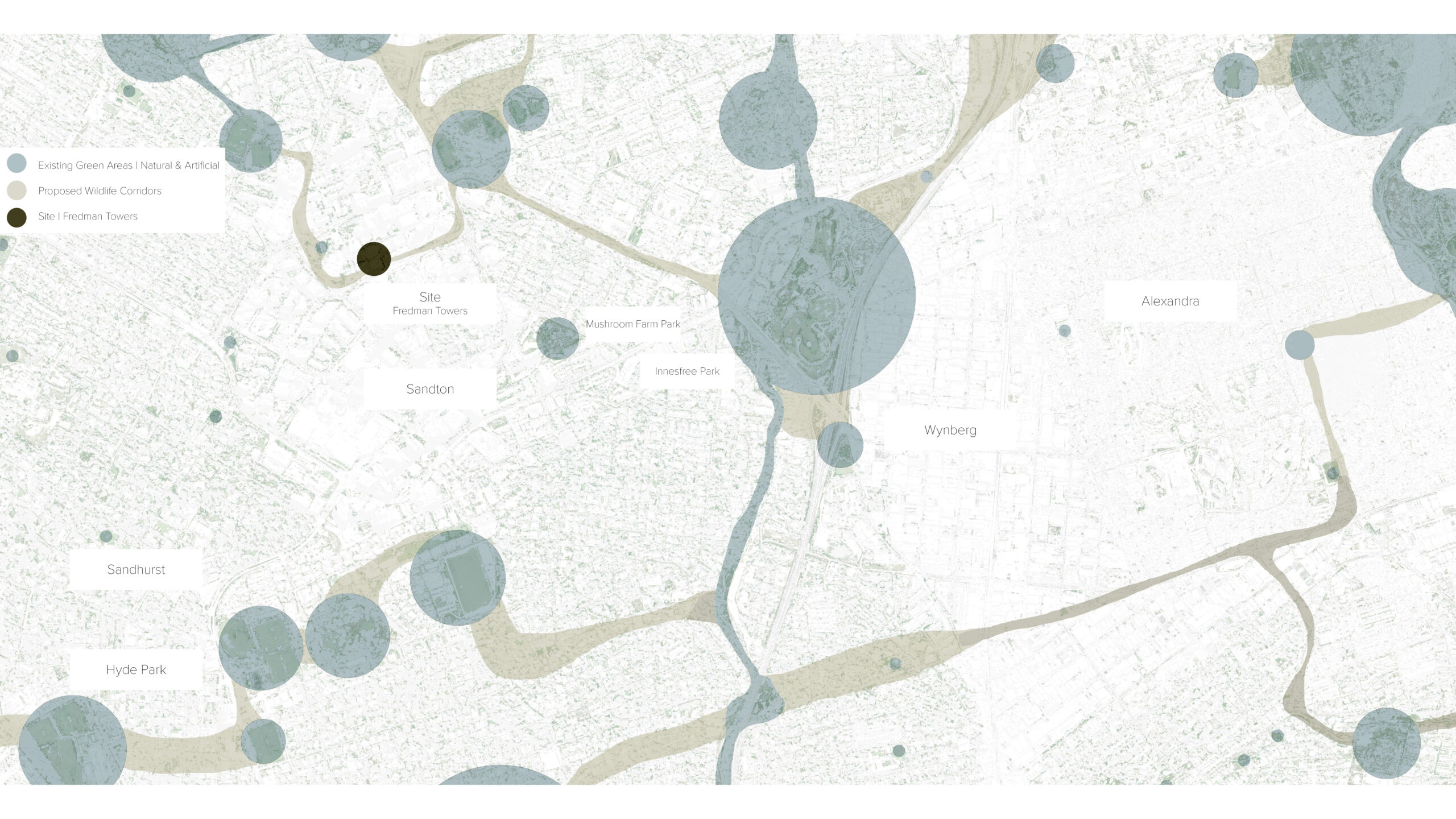
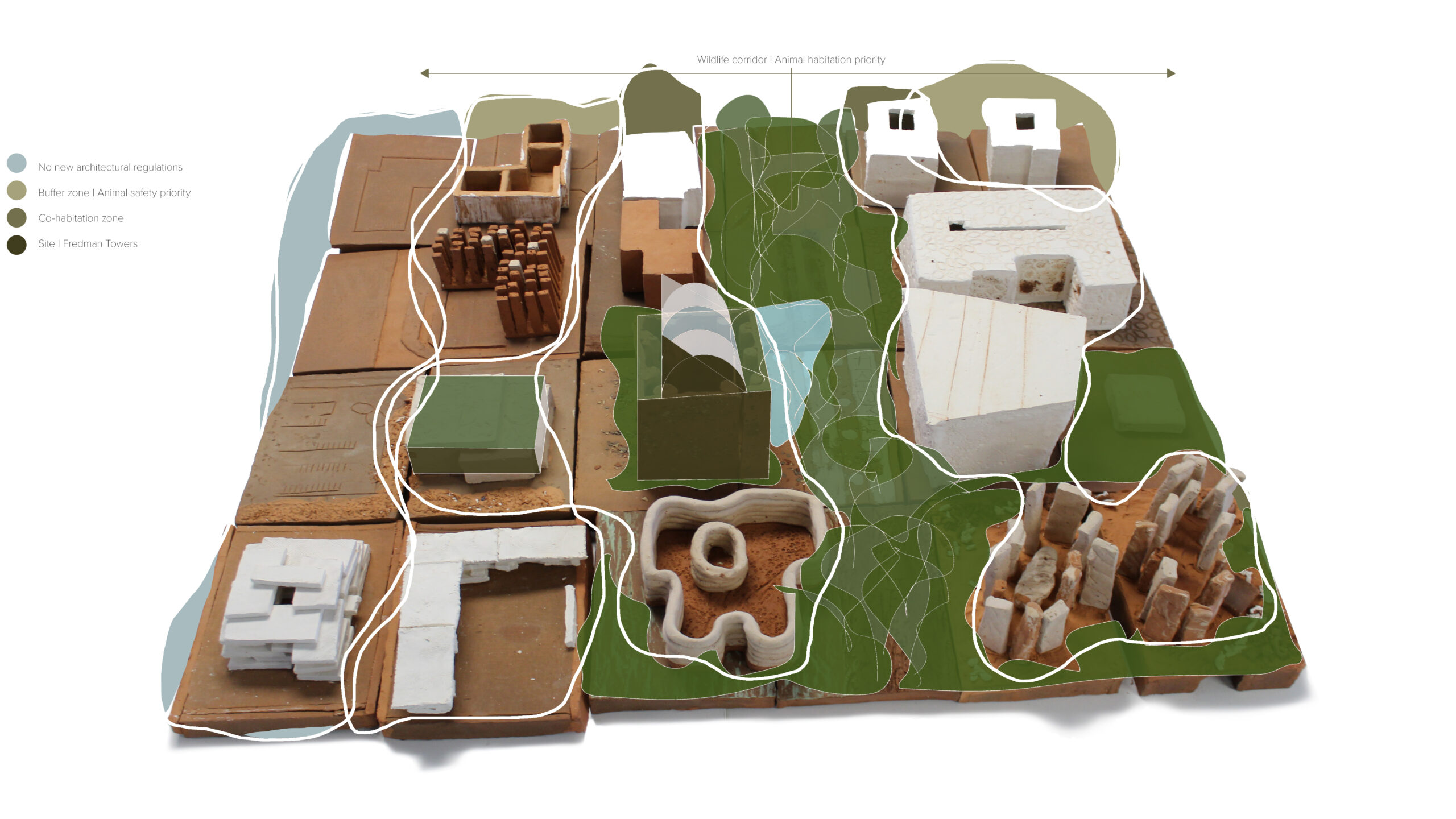
Wildlife corridors could be established in urban spaces to link multiple designed and natural green spaces. Wider wildlife corridors would allow for more buffer space between wildlife and people, and legislation could create a buffer zone between the city and wildlife corridors by
making the buildings adjacent to green spaces multi‐species habitats.
Animals take up space in buildings, whether intended by design or not. If corridors ran through buildings, this could be monitored. Keeping track of the animals that inhabit buildings can help keep them safe, control hygiene hazards, and maintain the structural integrity of buildings. There are limitations regarding infrastructure and safety when looking at the coexistence of humans and other animals; however, the multitude of benefits argues that the obstacles are a small step to overcome in comparison.